
A balcony workout space can be as simple as a mat, a few portable props and a clear path. These 20 ideas show ways to arrange low-impact movement areas without filling the balcony with gym machinery.
Check your building rules and balcony suitability before setting up; ask management or a qualified building professional if you are unsure.
Keep doors, drainage and access clear, avoid railing anchors and weight drops, and bring portable equipment indoors after use.
Affiliate disclosure: As an Amazon Associate, I earn from qualifying purchases.
1. Roll-Out Yoga Lane
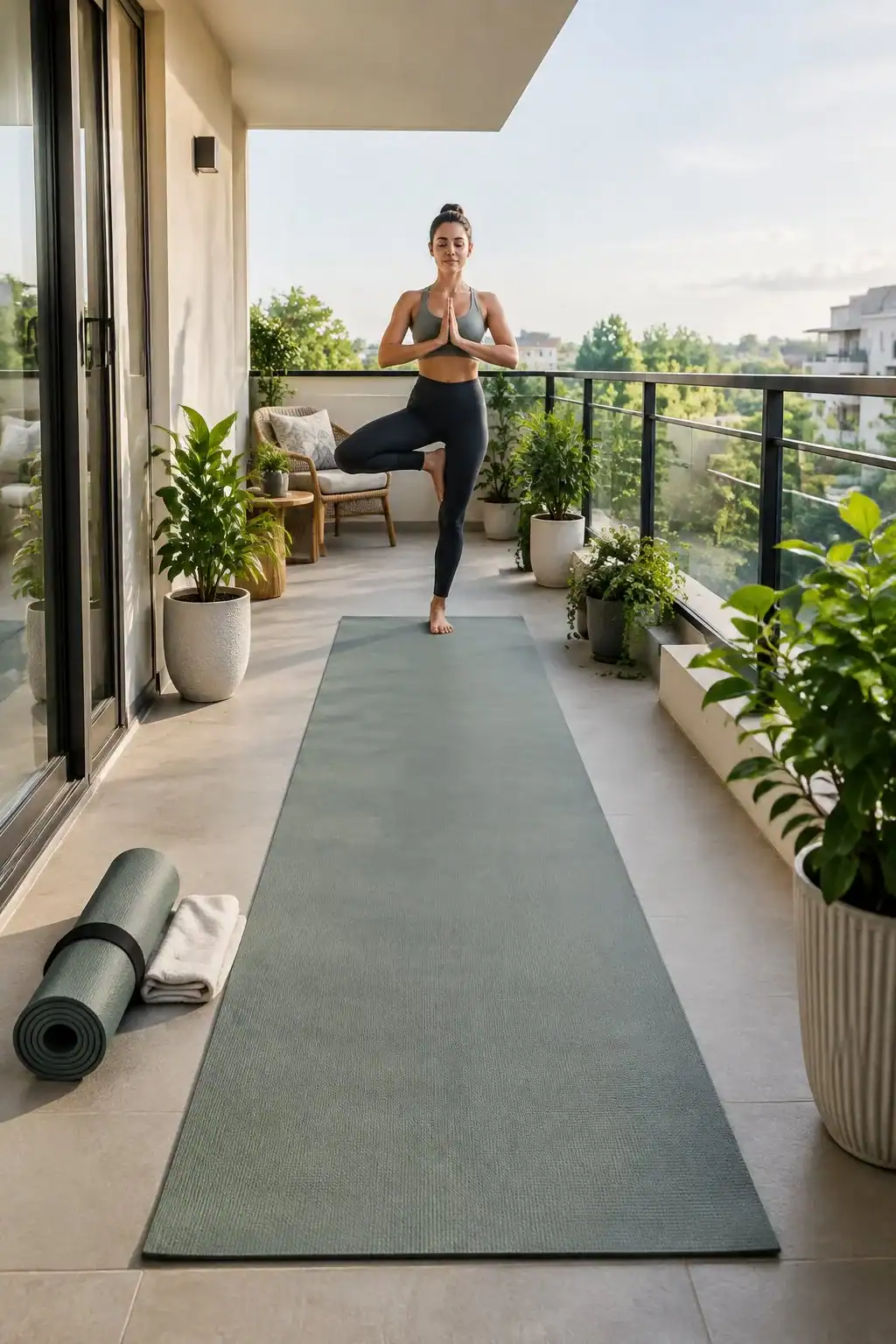
Lay one mat lengthwise along the house side of the balcony, leaving space at both ends for transitions. Keep the route from the door open, and roll the mat away when you finish so the balcony can return to everyday use.
2. Yoga Prop Studio With Compact Blocks
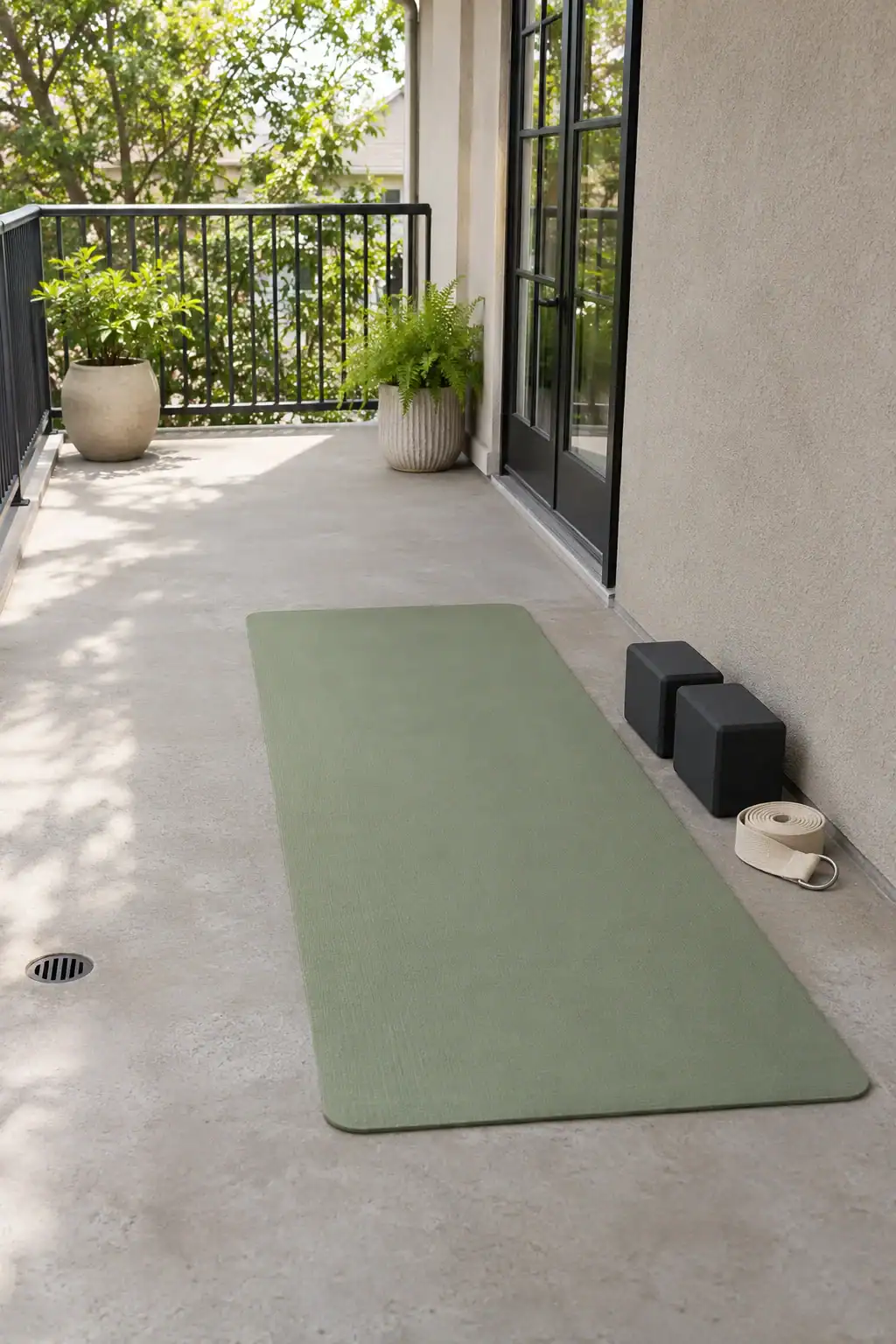
Pair a mat with two foam blocks and a coiled stretching strap for a small, organized practice area. Set the props beside the mat on the wall side, where you can reach them without narrowing your walking route.
3. Portable Resistance-Band Station
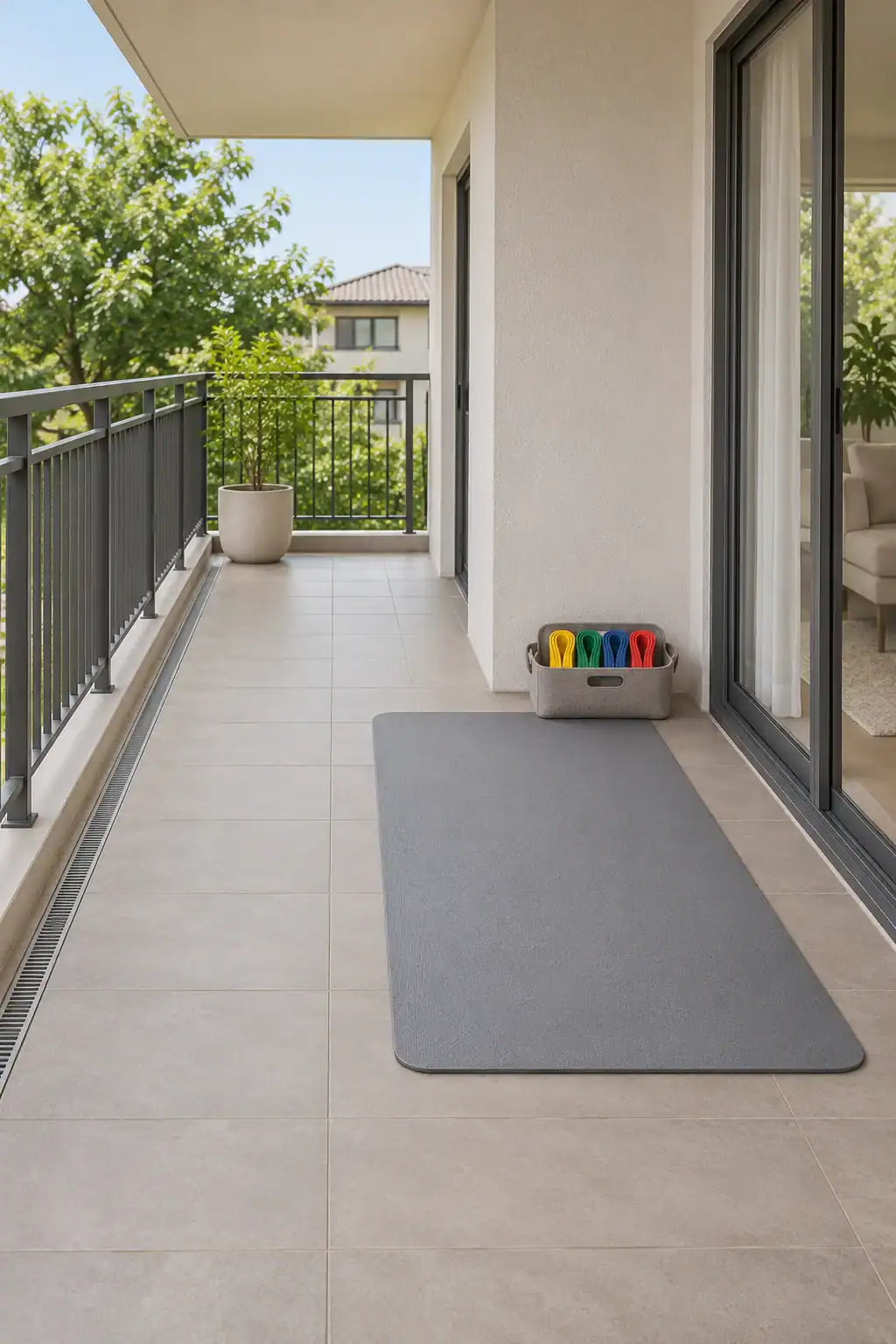
Keep loop bands in a small tote beside a clear floor area for an anchor-free station. Nothing needs to attach to the building or railing, and the entire kit can come indoors after your session.
Follow the bands’ supplied exercise instructions and inspect them before each use.
For the latex THERABAND loops below, avoid use if you have a latex allergy and follow the manufacturer’s eye-protection guidance.
4. Open-Center Bodyweight Area
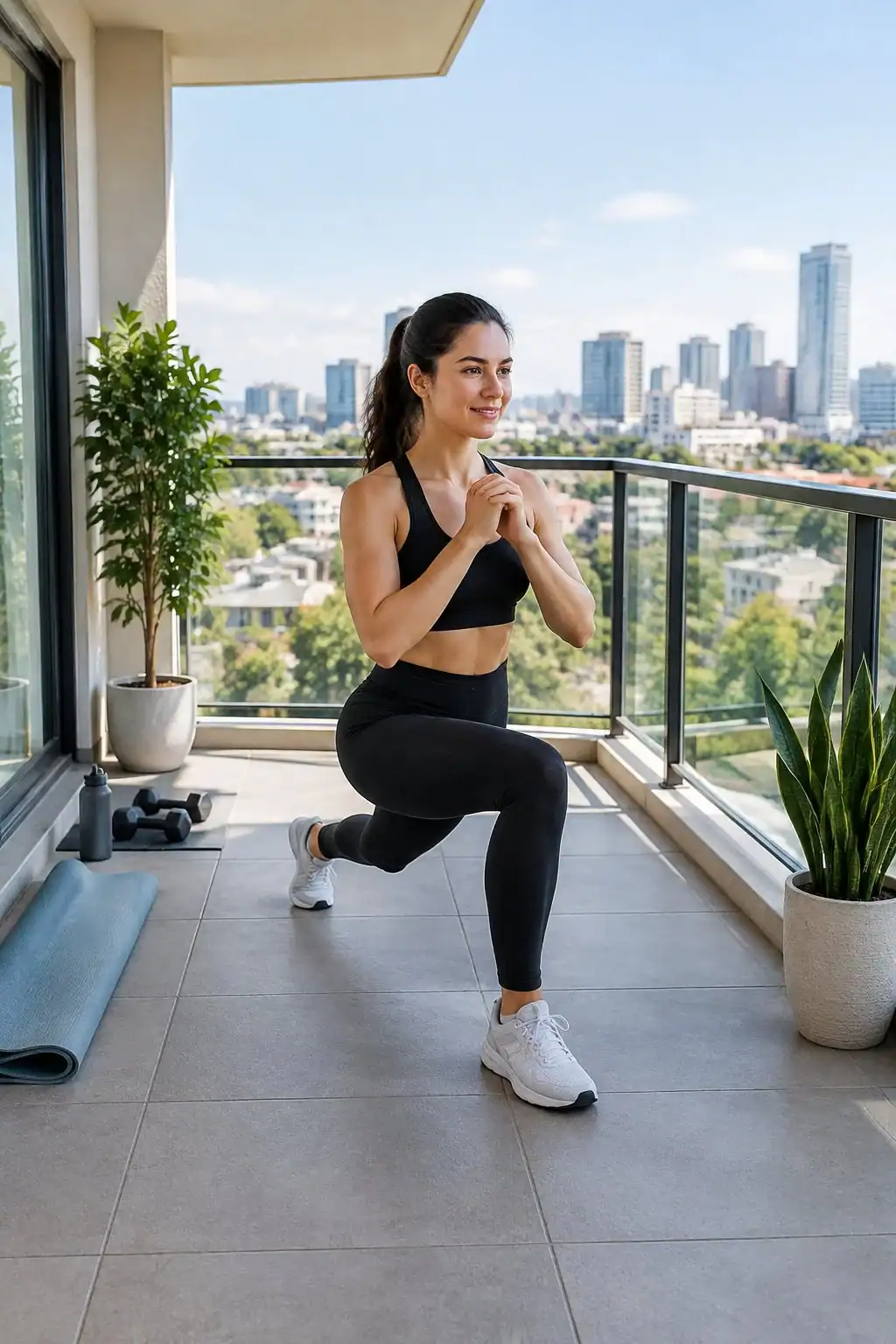
Leave the middle of the balcony free rather than filling it with equipment.
A towel and water bottle can sit near the house wall while the open floor accommodates controlled, low-impact movements that fit your space; skip jumps and movements that approach the railing.
5. Seated Mobility Nook
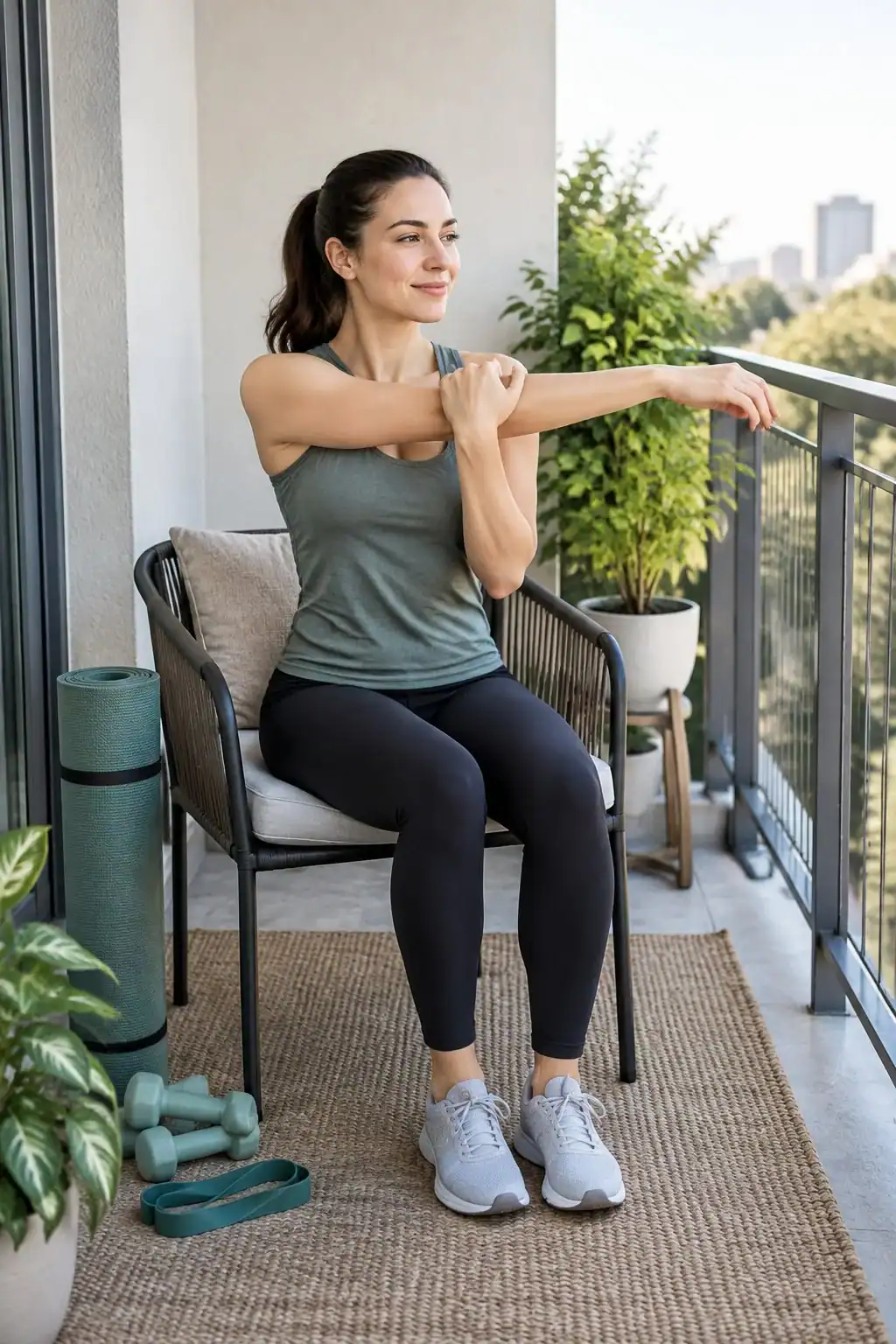
Place a stable chair on a dry, level part of the floor, with room around it for seated arm and leg movements. Keep the chair away from the railing and choose a firm seat rather than a rolling, folding or rocking chair for exercise.
6. Foam-Roller Floor Corner
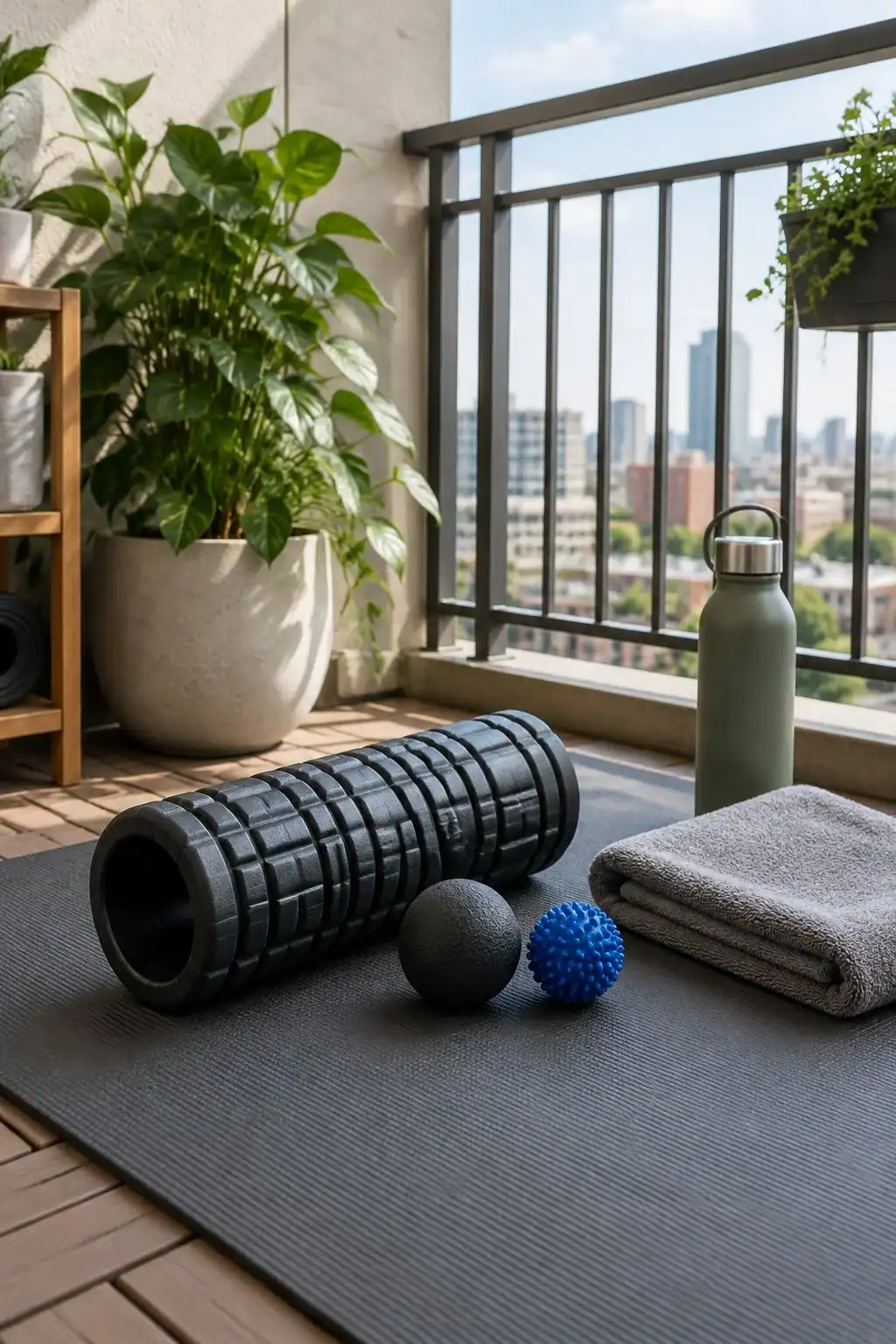
Give a mat and compact foam roller their own corner without adding a bulky storage unit. A low basket keeps small props from rolling into the walkway, and a folded towel adds a softer texture to the arrangement.
7. Existing-Shade Stretching Zone
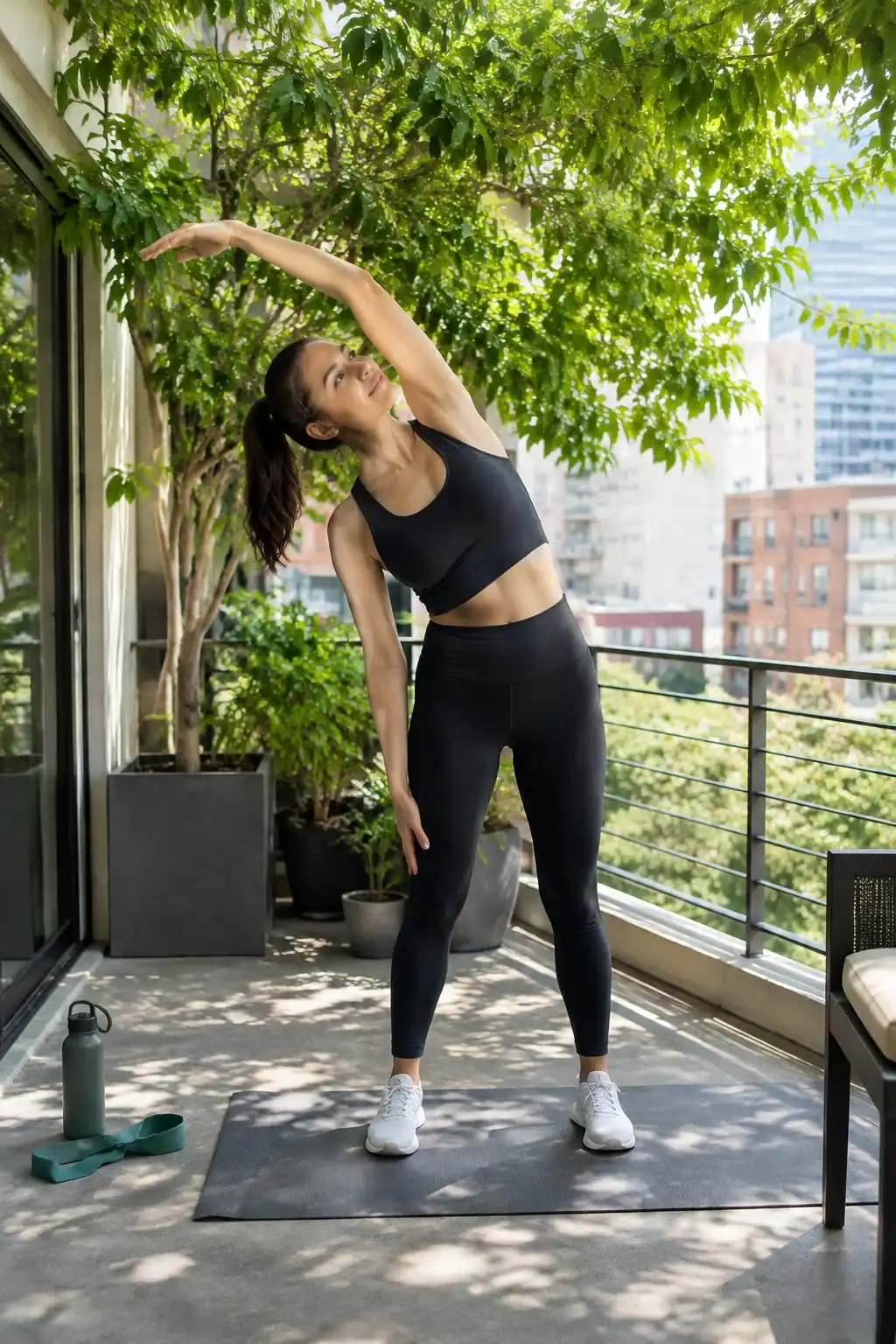
Use shade already provided by the building or established planting to choose your practice spot. Move the mat as the shade changes, keeping it on a dry, level surface with clear space around it rather than squeezing into a narrow gap at the edge.
8. Indoor Storage, Outdoor Practice
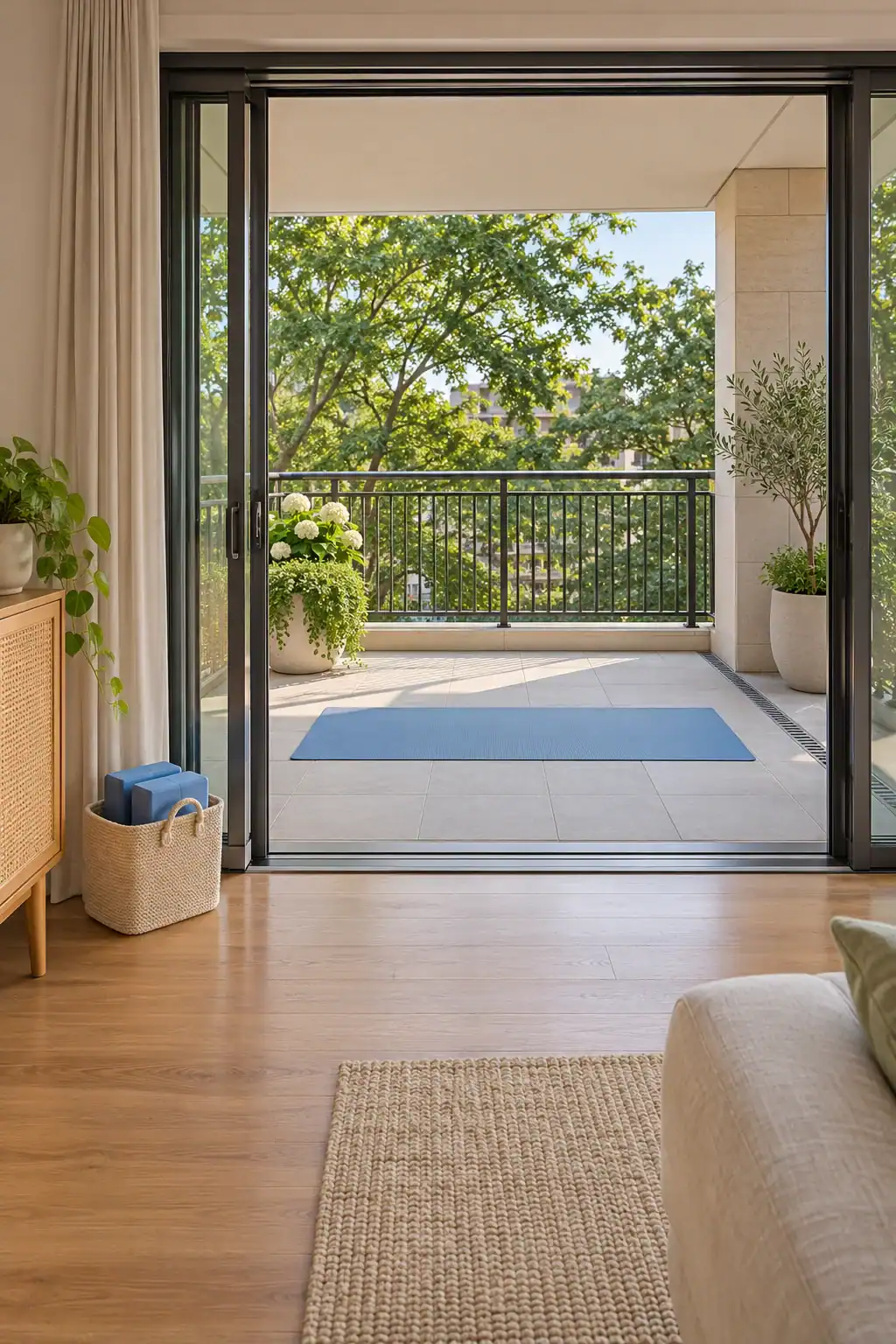
Keep your gear just inside the balcony door and carry out only what you need. Place the mat fully on the balcony, leaving the door track and entry route clear instead of running a mat across the threshold.
9. Existing Textured-Wall Backdrop
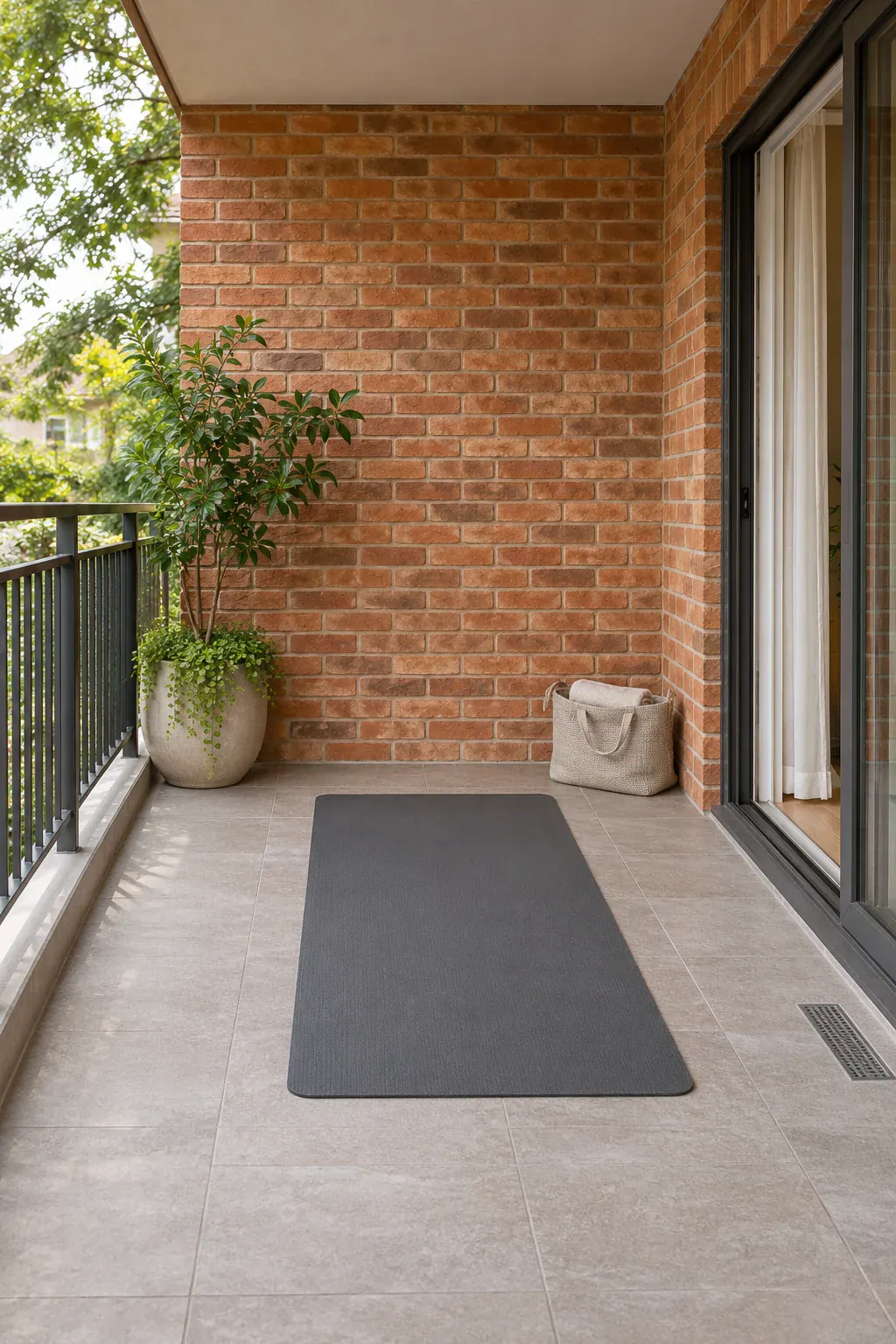
Let an existing brick or textured house wall give the workout area its character. A plain mat and low gear tote keep the arrangement simple without introducing a freestanding screen that could catch the wind.
10. Removable Mat-Tile Rectangle
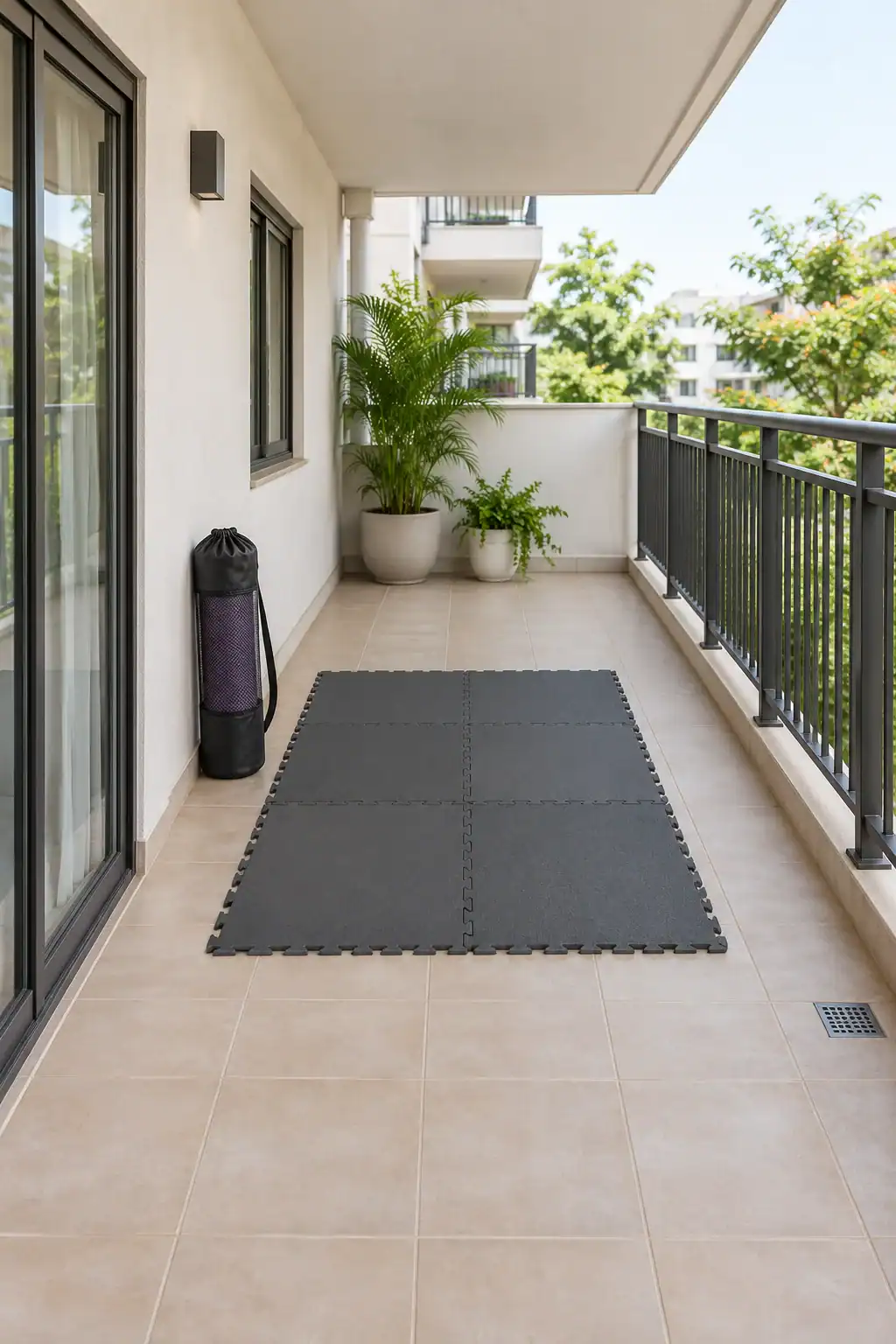
Where the flooring and tile manufacturers allow it, arrange a small rectangle of lightweight exercise tiles on a clean, dry surface. Keep the edges flat and drainage uncovered, then lift the tiles after each session so moisture cannot remain hidden underneath; they do not establish safe loading or soundproof the balcony.
11. Covered-Balcony Movement Studio
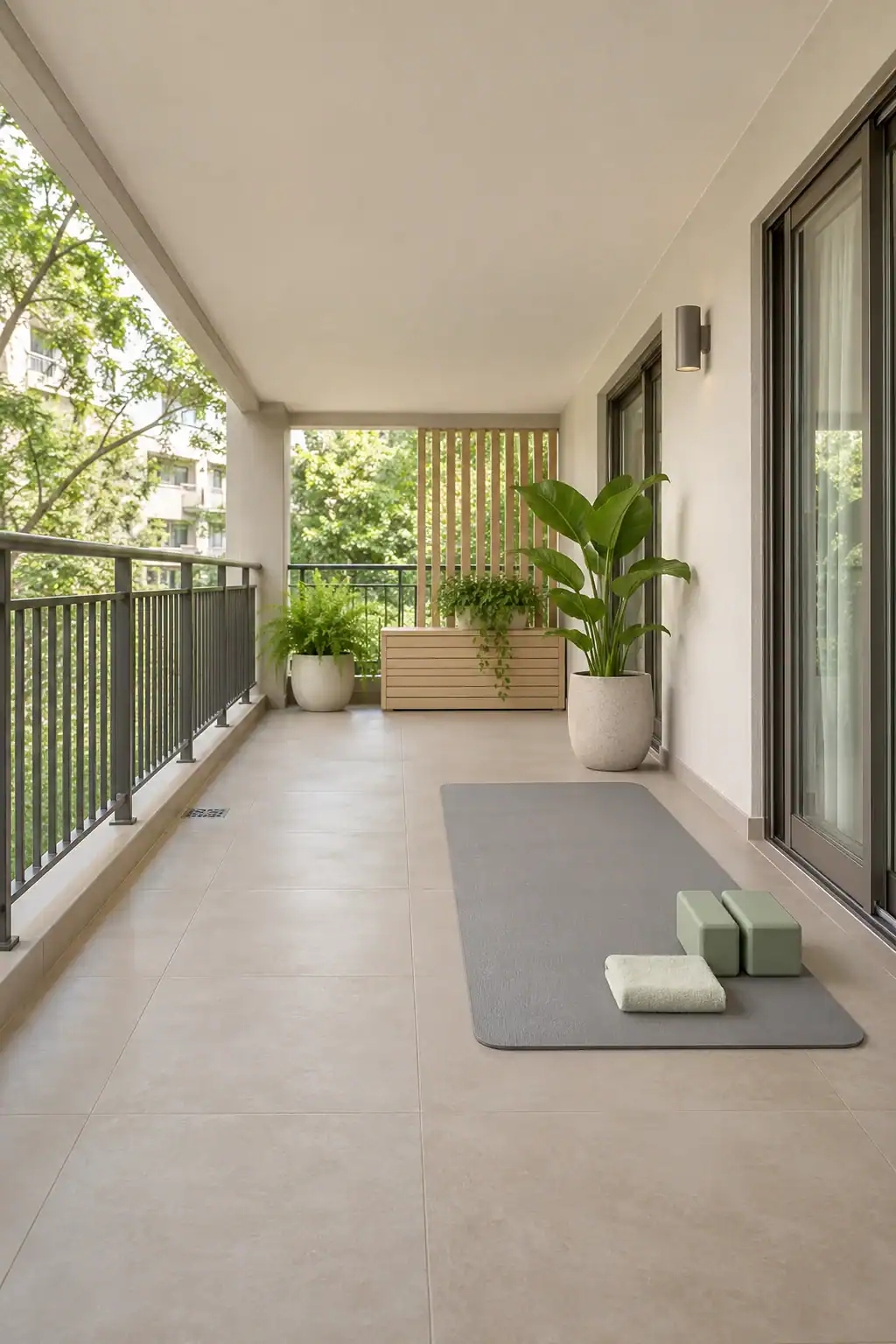
An existing roof can make a simple mat-and-block setup feel like a little outdoor studio. Keep portable gear close to the house wall and bring it inside afterward, since overhead cover does not make indoor equipment suitable for outdoor storage.
12. One-Side Storage With a Clear Center
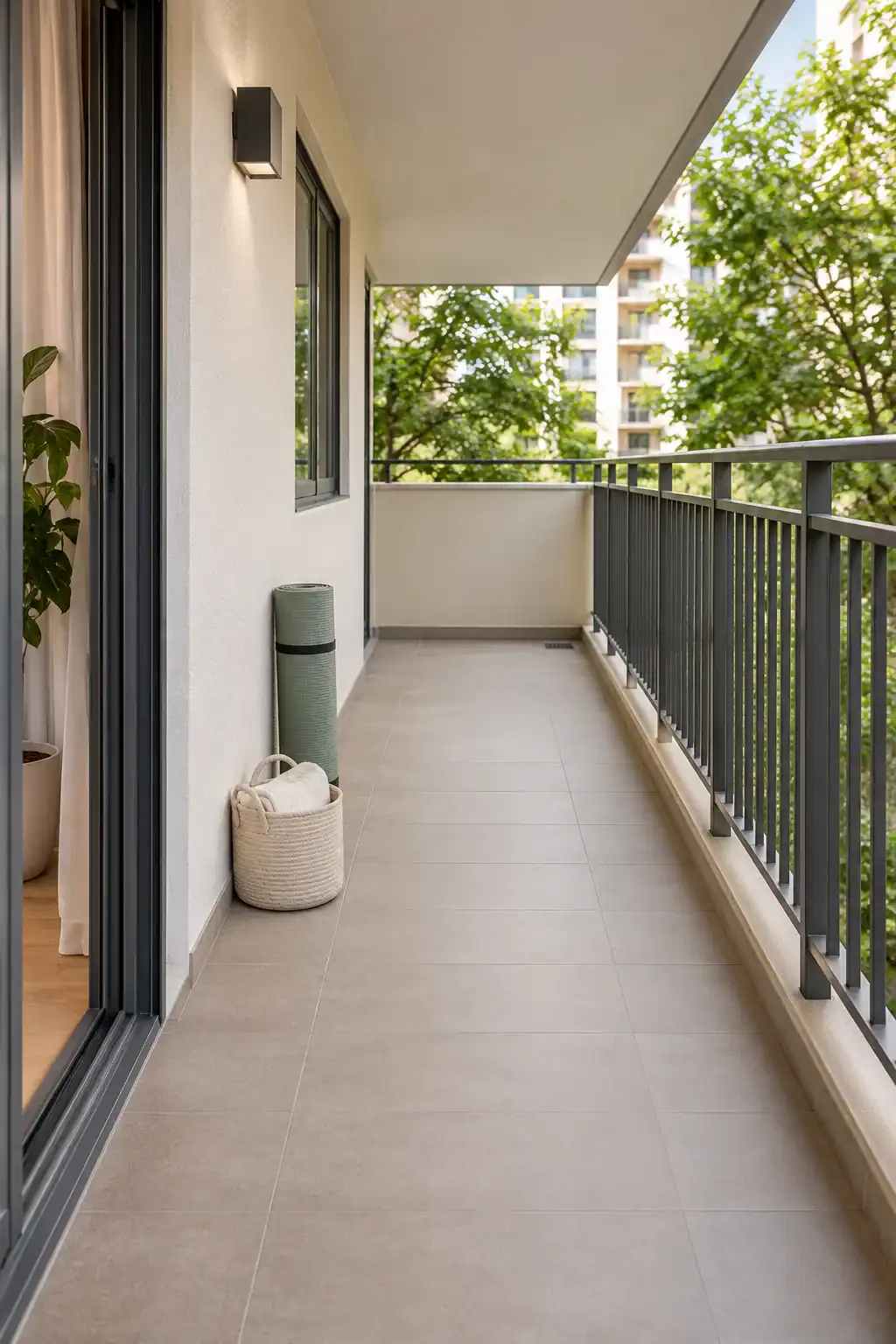
On a narrow balcony, group a rolled mat and low basket along the house wall when you are not exercising. Leaving the center empty preserves access and avoids turning every available inch into storage.
13. Color-Blocked Movement Zone
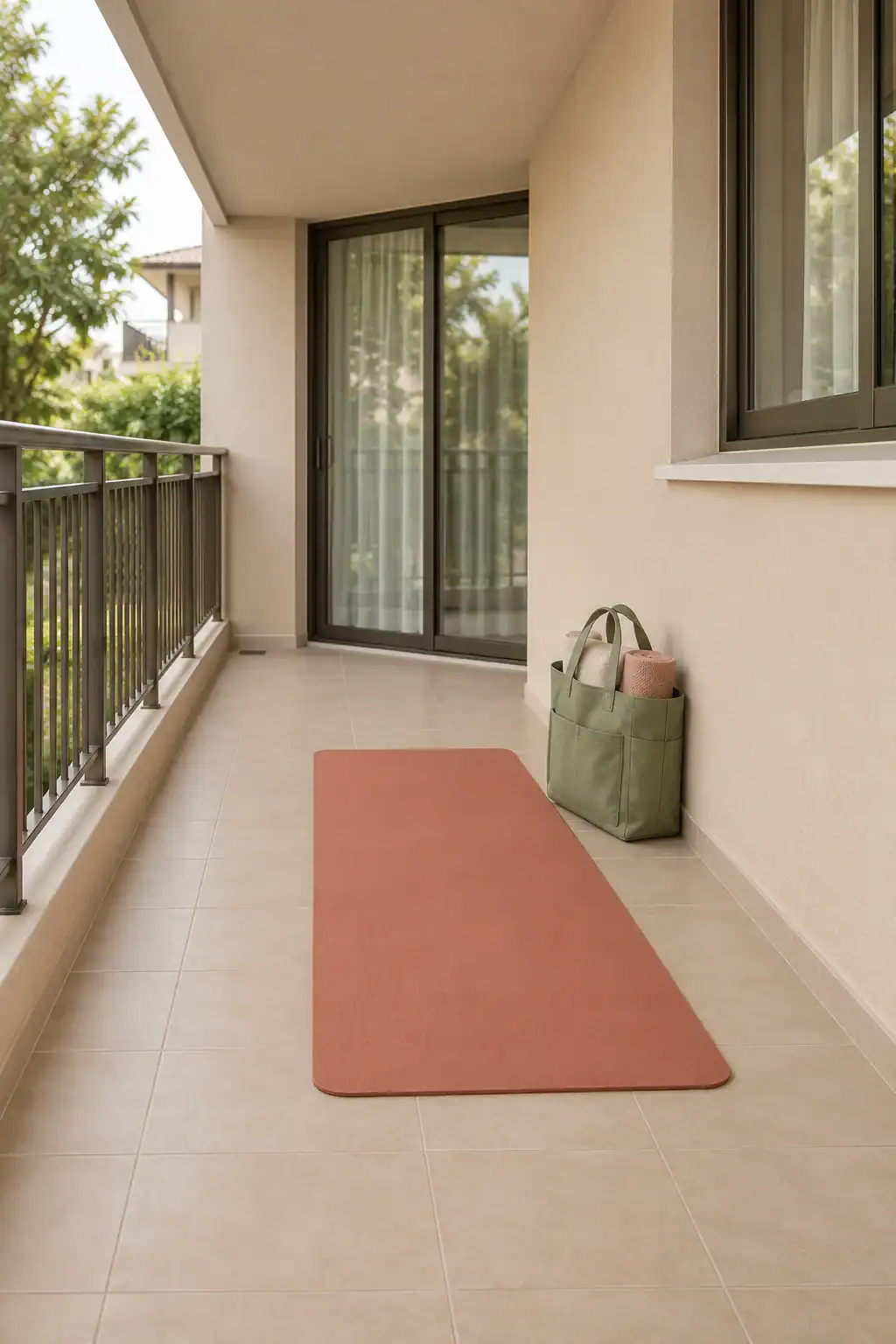
Use a terracotta mat and a sage-green tote to define the workout corner through color. This gives a neutral balcony a deliberate look without painting the floor or installing a second surface.
14. Bring-In, Bring-Out Gear Caddy
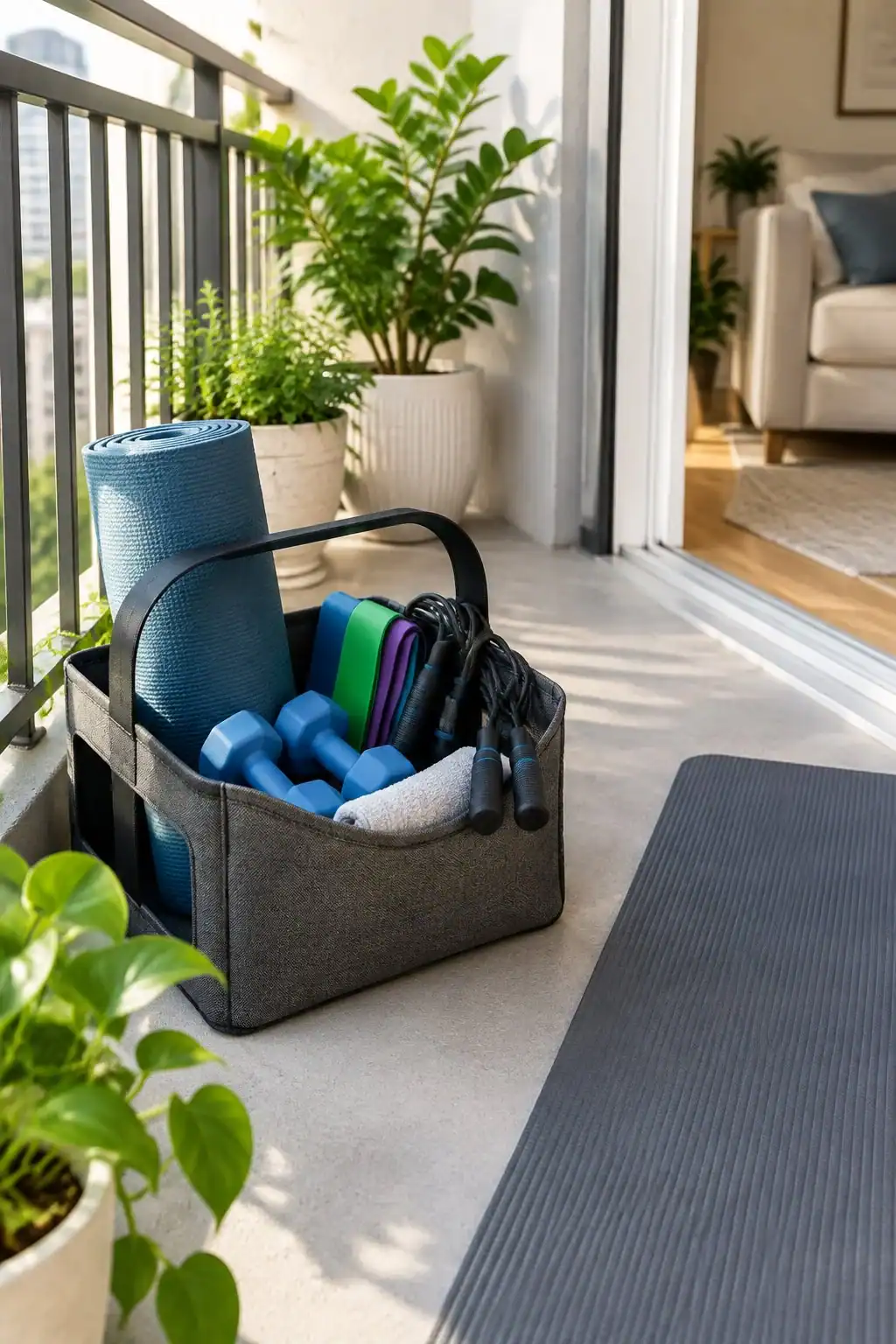
Pack a small handled caddy with the props you actually use, such as a towel, blocks and bands. Set it beside the mat during a session, then carry it indoors so exercise equipment does not become permanent balcony clutter.
15. Quiet Floor-Level Setting
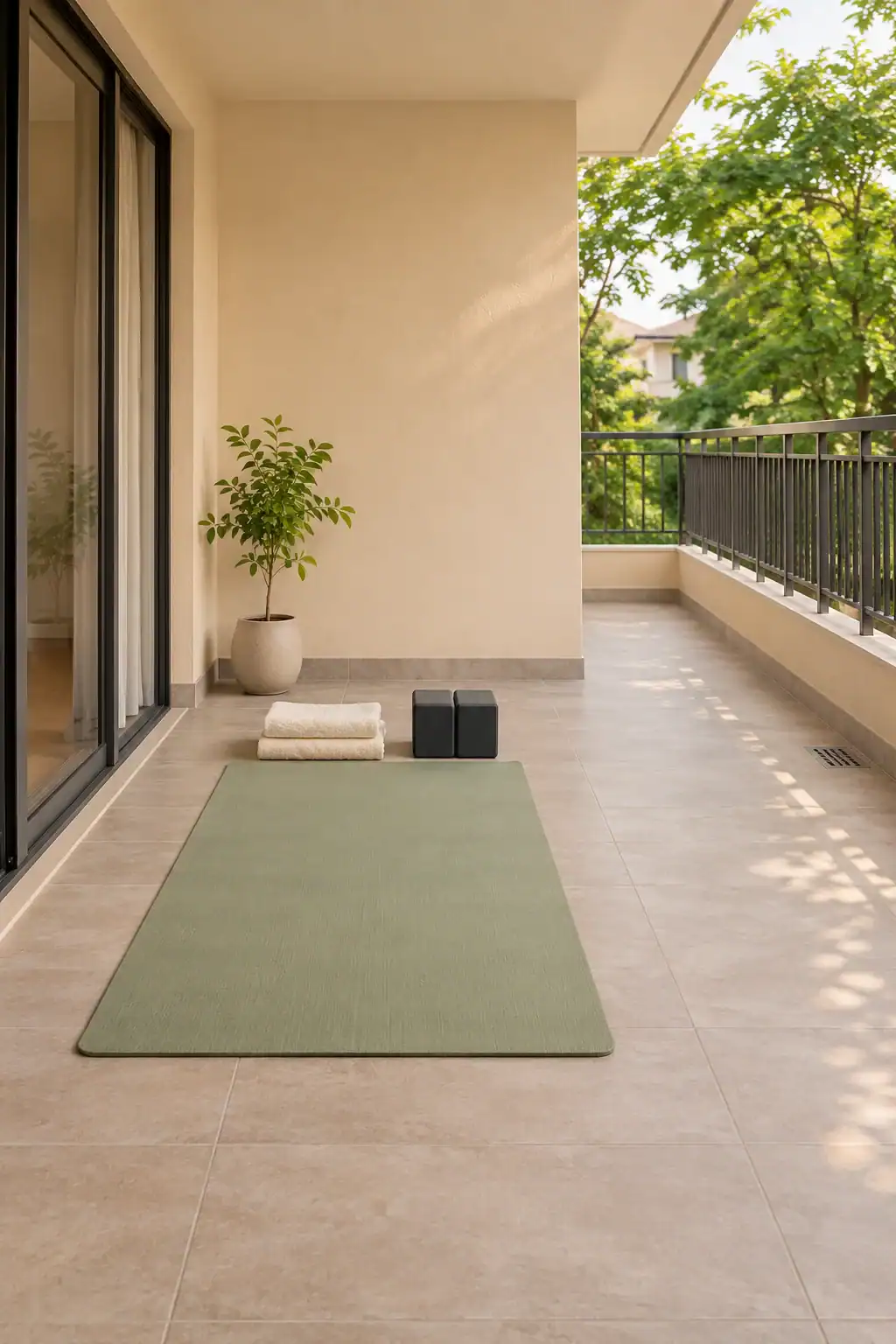
Choose a muted mat, folded cotton towels and a restrained set of props for a calm floor-level arrangement. Keep decorative pots small and out of your movement area, with no furniture or props positioned as climbing aids near the railing.
16. Shared Lounge and Workout Strip
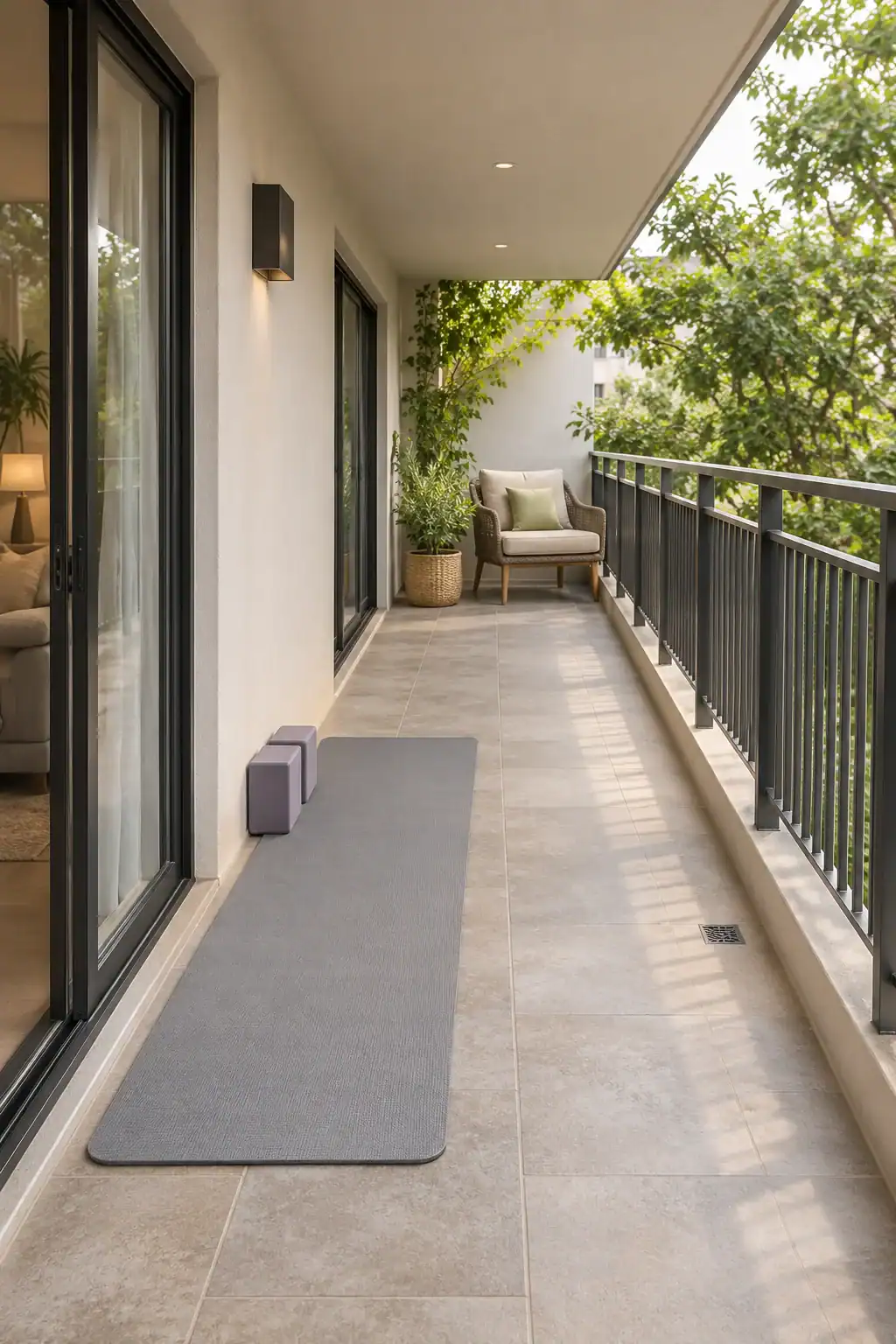
Keep an existing chair at one end of a long balcony and a slim mat along the house side. A separate clear walking lane lets the space serve both purposes without forcing anyone to step over exercise gear.
17. L-Shaped Balcony Layout
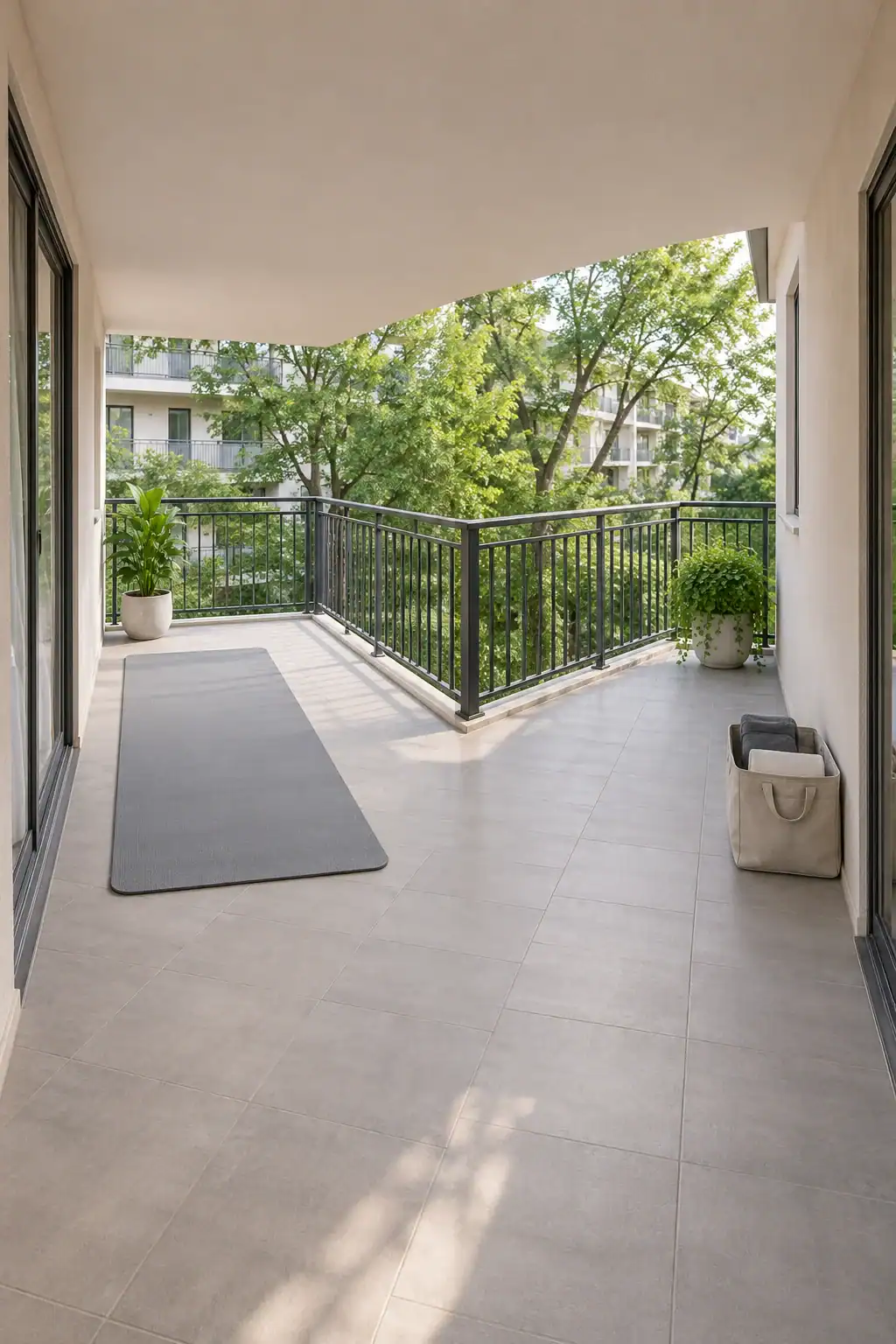
Use one wing of an L-shaped balcony for the mat and the other for a small portable kit. Leave the inside corner open, giving you a clear turning area between the door, practice space and the rest of the balcony.
18. Side-by-Side Mat Setup
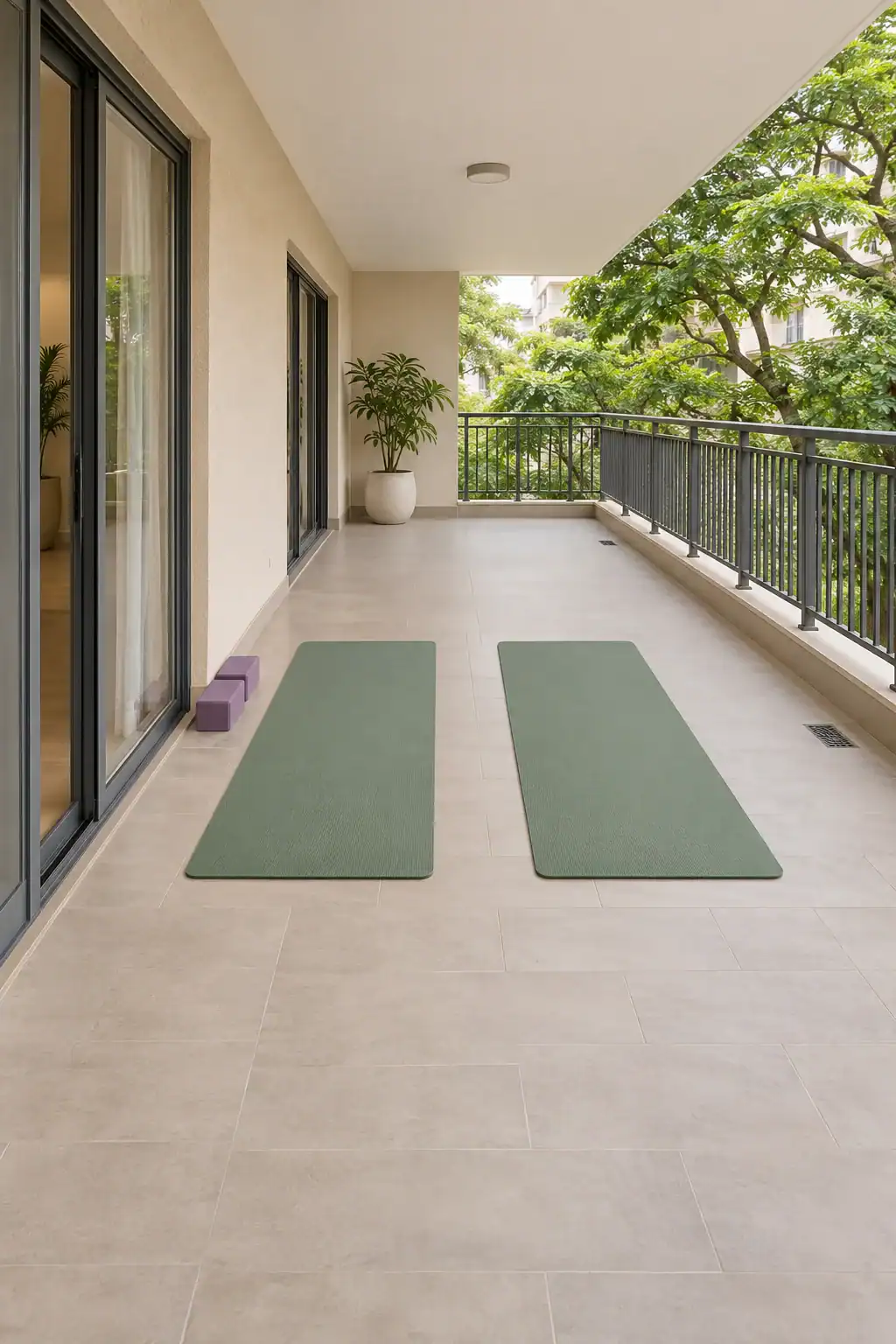
If your balcony has enough clear floor space, two parallel mats can make room for a shared session.
Check that each person can complete the intended movements without touching the other mat, blocking access or moving toward the railing; use the space one person at a time if that room is unavailable.
19. Pilates-Ring Mat Setup
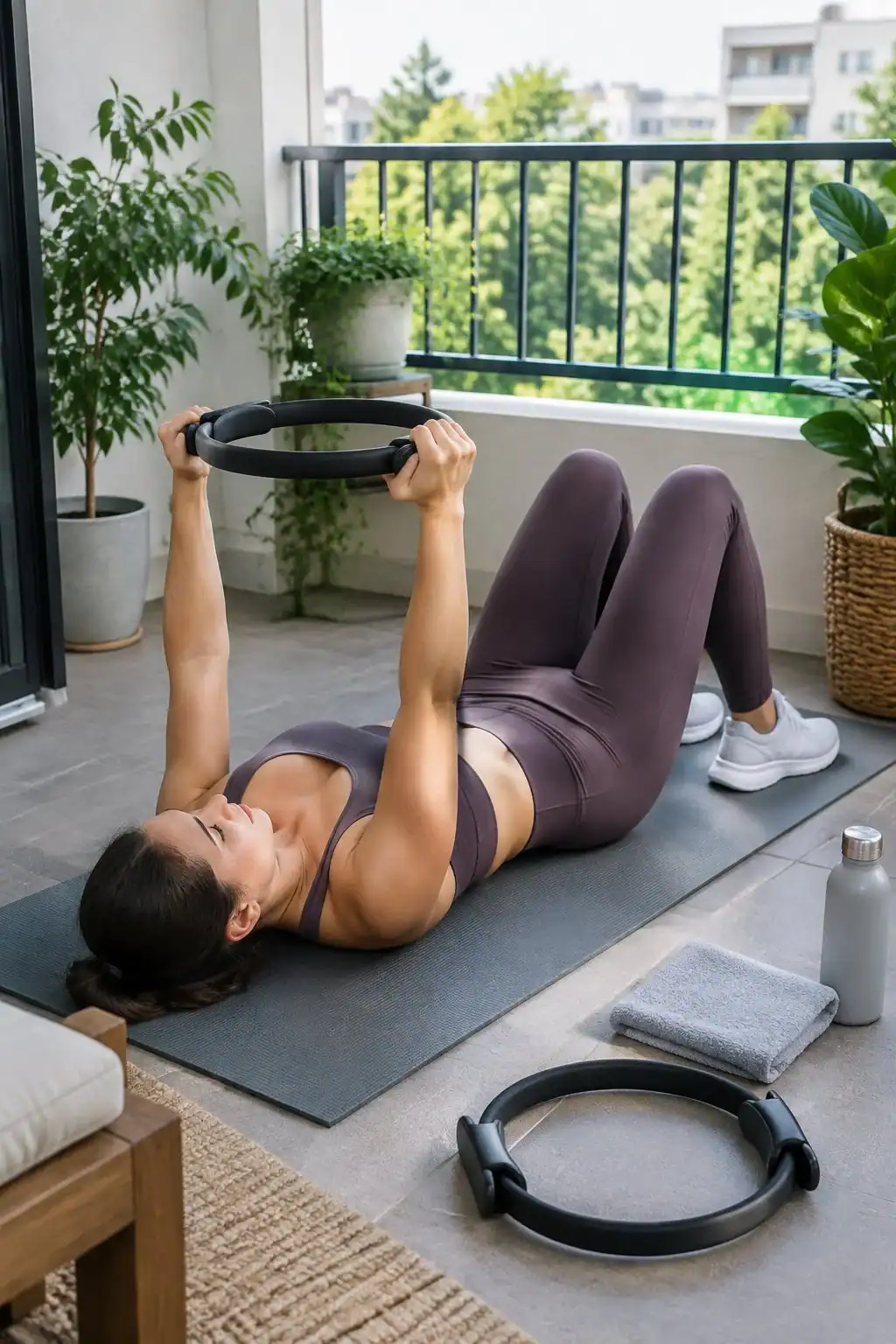
Keep a Pilates ring beside one corner of the mat for a compact, purpose-focused setup. Leave the surrounding floor open and use the ring only according to its instructions, then store it indoors rather than leaving it exposed to weather.
20. Clear-Floor Standing Mobility Zone
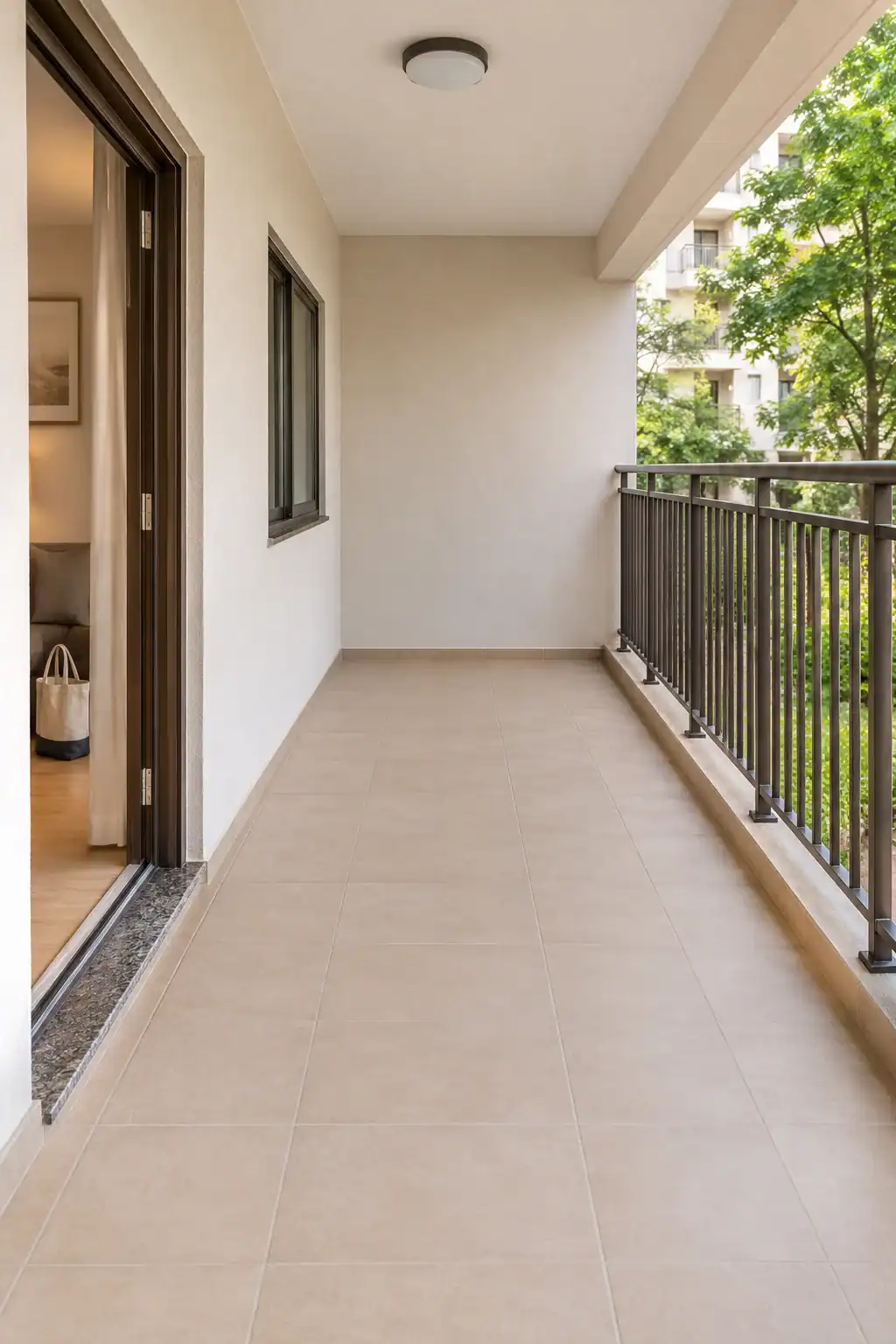
A balcony does not need permanent gym equipment to support a short movement break.
Keep a section of dry, secure footing completely clear for controlled standing movements, choosing footwear and movements that suit the surface and staying away from the edge.
After each session, let damp gear dry as its manufacturer directs before putting it away. Mat-care guidance also warns against prolonged sun exposure, so treat the setup as something you bring out to use rather than leave outdoors.