
A luxury home gym starts with the way you want to use the room, then brings in the finishes you enjoy elsewhere at home. Thoughtful lighting, fitted storage, and a clear equipment layout can make a workout space feel like a considered part of the house.
Treat these design illustrations as inspiration for finishes and layout. Before buying equipment, check its model-specific space requirements, and have qualified professionals assess any structural changes, heavy mirrors, or electrical work.
Affiliate disclosure: As an Amazon Associate, I earn from qualifying purchases.
1. Warm Walnut Training Studio
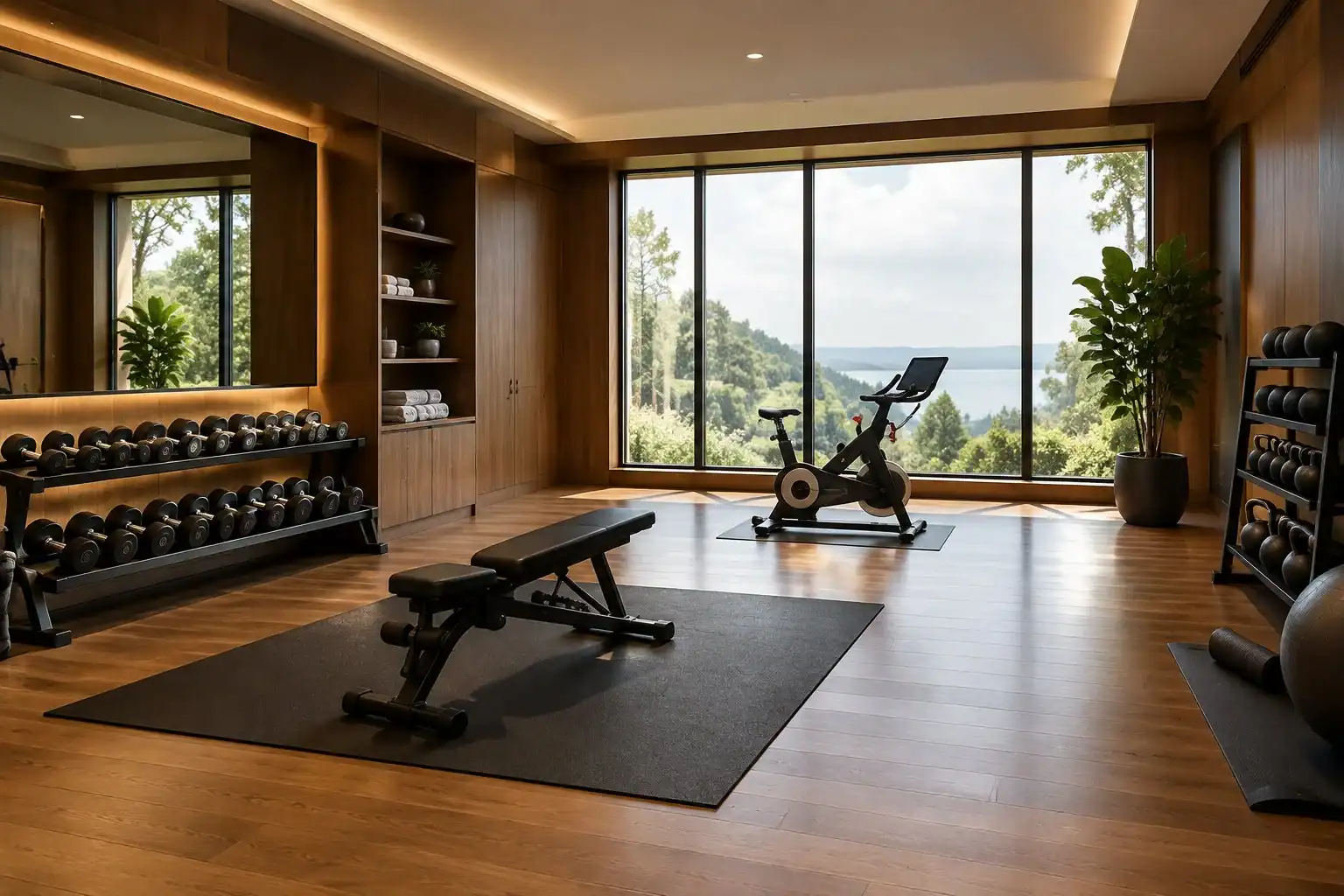
Warm walnut paneling gives your training room the feel of a tailored den, especially when you pair it with black metal equipment and soft, layered lighting.
Keep the wood on the walls and choose rubber or another suitable gym floor beneath equipment, with a clear route between stations.
2. Black-and-Brass Strength Room
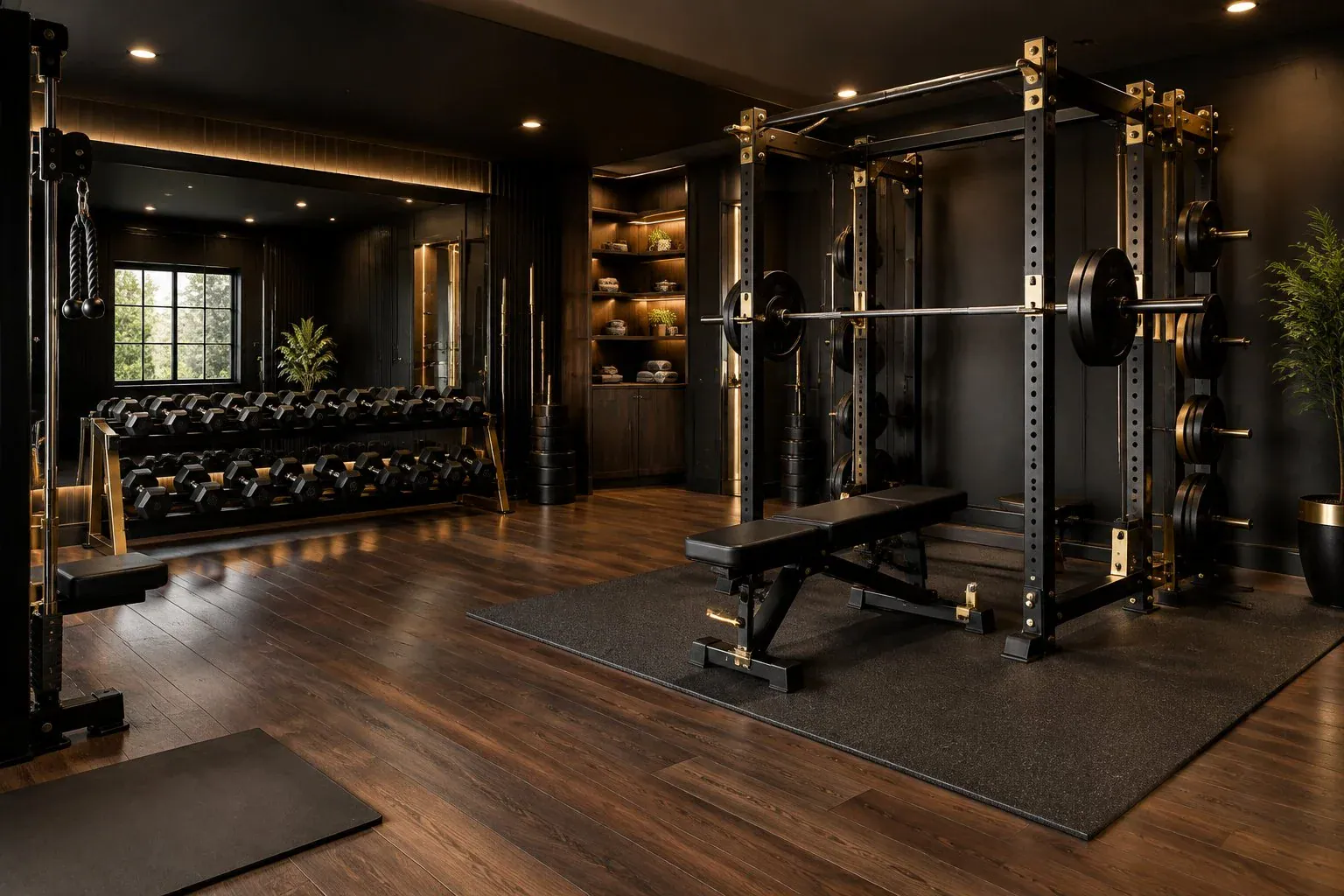
A black strength setup with restrained brass details creates a crisp, tailored look for your home gym.
Use brass on cabinet pulls or a ceiling fixture, and keep the rack and weights on purpose-made training flooring; check equipment manuals for clearances before arranging the bench and storage.
3. Glass-Walled Garden-View Gym
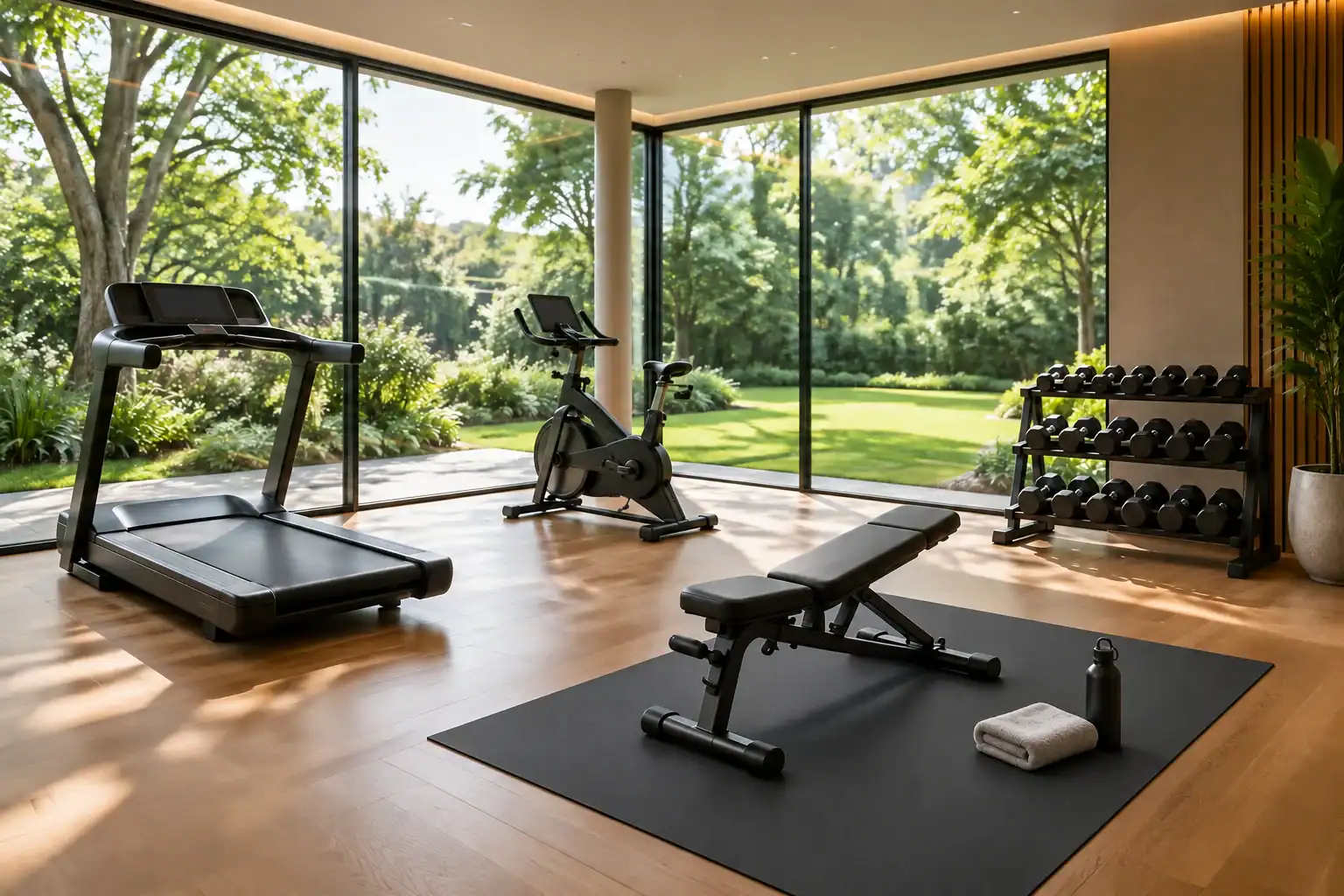
Set your equipment back from the glass so you can enjoy garden views while keeping a clear buffer around the glazing.
A low-profile rubber floor and simple window treatments preserve the airy feel, while mirrors on an interior wall give you a reflective surface without competing with the view.
4. Boutique Pilates Studio
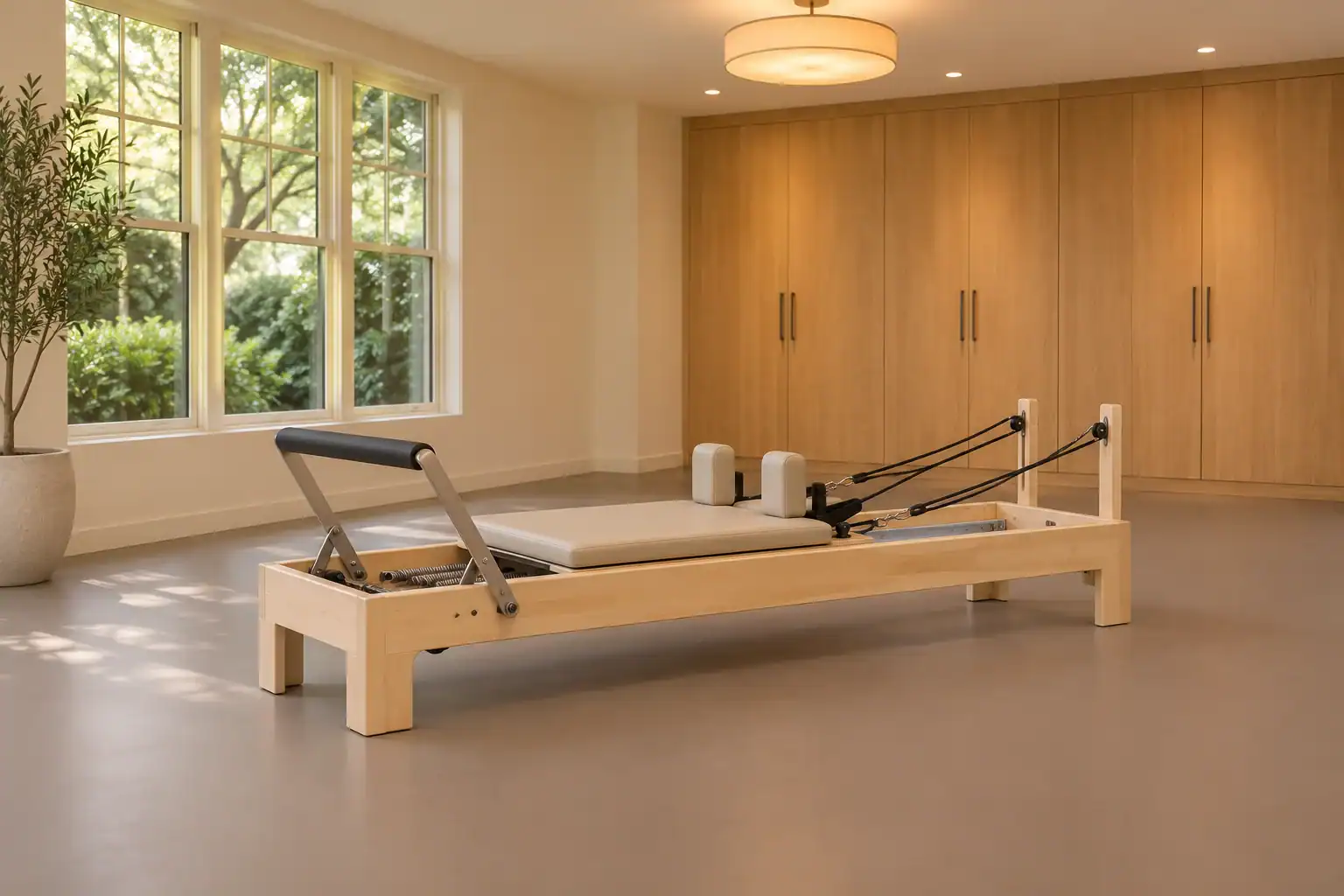
Give your Pilates room a boutique-studio mood with pale walls, a reformer as the focal point, and accessories stored neatly within reach.
Plan the machine’s full footprint and operating clearance from its manual, then use a smooth, resilient floor and closed storage for small props.
5. Spa-Inspired Yoga Space
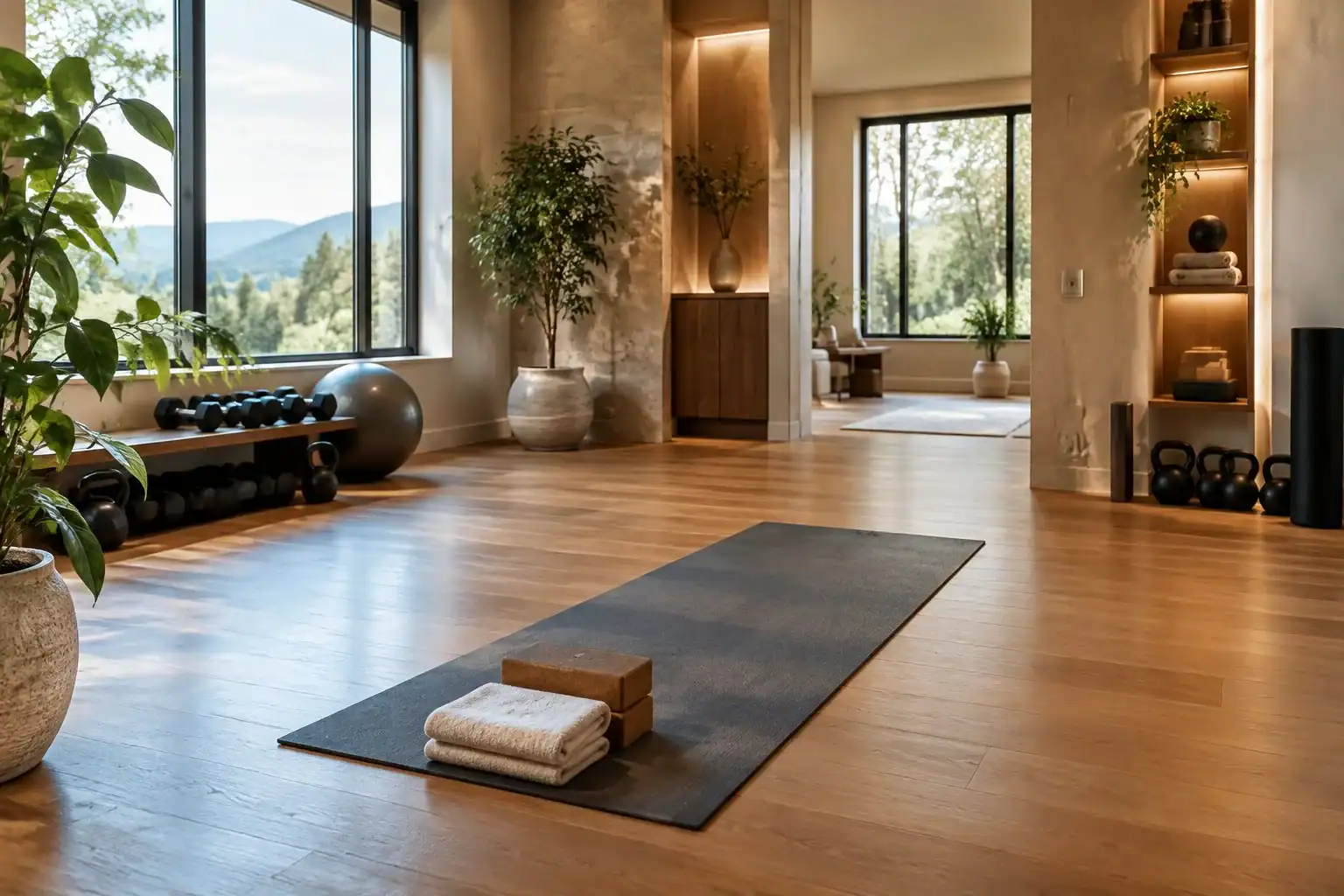
Warm neutral paint, soft indirect lighting, and a simple place to store mats and blocks give a yoga room a spa-like feel.
Keep the practice area open and let a textured wall or a leafy view provide the decoration, rather than placing fragile objects beside your mat.
The Manduka mat below is for yoga, not for supporting heavy machines; follow its care and break-in guidance, including towel advice if you find the surface slippery.
6. Skylit Attic Gym
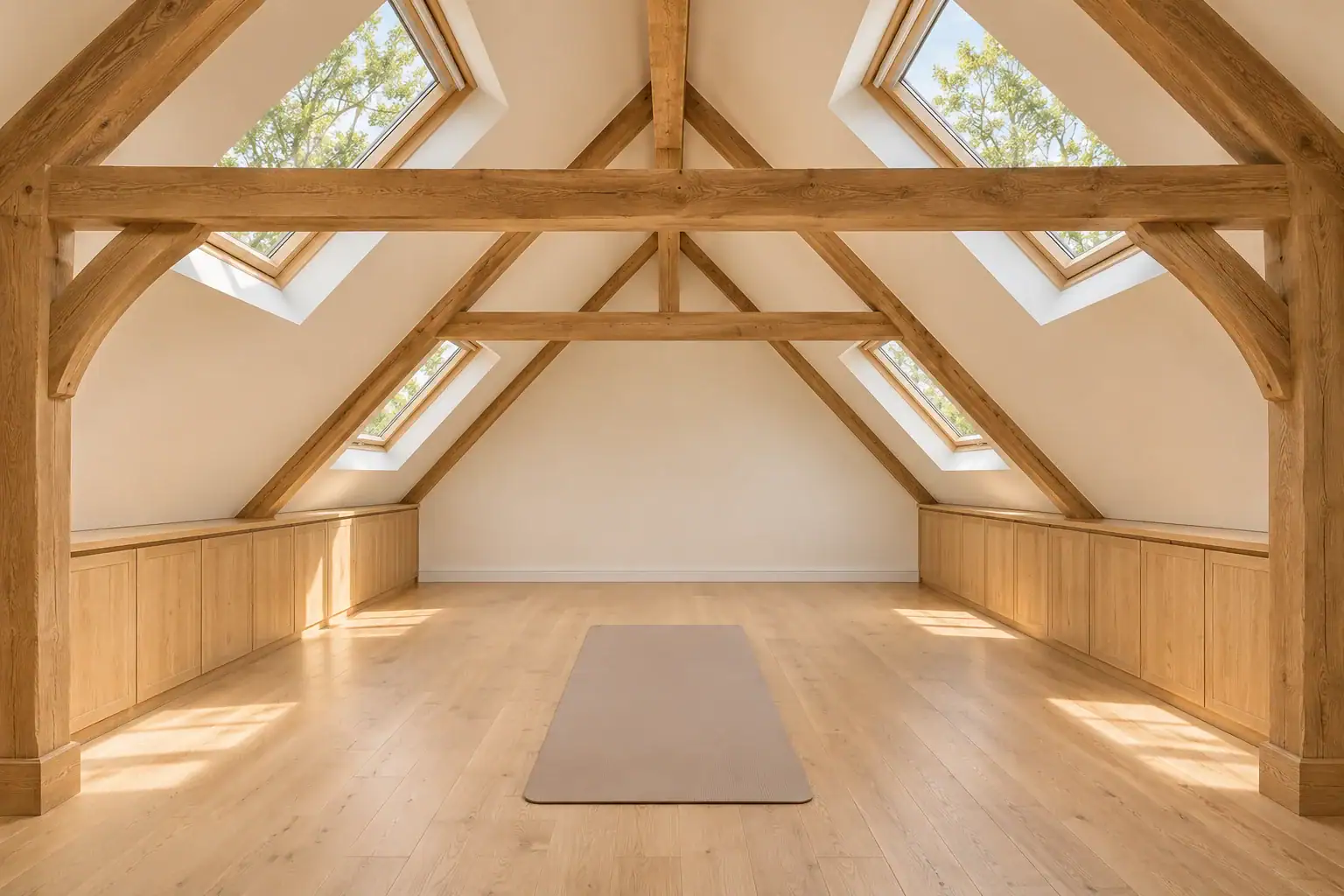
Skylights and exposed beams give an attic exercise room its own character, with low storage tucked beneath the eaves and an open mat area under the highest part of the roof.
Have the structure, ventilation, access, and usable headroom assessed before converting the space; a room that fits a yoga mat may still be unsuitable for a treadmill or overhead movements.
7. Sophisticated Basement Studio
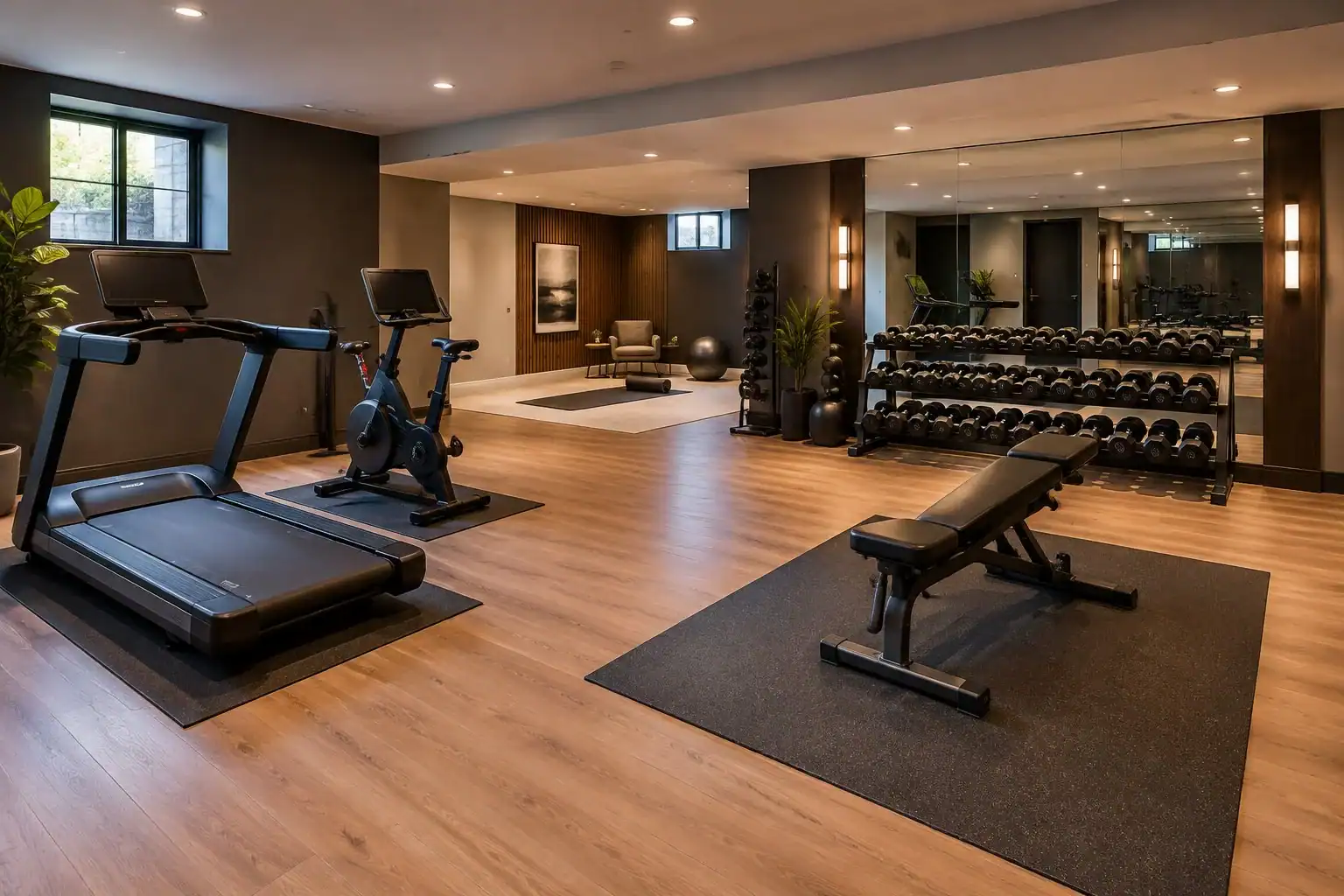
Deep paint, warm wood accents, and even lighting help a basement gym feel finished rather than makeshift. Address moisture problems before fitting it out, then plan ventilation and lighting with qualified professionals and keep the training area clear.
8. Light Oak Scandinavian Gym
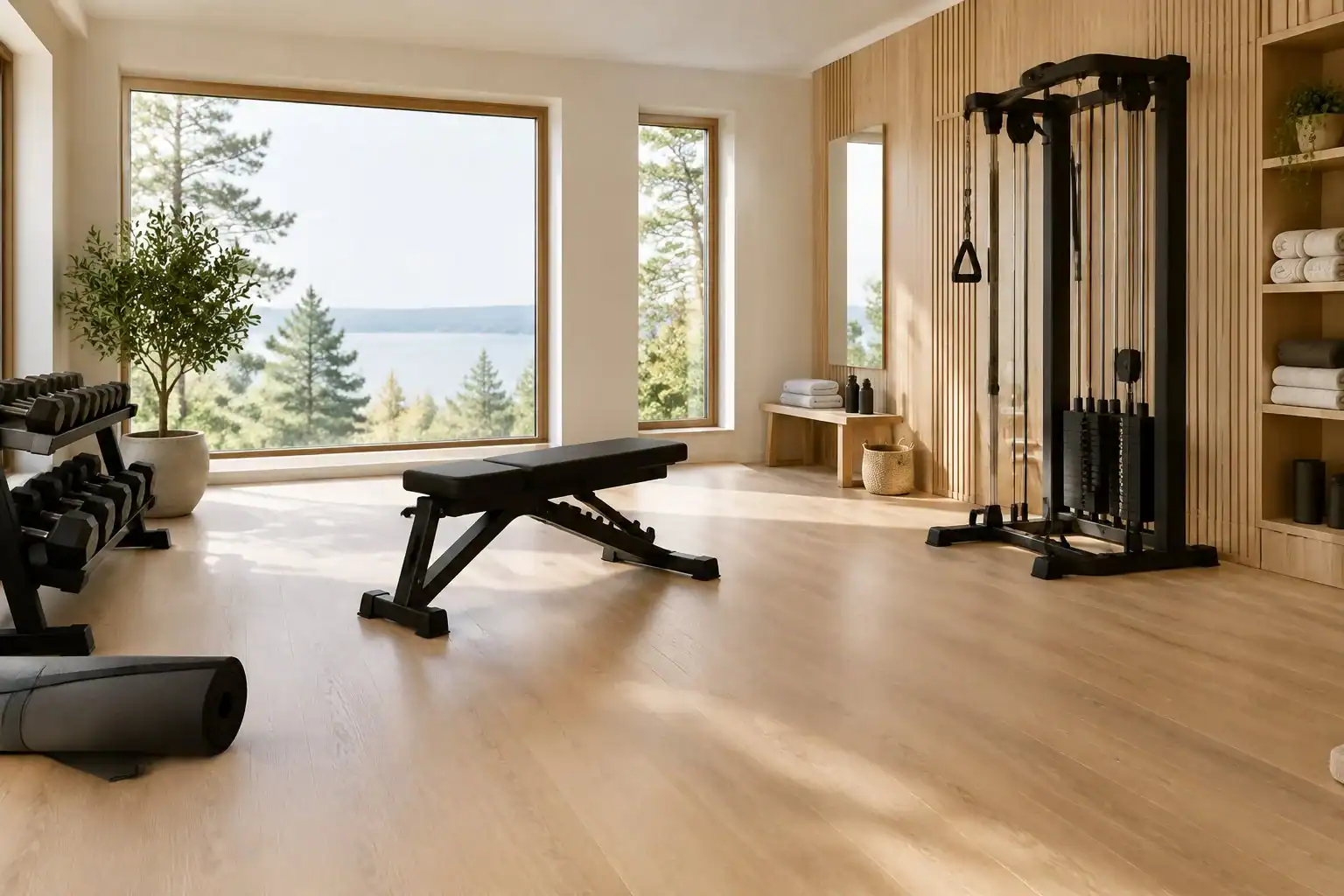
Light oak, white walls, and uncluttered storage create a Scandinavian look that keeps your gym feeling bright. Bring the oak into cabinetry or a wall detail, then use a durable training surface beneath equipment and keep plants clear of workout paths.
9. Restrained Marble-Look Accent Wall
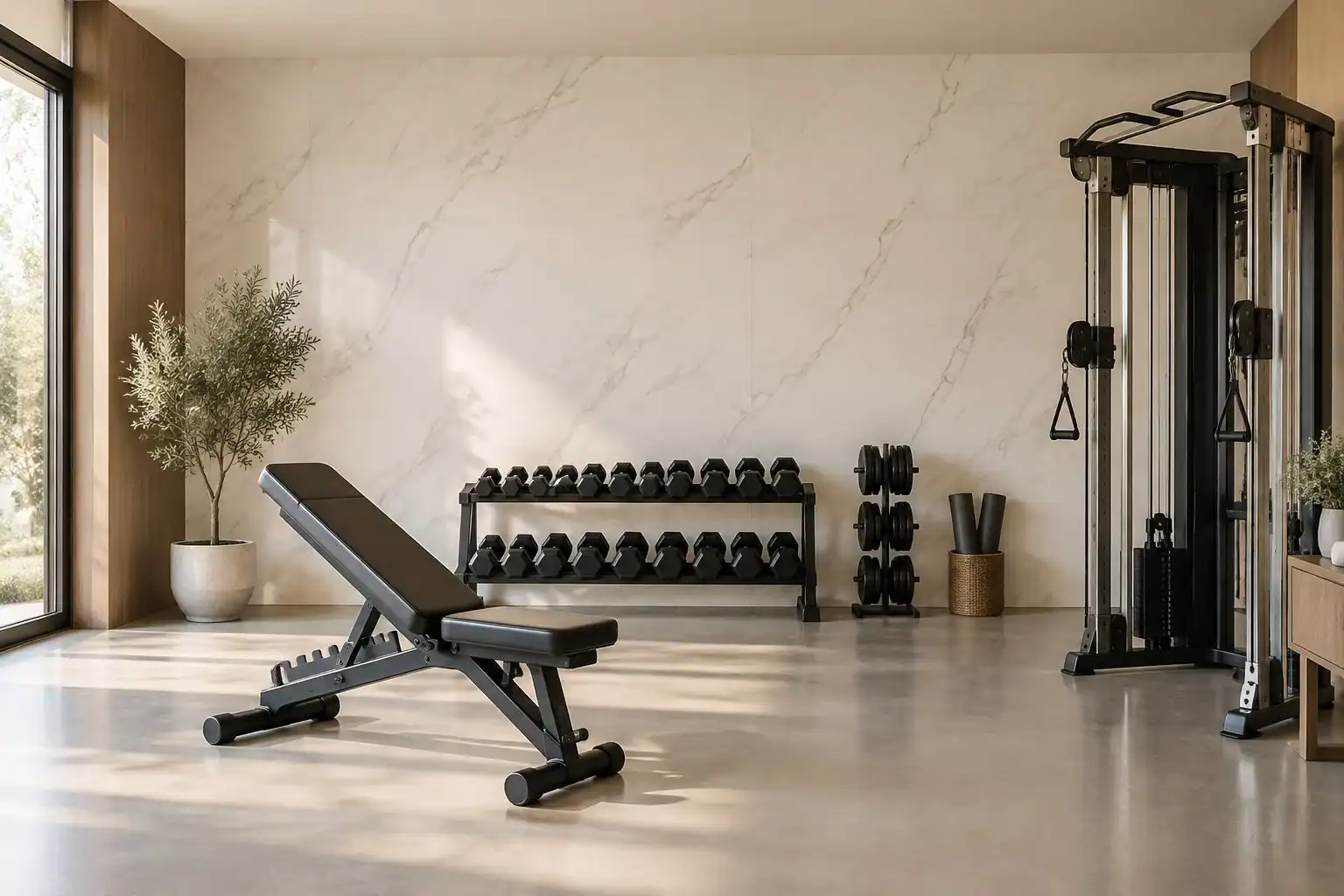
A marble-look accent wall adds polish when you limit the pattern to one surface behind the main equipment.
Choose a durable wall finish and let rubber or another gym-appropriate material cover the floor, with equipment positioned to preserve the clearances listed in its manual.
10. Sculptural Architectural Lighting
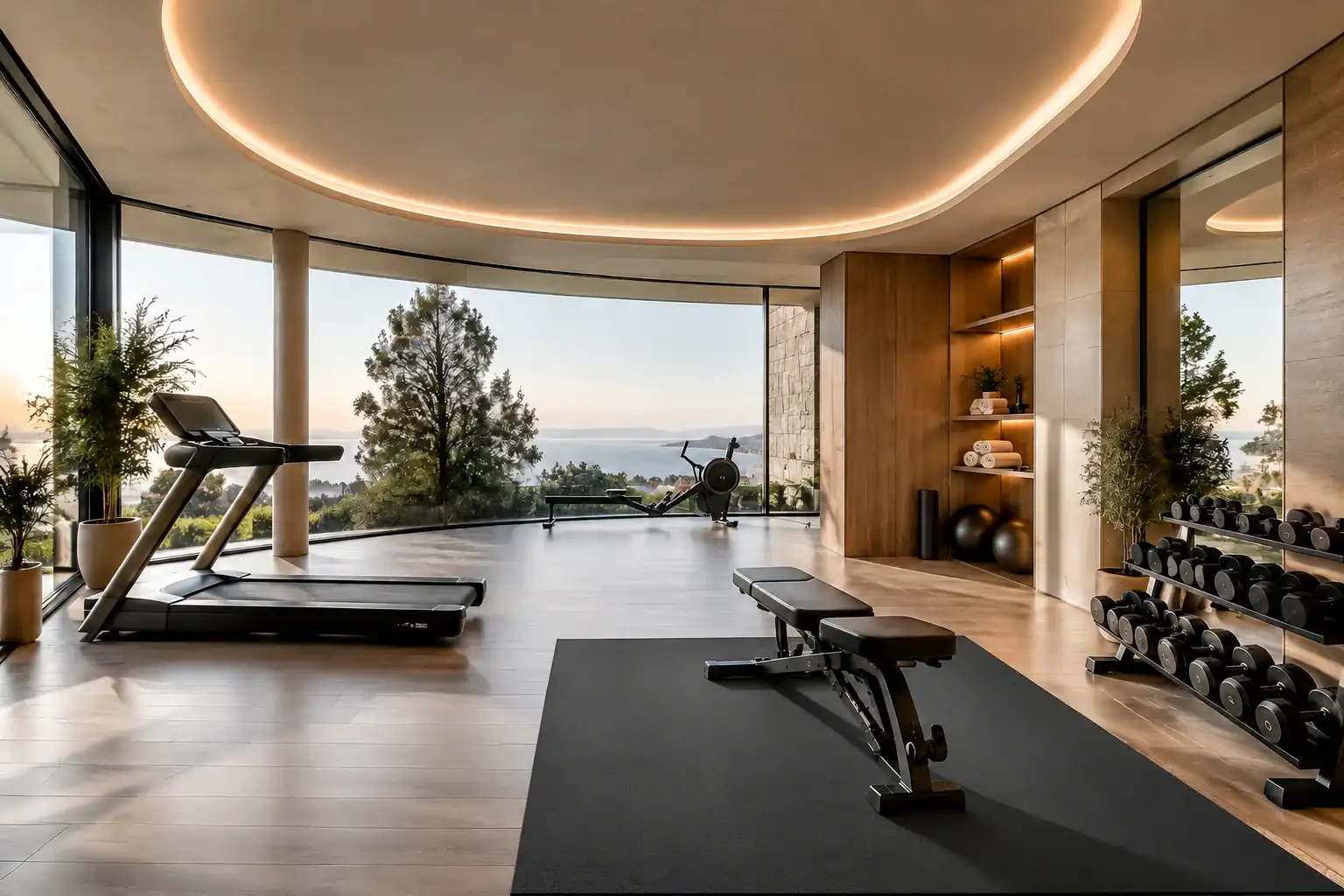
A sculptural ceiling detail or an illuminated cove gives your gym a focal point without filling the floor with decoration.
Position lighting outside equipment and movement zones, and use appropriate qualified installers for ceiling support and wiring.
11. Built-In Concealed Equipment Storage
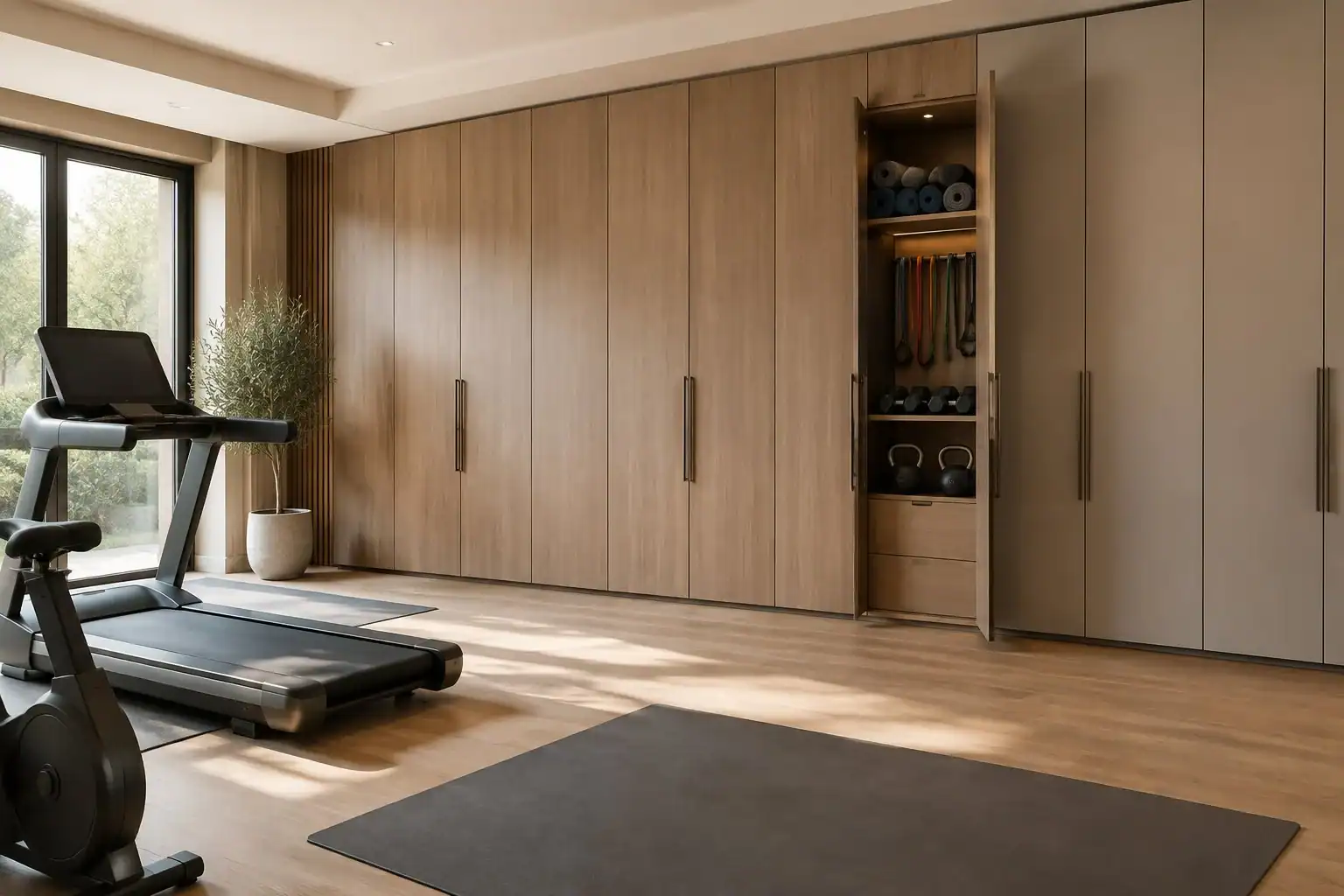
Floor-to-ceiling cabinetry gives your gym a calm, orderly look by keeping smaller equipment out of sight.
Choose shelves and drawers rated for their contents, leave room to open doors without blocking exercise areas, and have heavy cabinetry secured appropriately.
12. Dual-Zone Cardio and Strength Room
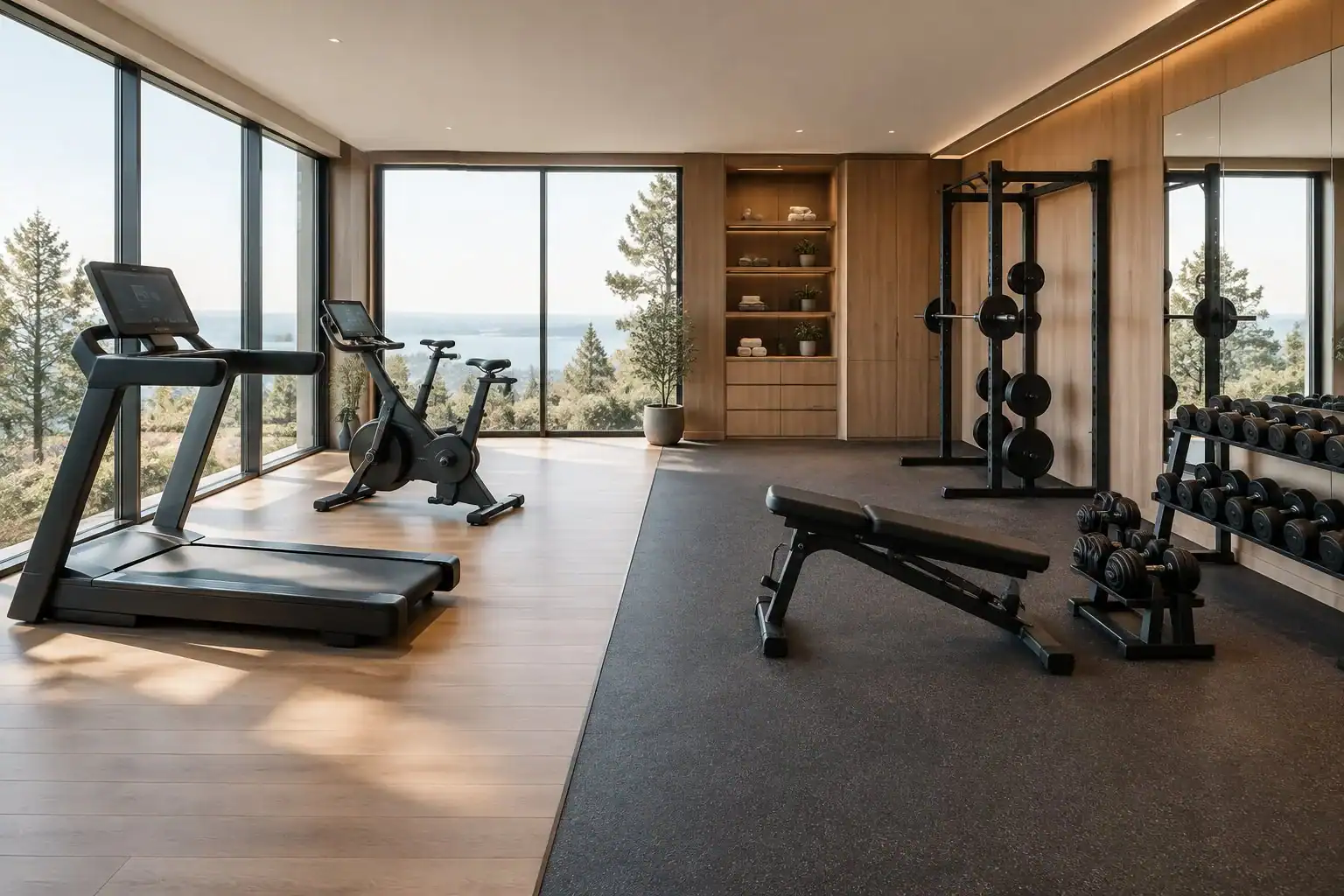
A dual-zone layout makes a larger gym easier to navigate by grouping cardio machines on one side and strength equipment on the other.
Define both areas with consistent training flooring, leave a clear path between them, and use each machine’s manual to plan its required space.
13. Art-Gallery-Style Gym

Treat your gym like a small gallery with a focused collection of framed art on an interior wall.
Keep frames outside the equipment footprint and use secure professional installation for heavier pieces, with a simple flooring choice that lets the artwork stand out.
14. Indoor-Outdoor Garden Connection
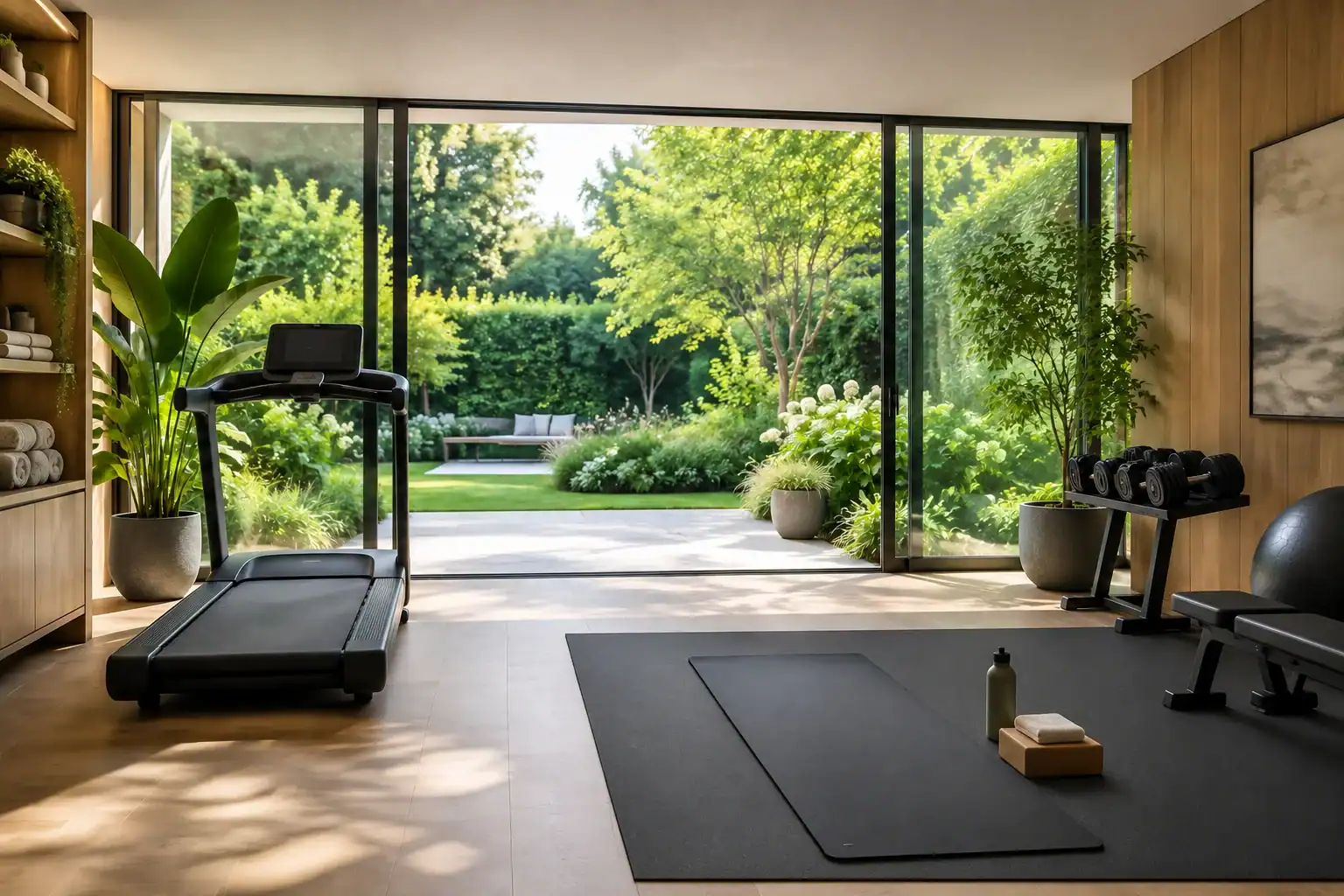
Wide glass doors connect your gym visually to the garden and bring daylight into the room.
Keep exercise equipment indoors unless its manufacturer permits outdoor use, preserve the door opening and operating clearances, and keep the threshold dry and free of clutter.
15. Rich Green Library-Inspired Gym
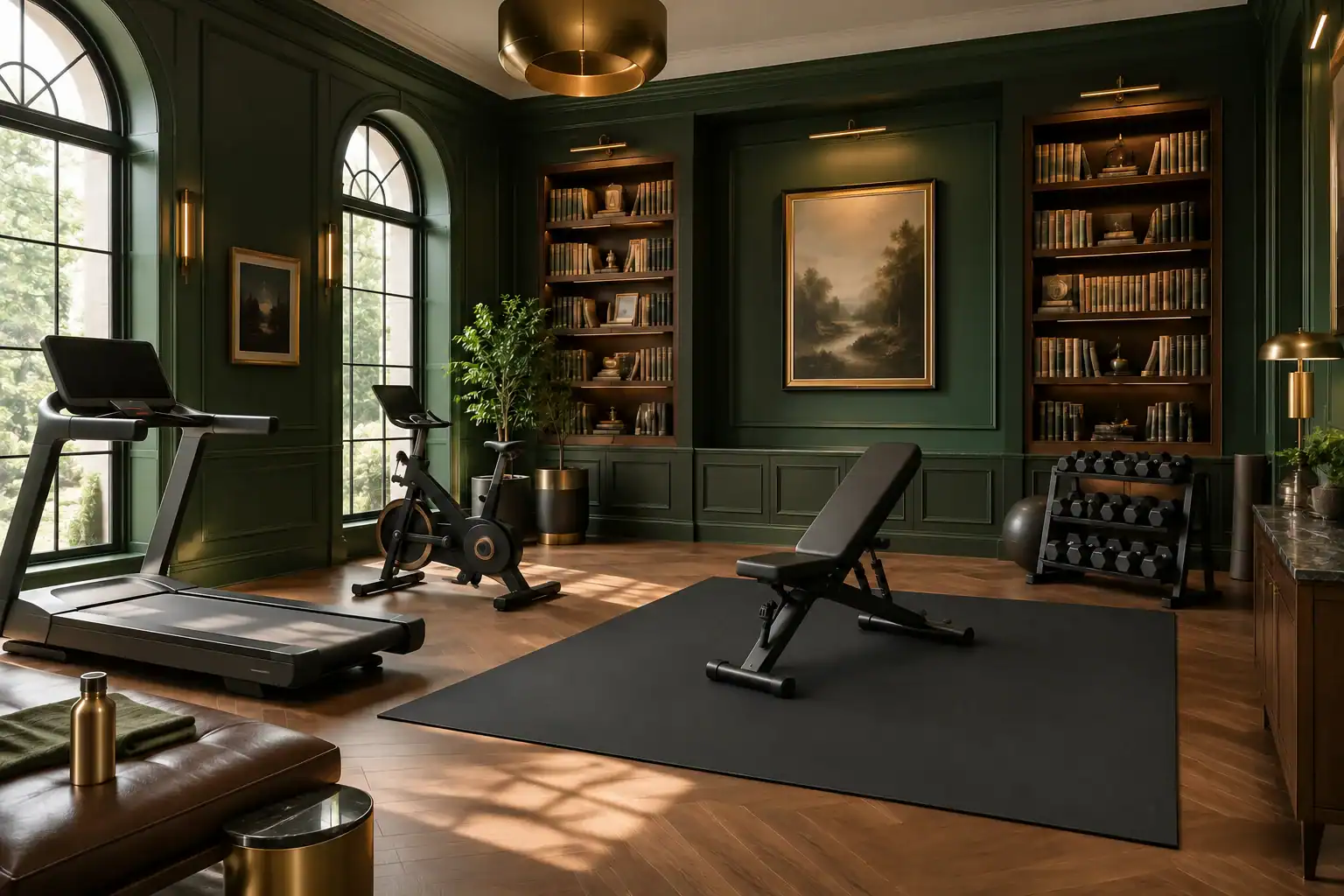
Rich green walls and built-in bookshelves give your gym the quiet character of a private library.
Place shelves along a wall away from active equipment, secure tall units properly, and use a dedicated training floor beneath weights and machines.
16. Industrial Loft Gym
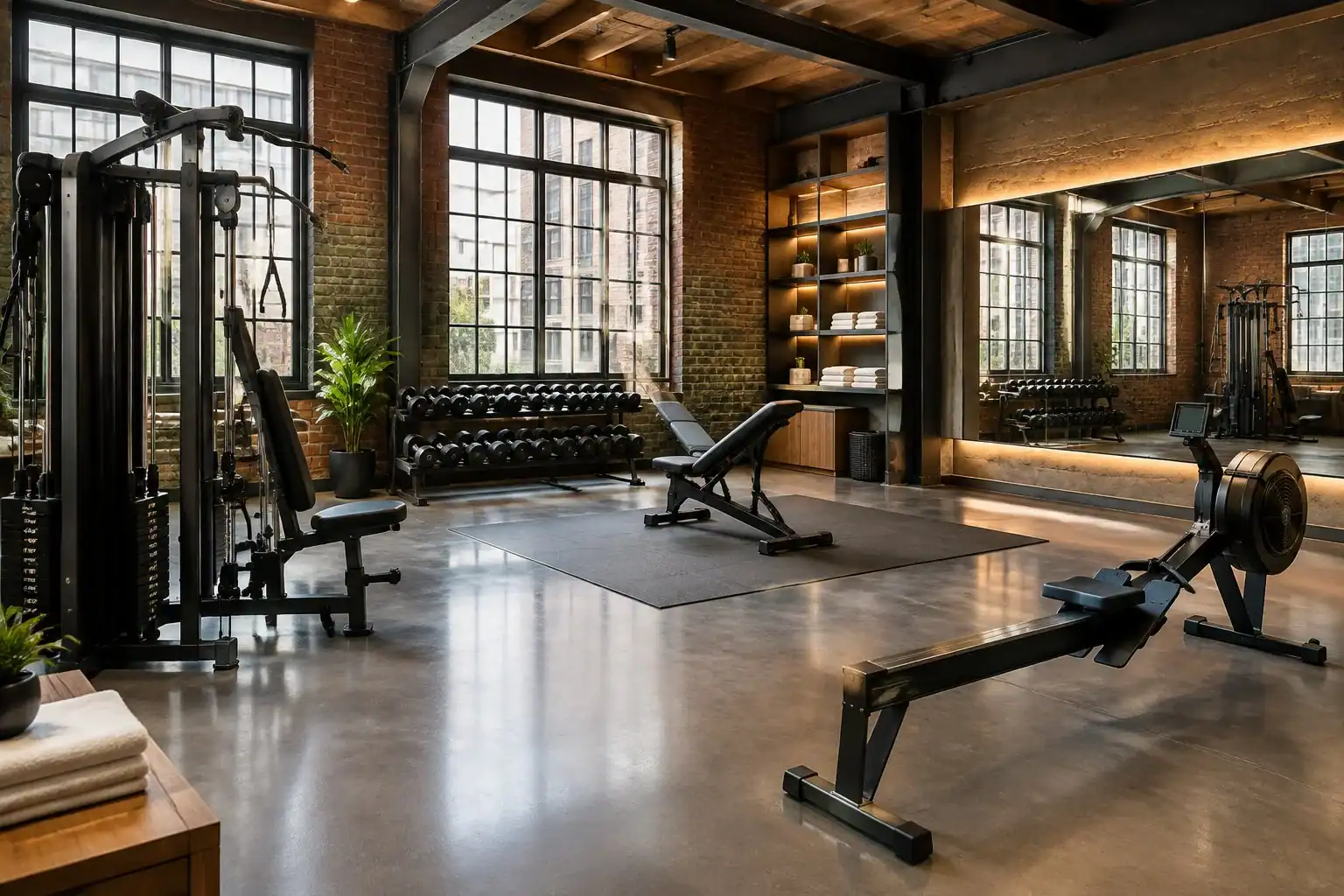
Exposed brick, steel details, and open volume give a loft gym an industrial character. Define the training area with durable gym flooring, keep cords routed safely along walls, and ask a qualified professional to assess any ceiling or wall-mounted fixtures.
17. Mediterranean Plaster Studio
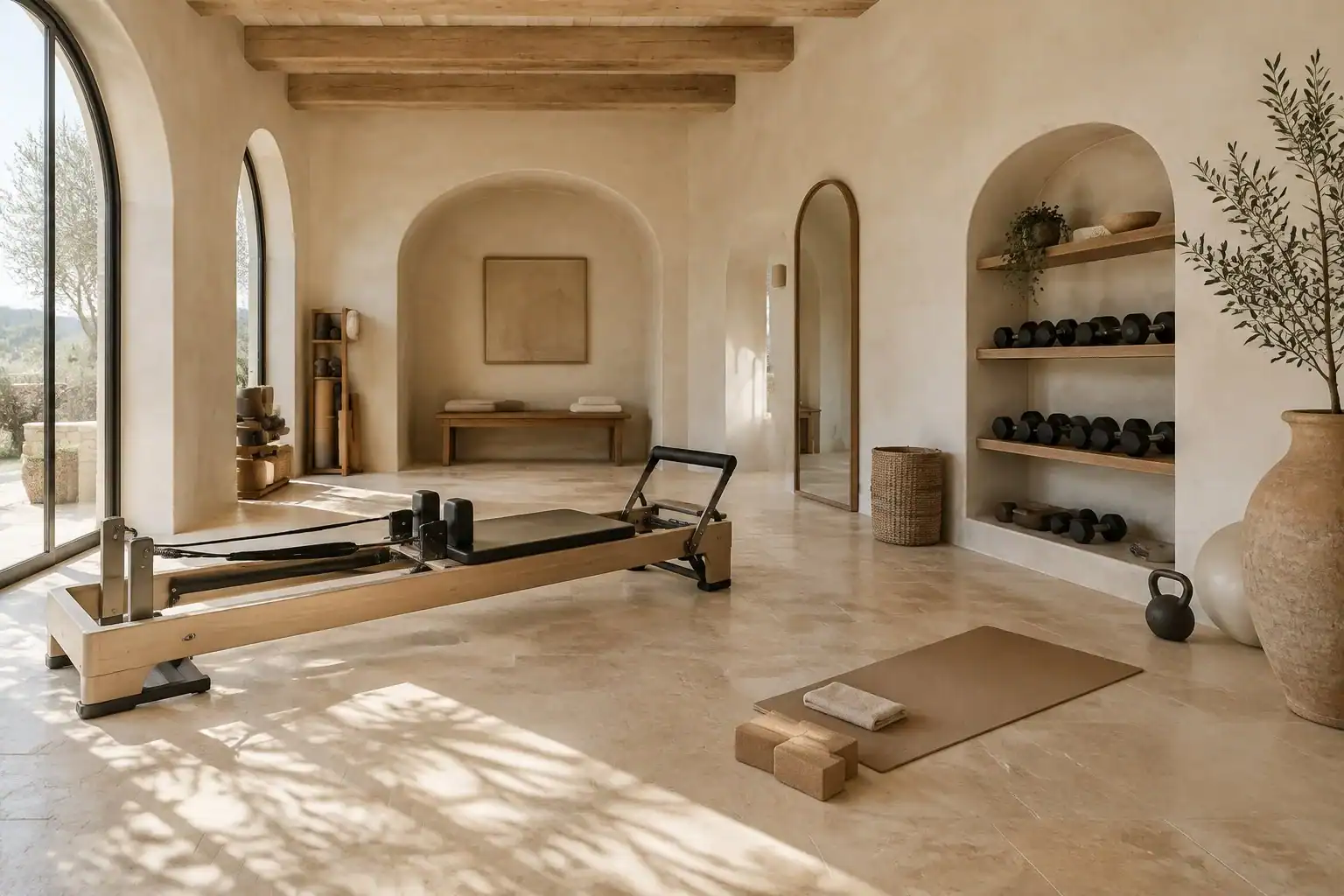
Soft plaster walls in warm cream or sand tones bring a Mediterranean feel to your workout room. Pair that finish with natural wood accents and a resilient floor beneath equipment, keeping the palette simple so the textured wall remains the main feature.
18. Luxury Compact Spare Room
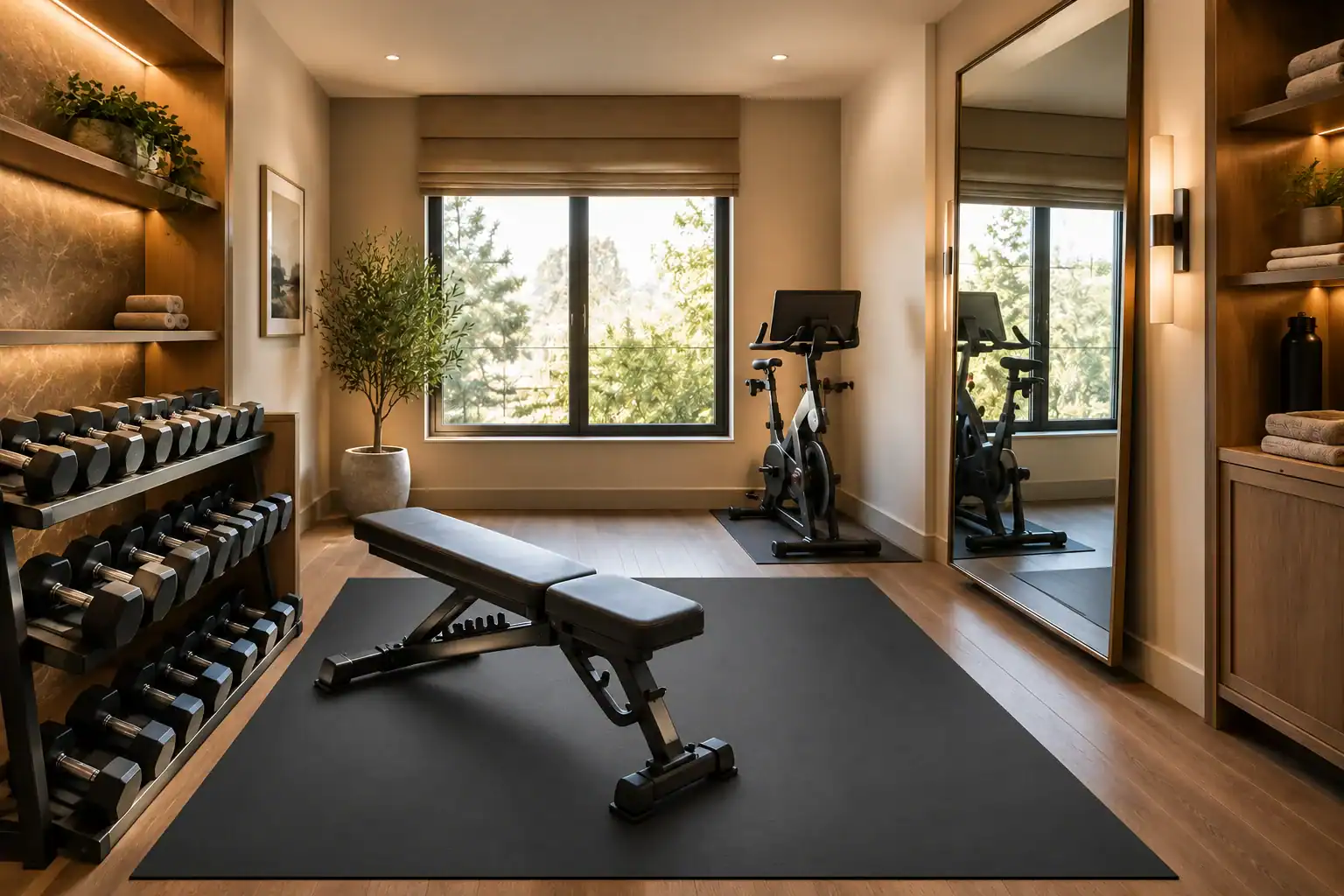
A compact spare room works as a polished gym when you choose equipment that fits its footprint and reserve one open zone for movement.
Use a wall mirror installed by a qualified professional, store small accessories in a cabinet, and follow equipment manuals for placement and clearance.
19. Family Fitness Studio
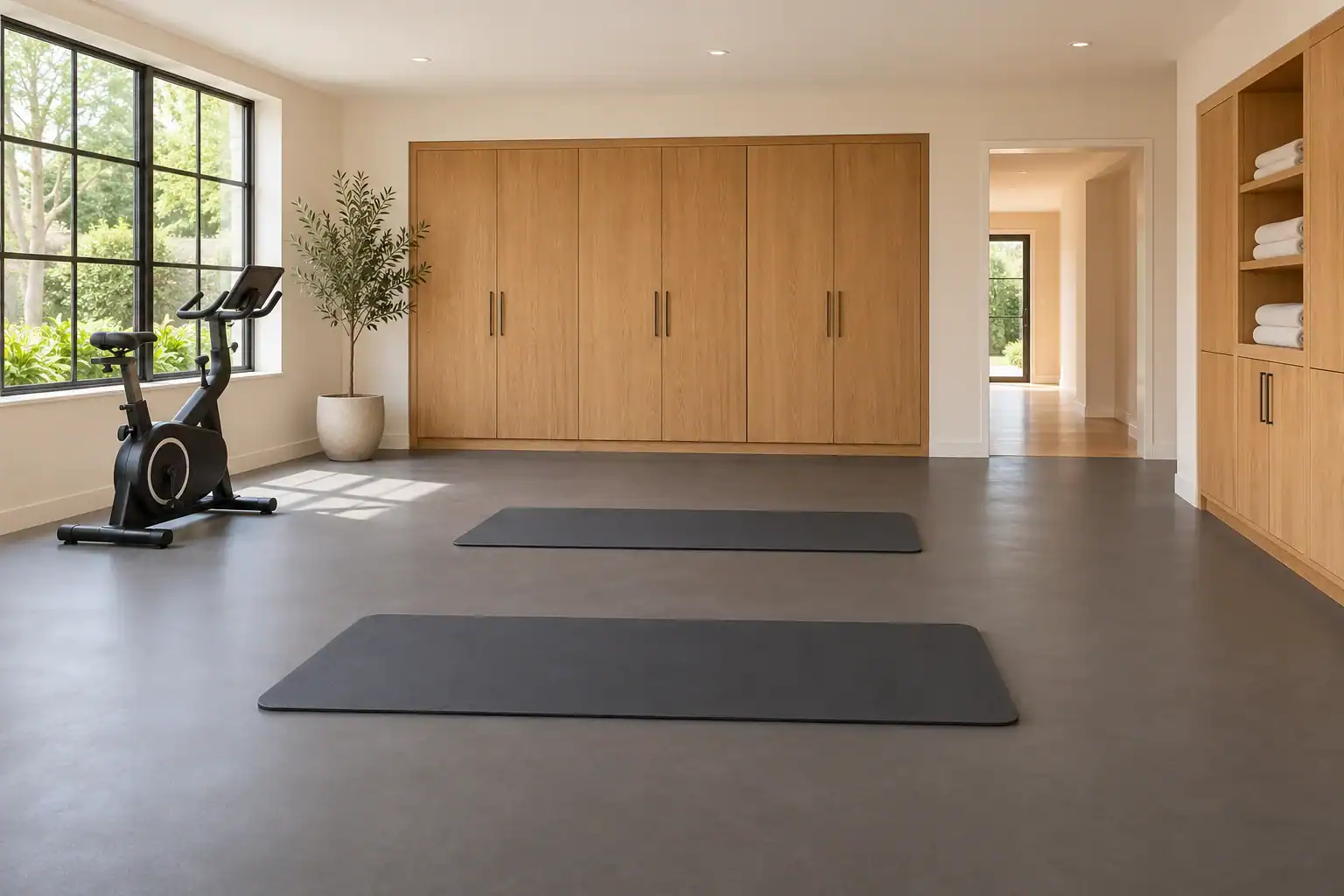
For adults sharing a home gym, a generous open center and separate storage for each person make the room easier to use in turns.
Keep children and pets away from operating equipment, and secure equipment and accessories between sessions according to their instructions.
20. Dedicated Recovery Lounge Beside the Training Space
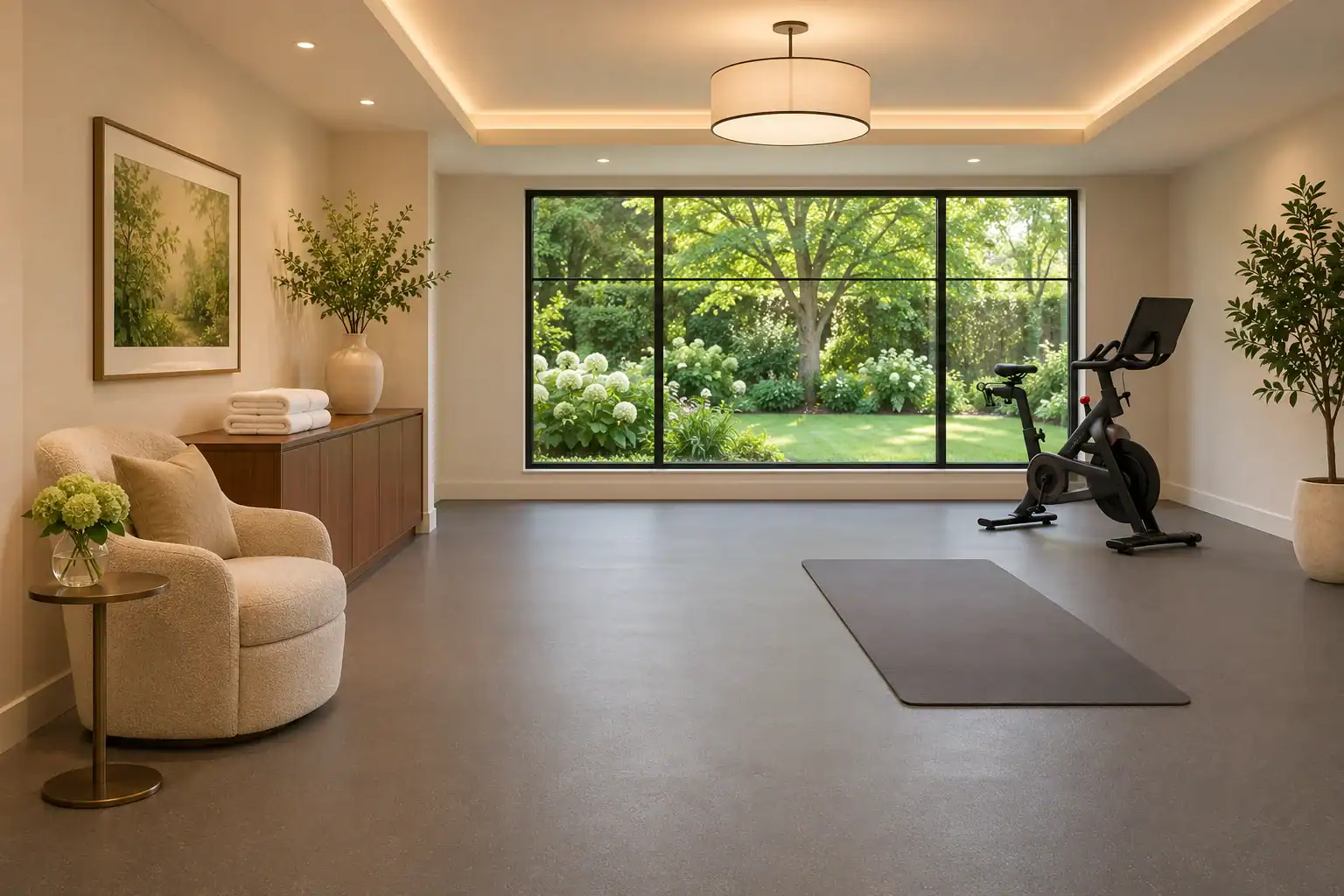
A separate lounge gives you a comfortable place to sit while keeping the training zone clear. Use an upholstered chair, a small side table, and storage for fresh towels, with a wide walkway between the seating and exercise areas.
A slim cart can hold light accessories against a wall beside the chair, but it should not serve as a weight rack or sit in an exercise path. The bottles and towels shown in its product photo are styling accessories.