
A bedroom gym corner works best when you can set it up quickly and still use the room comfortably.
Start with the space your routine needs, then choose storage that keeps your bed, closet, windows, and exits easy to reach. These ideas use portable gear, small furniture, and simple room zoning to make that balance easier.
Follow the manufacturer’s setup, mounting, and storage instructions for your equipment and furniture. The room scenes below are design illustrations, not tested installations.
Affiliate disclosure: As an Amazon Associate, I earn from qualifying purchases.
1. Bedside Mat-and-Basket Corner
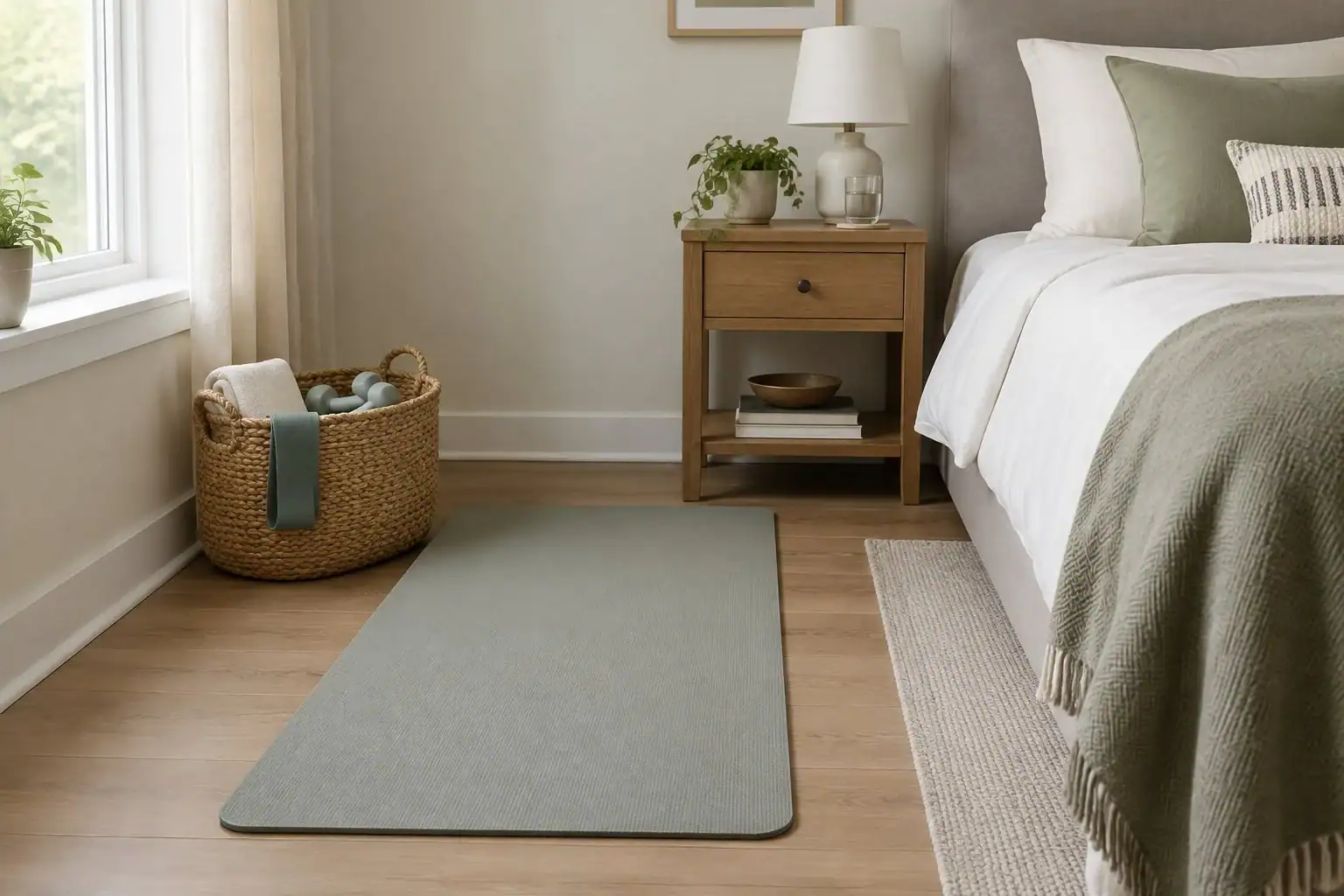
Keep a rolled mat beside your bed and tuck small workout props into a basket within easy reach. Choose a basket for towels, blocks, and resistance loops, and leave a clear walking strip between the kit and your bedside route.
2. Window-Side Stretch Zone with Low Storage
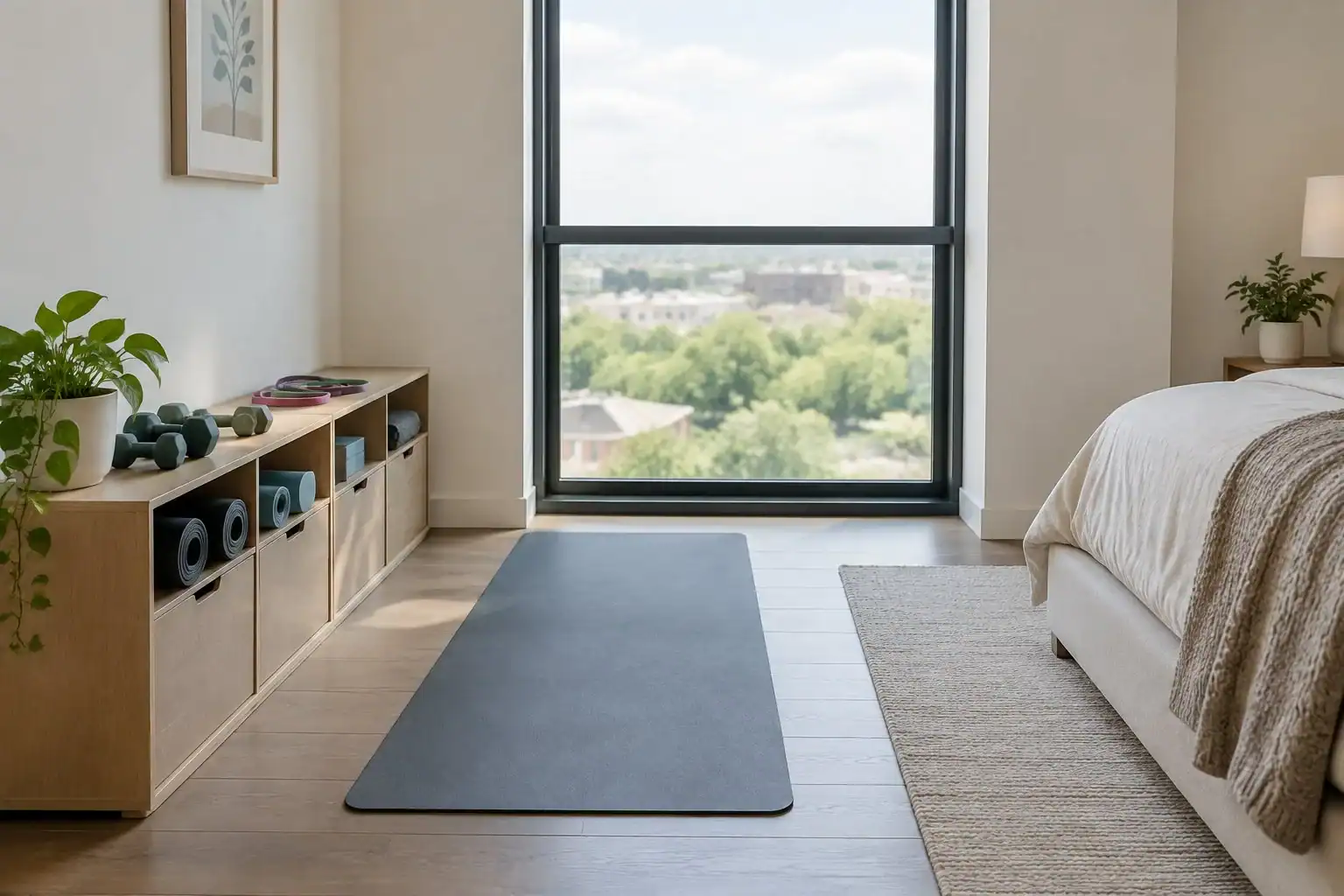
Low cubbies beside the window give rolled mats and props a home without filling the wall with tall furniture.
Set your mat in the open floor area nearby, keeping access to the window and its controls clear; store hand weights only on furniture rated for their load.
3. Closet-Side Folding-Mat Shelf
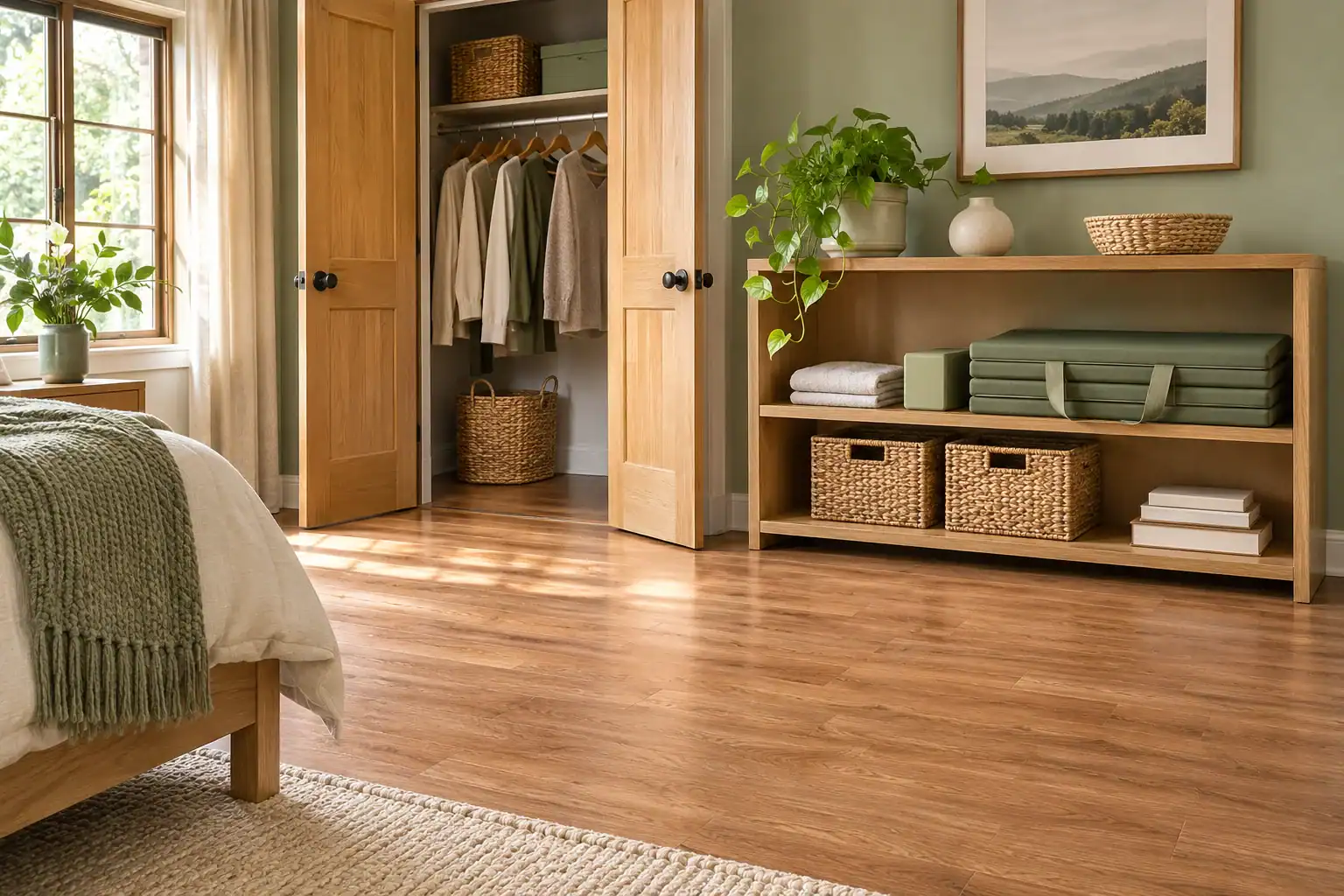
A portable folding exercise mat can sit flat on a shelf beside your closet, ready to carry onto a clear patch of floor. Measure its folded size before choosing the shelf, and keep the closet doors and drawers free to open fully.
4. Under-Bed Gear Bin and Clear Floor Space
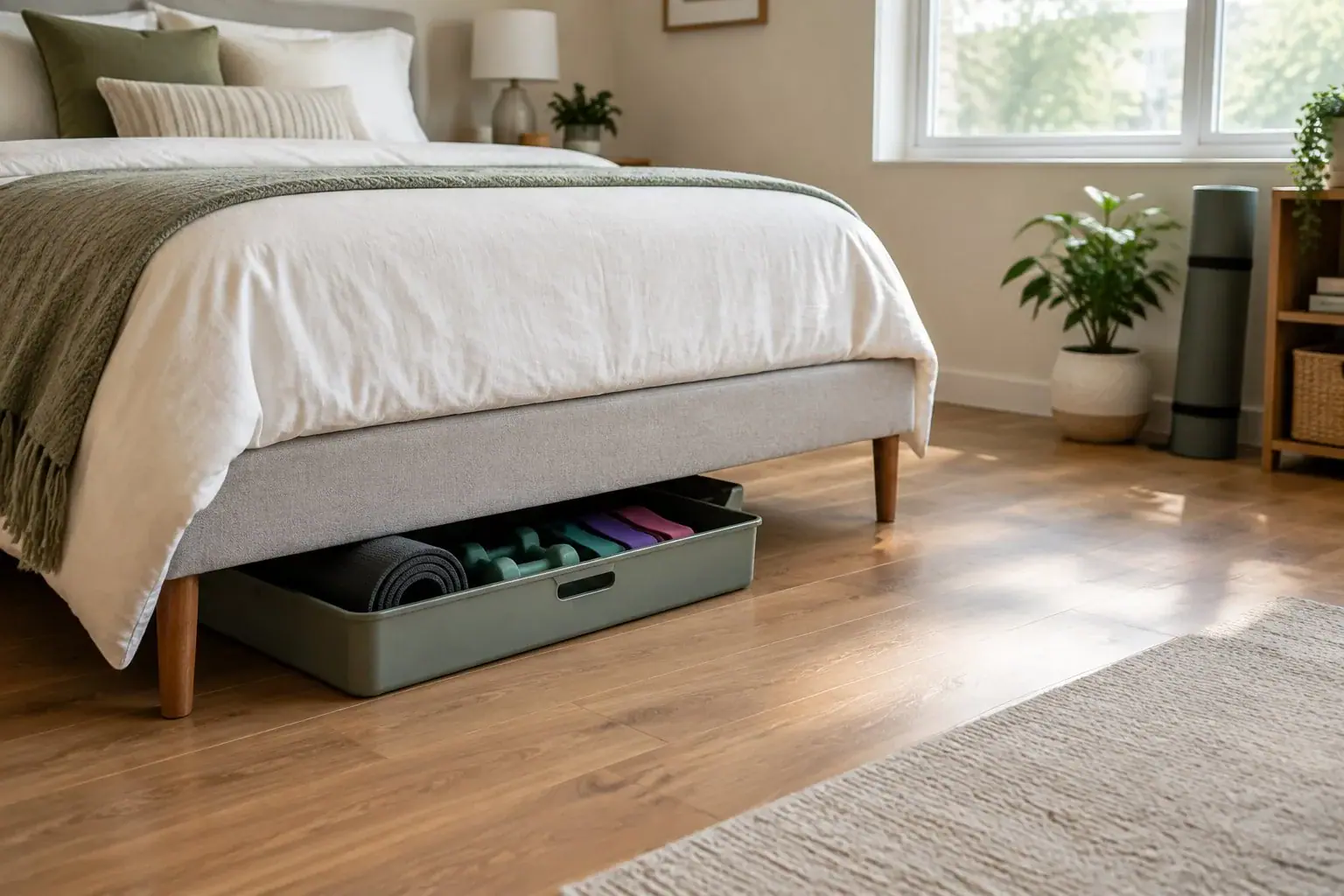
Use a shallow bin beneath your bed for bands, a towel, and other small gear, then keep the nearby floor open for your mat. Choose a container that slides fully under the frame so it does not crowd the walking path.
5. Open Bookcase as a Gentle Zone Divider
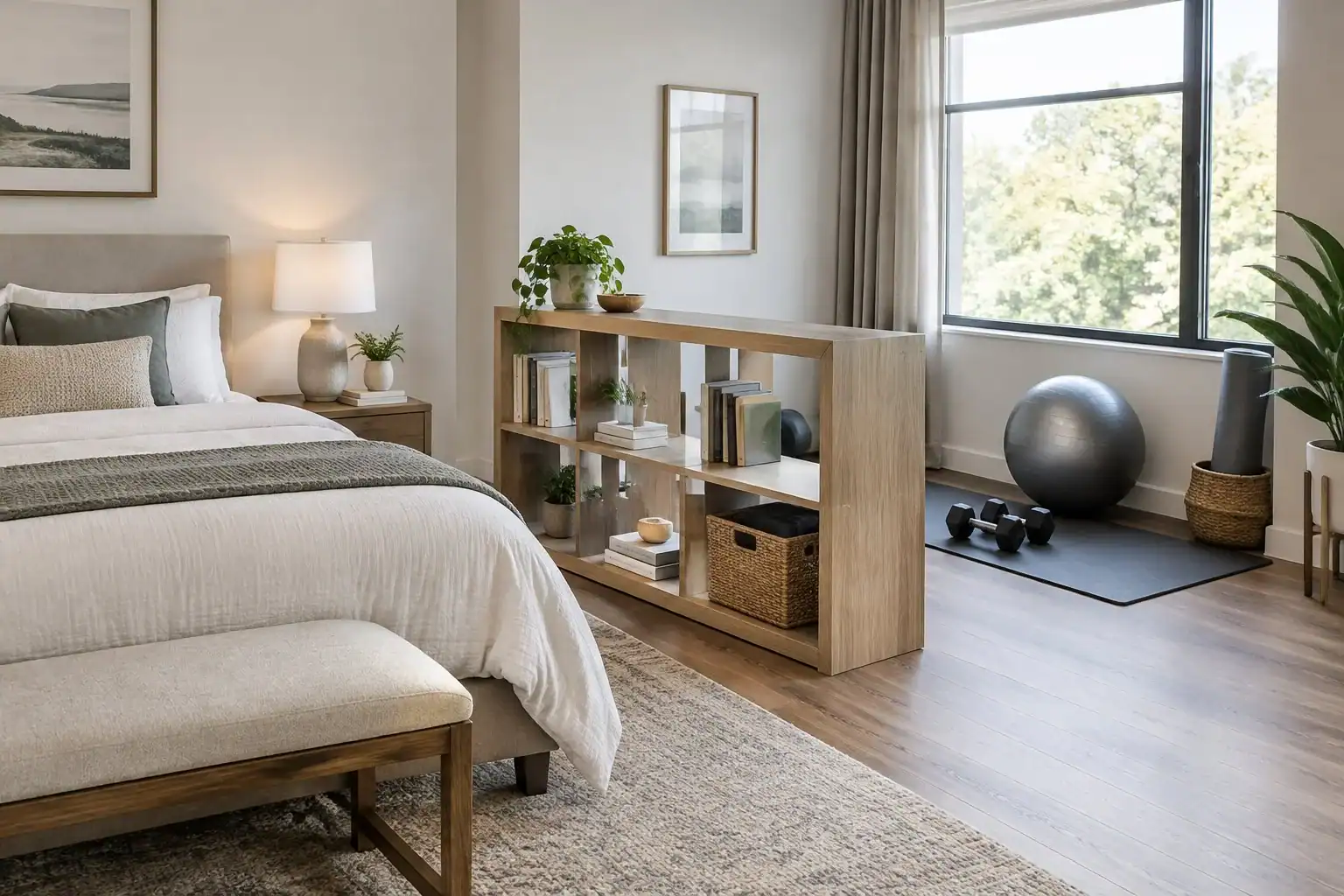
An open bookcase can mark the edge of a workout area while allowing light through its shelves. Choose a unit whose manufacturer permits your planned divider placement, follow its anchoring instructions, and keep the route around it clear.
6. Daybed-Side Yoga Nook
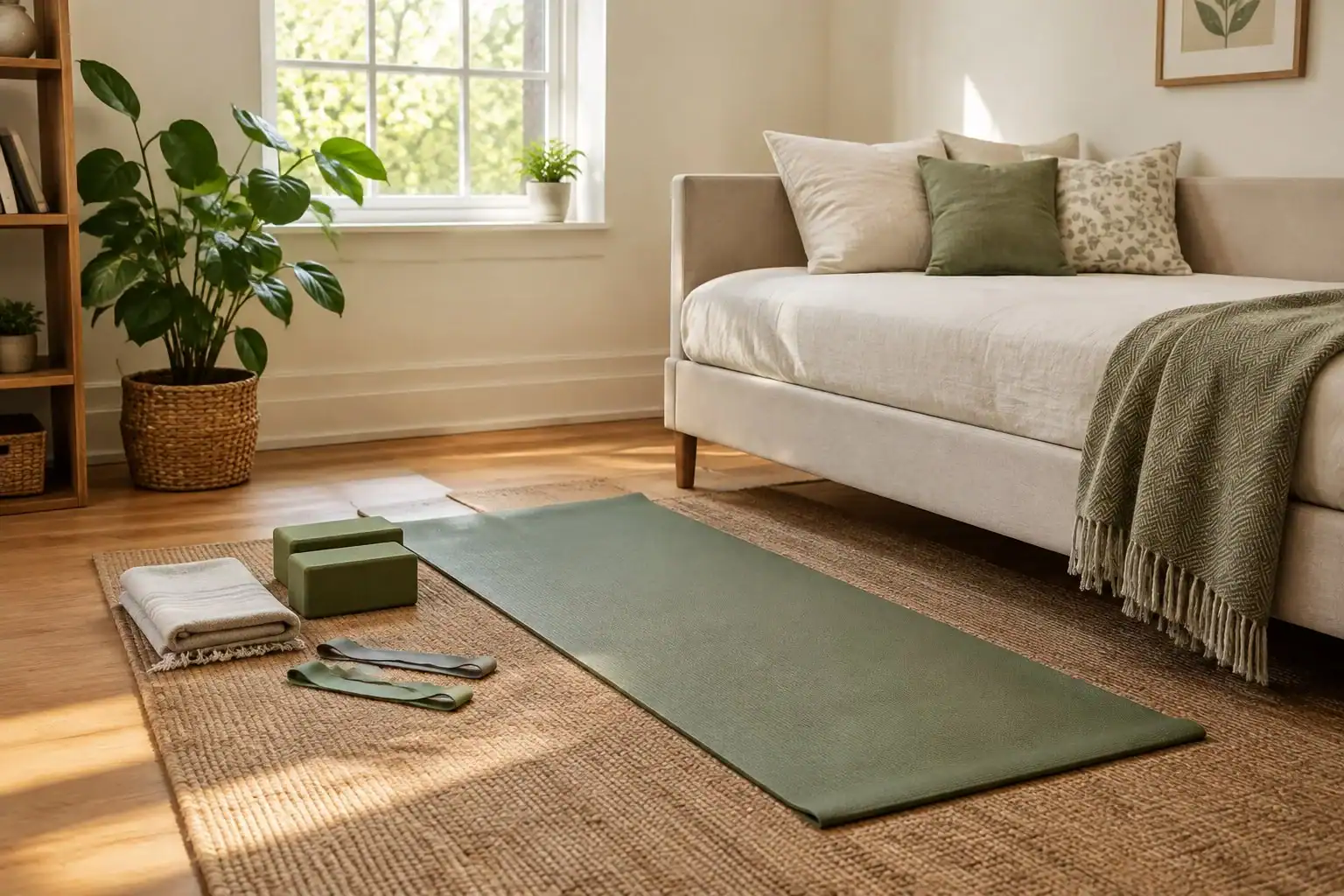
Place your mat along the open side of a daybed to turn a guest bedroom into a flexible yoga nook.
Keep blocks and a strap nearby, then put them away before pulling out a trundle or converting the bed; move loose rugs aside and use a surface suited to your mat before a session.
7. Foot-of-Bed Workout Zone
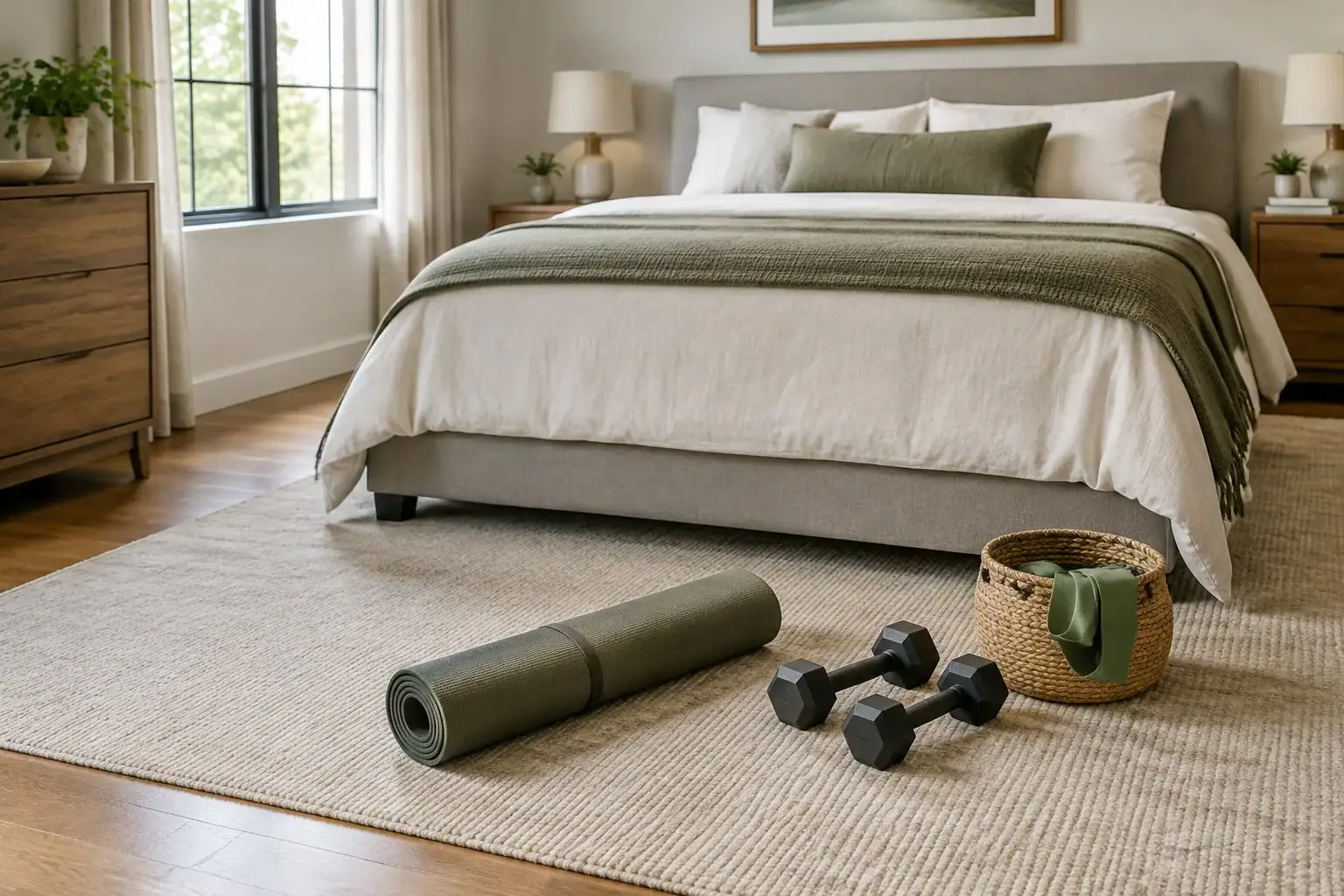
The open floor at the foot of your bed can become a temporary mat zone without rearranging the whole room.
Measure the space with the mat unrolled, keep a passage along one side of the bed, and return hand weights to low, stable storage after use.
8. Safely Installed Mirror and Mat Corner
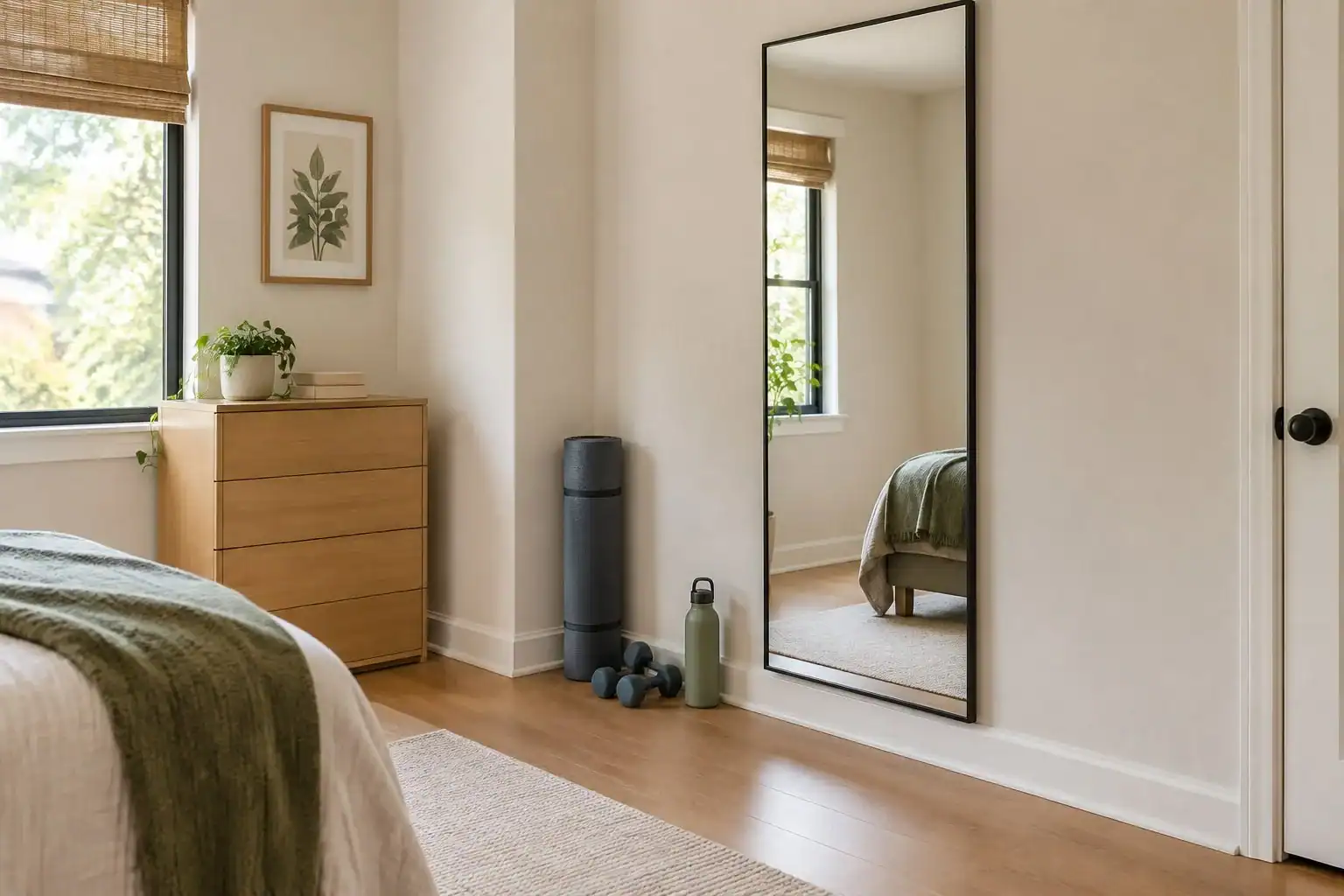
A wall-mounted full-length mirror lets one corner serve as both a dressing area and a workout spot. Follow the mirror maker’s mounting instructions for your wall type, and store your rolled mat beside it without blocking the door swing.
9. Chair-Assisted Stretching Spot
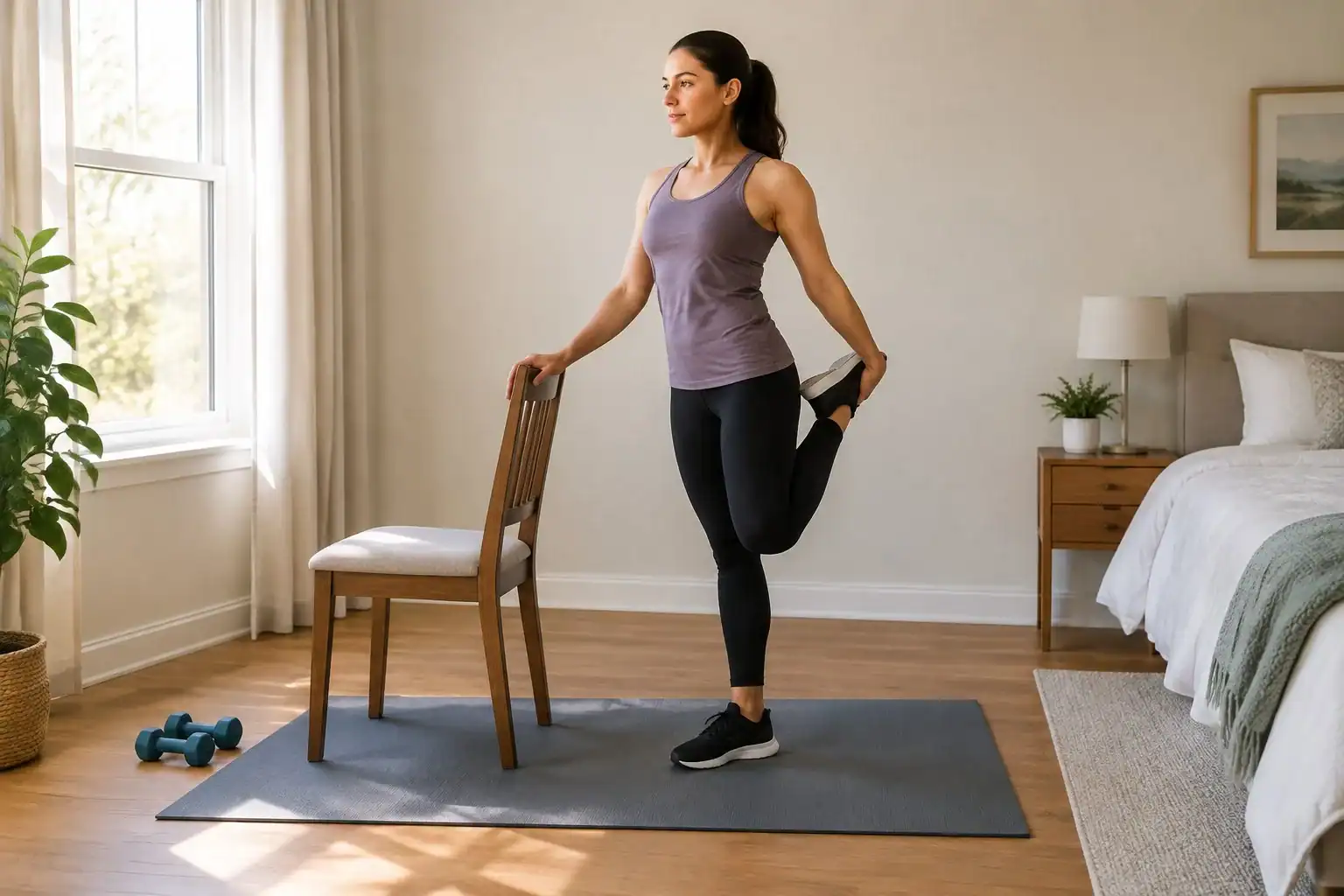
A firm, stable chair can share a corner with a mat when your usual routine includes chair-supported movement.
Choose a chair without wheels, place it on an even nonslip surface, and leave enough room around it for the movements you actually plan to do.
10. Slim Rolling Cart for Workout Props
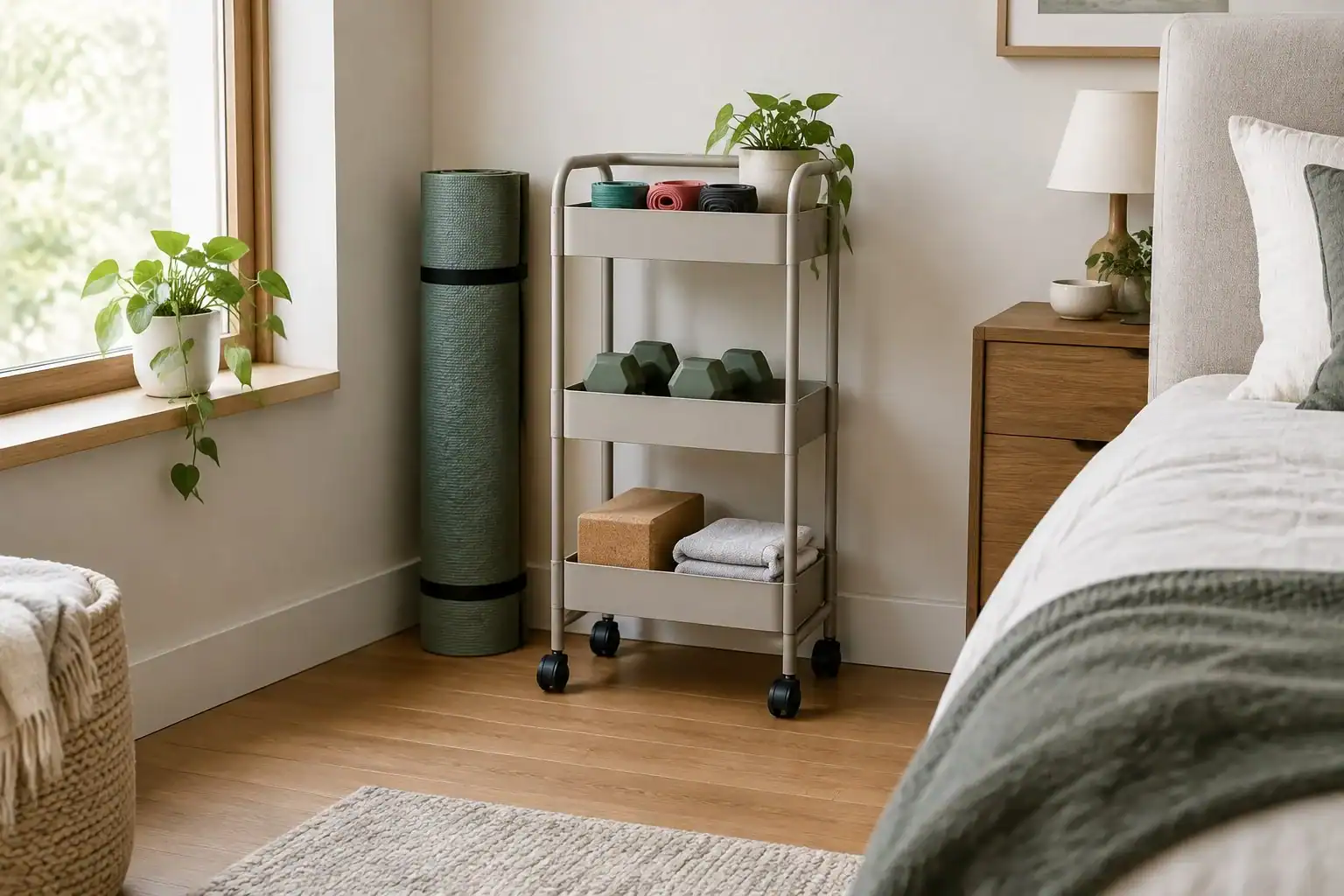
A narrow rolling cart keeps towels, straps, and other lightweight accessories together, then moves out of the way when you need the floor.
Park it against a wall clear of closet doors, and do not treat a utility cart as a weight rack unless its manufacturer specifically rates it for that use.
11. Storage Bench Beside the Workout Area
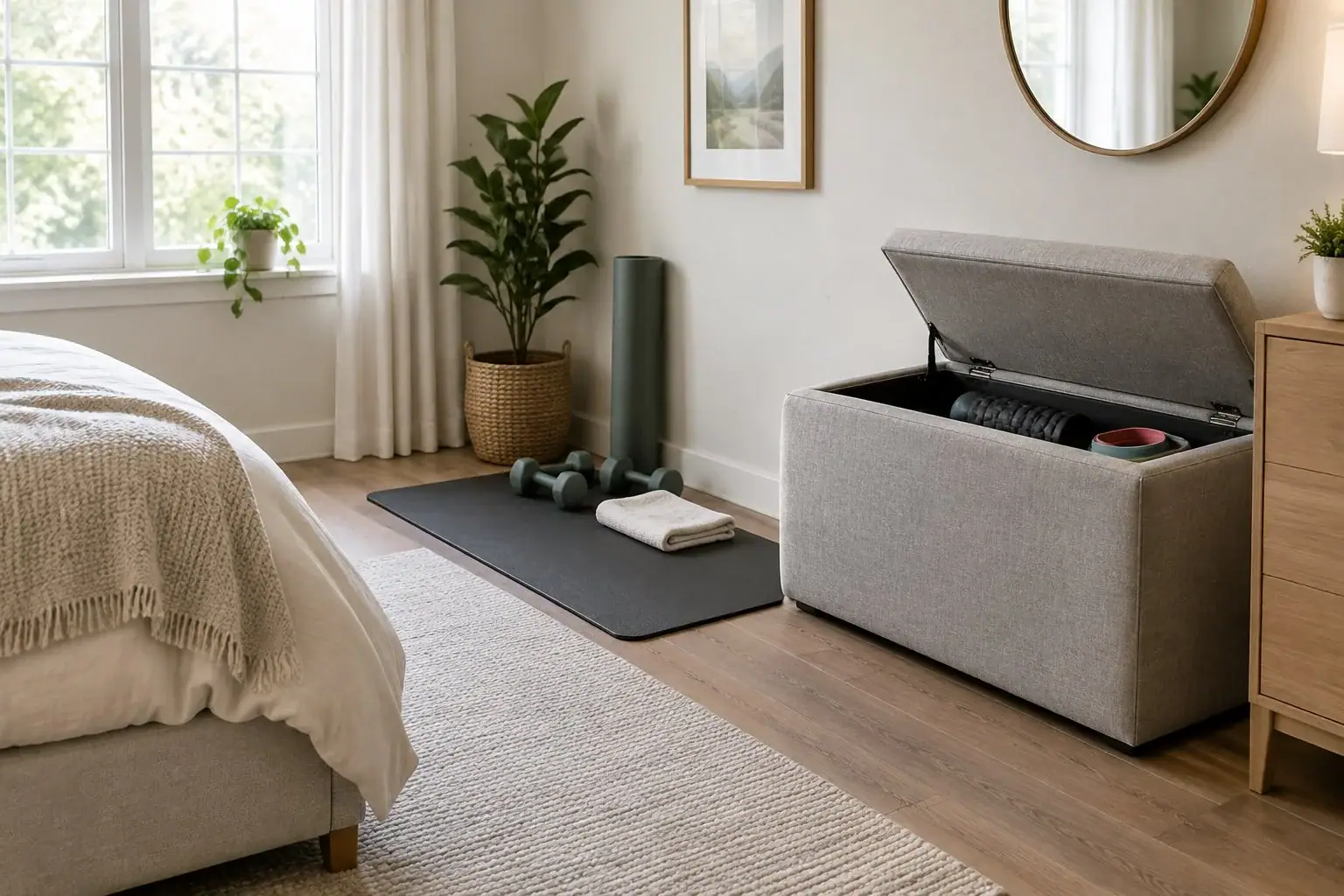
Place a storage bench along the edge of your workout area to conceal folded mats or small accessories. Check both the compartment size and the lid’s opening space before buying, and use the bench for exercise only if its maker specifically permits it.
12. Alcove Yoga Corner with a Freestanding Lamp
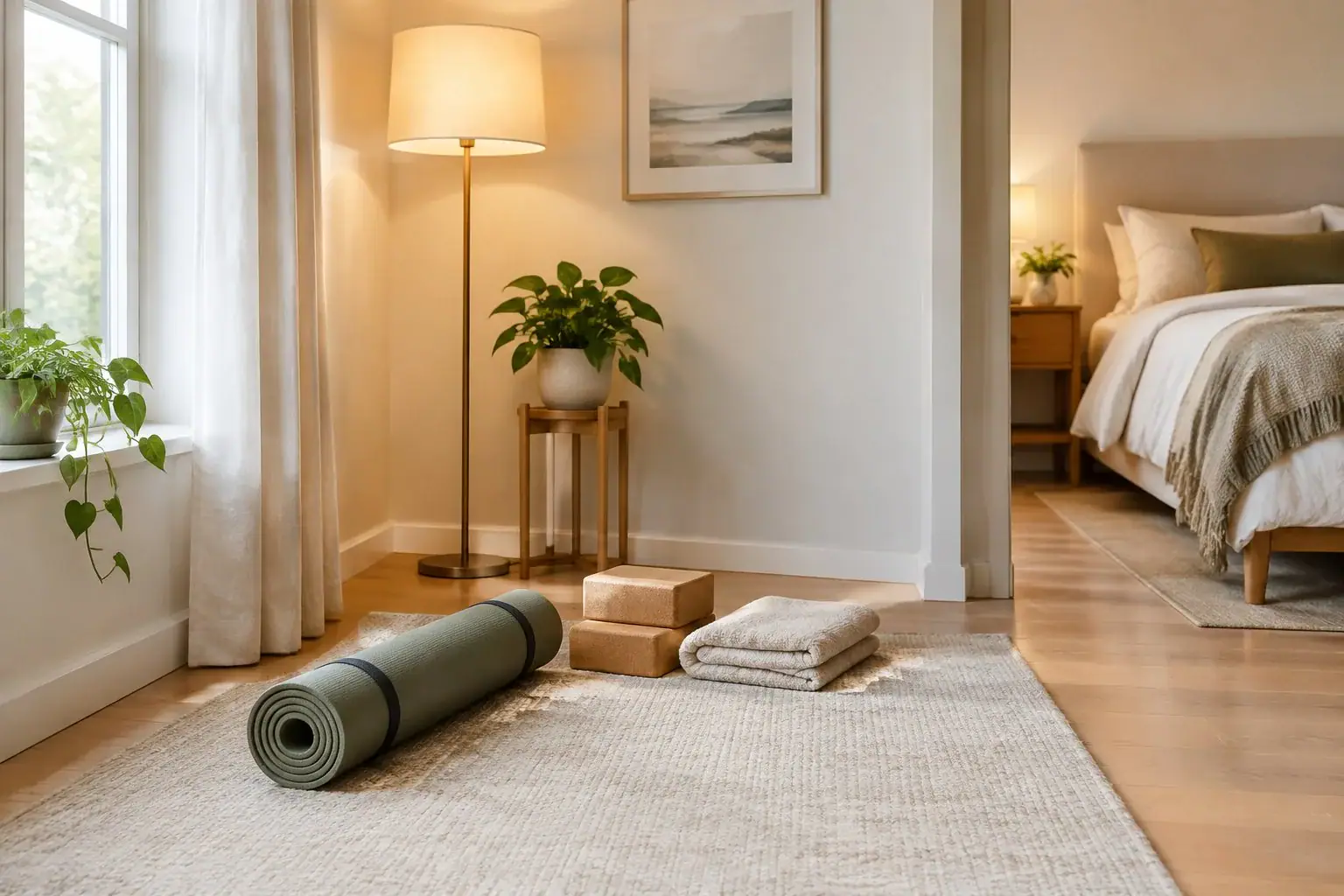
An alcove gives your mat a natural boundary, and a freestanding lamp adds comfortable ambient light. Set the lamp outside the mat’s footprint, with its cord routed along the wall and away from your walking path.
13. Dresser-Side Prop Tray
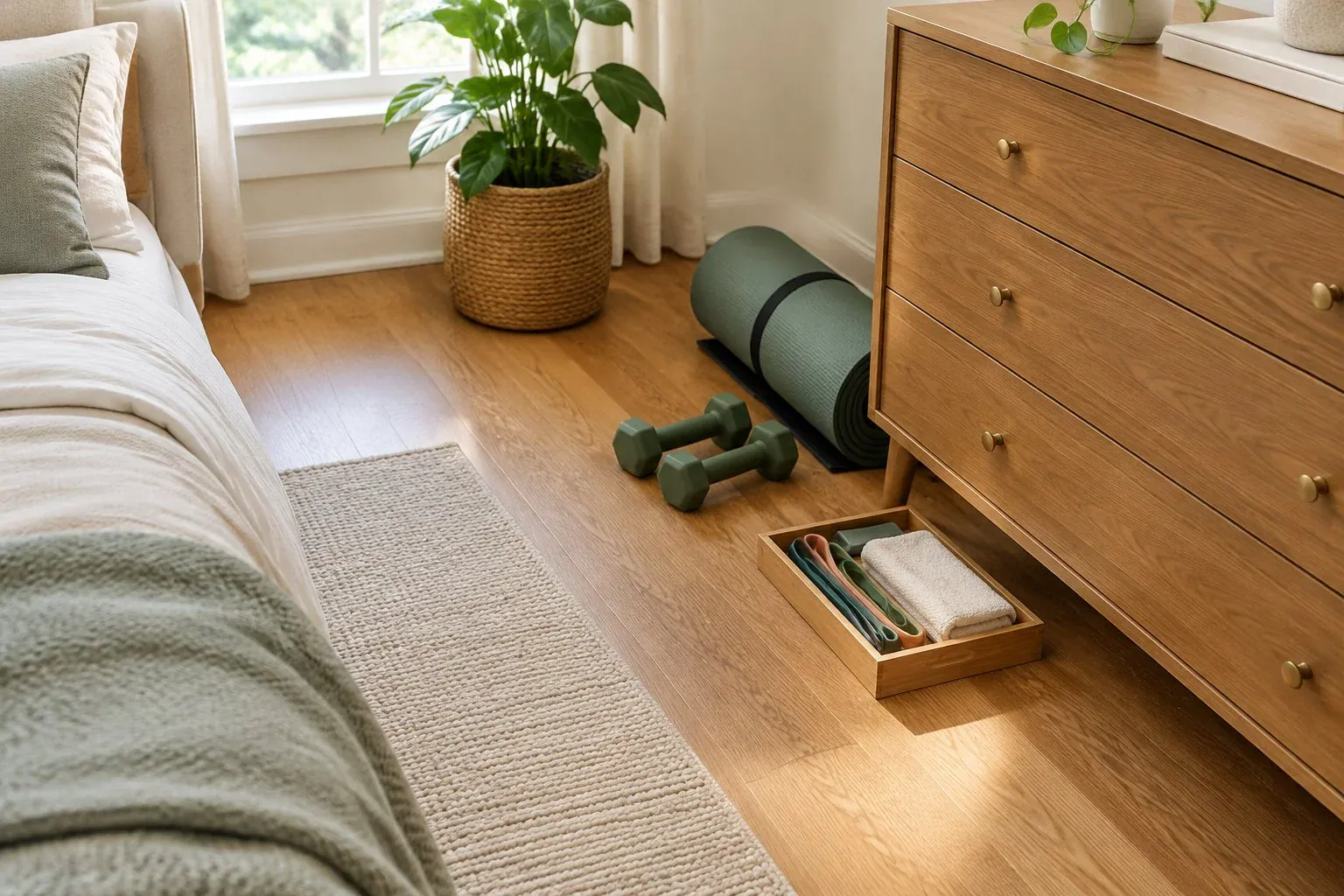
A shallow tray keeps resistance loops and a folded towel together in a dresser drawer or on its top, ready to bring to your mat.
Keep the drawers accessible, put the tray away after use, and store hand weights separately in low storage designed for their load.
14. Shared Bedroom Storage Zone Marked by a Rug
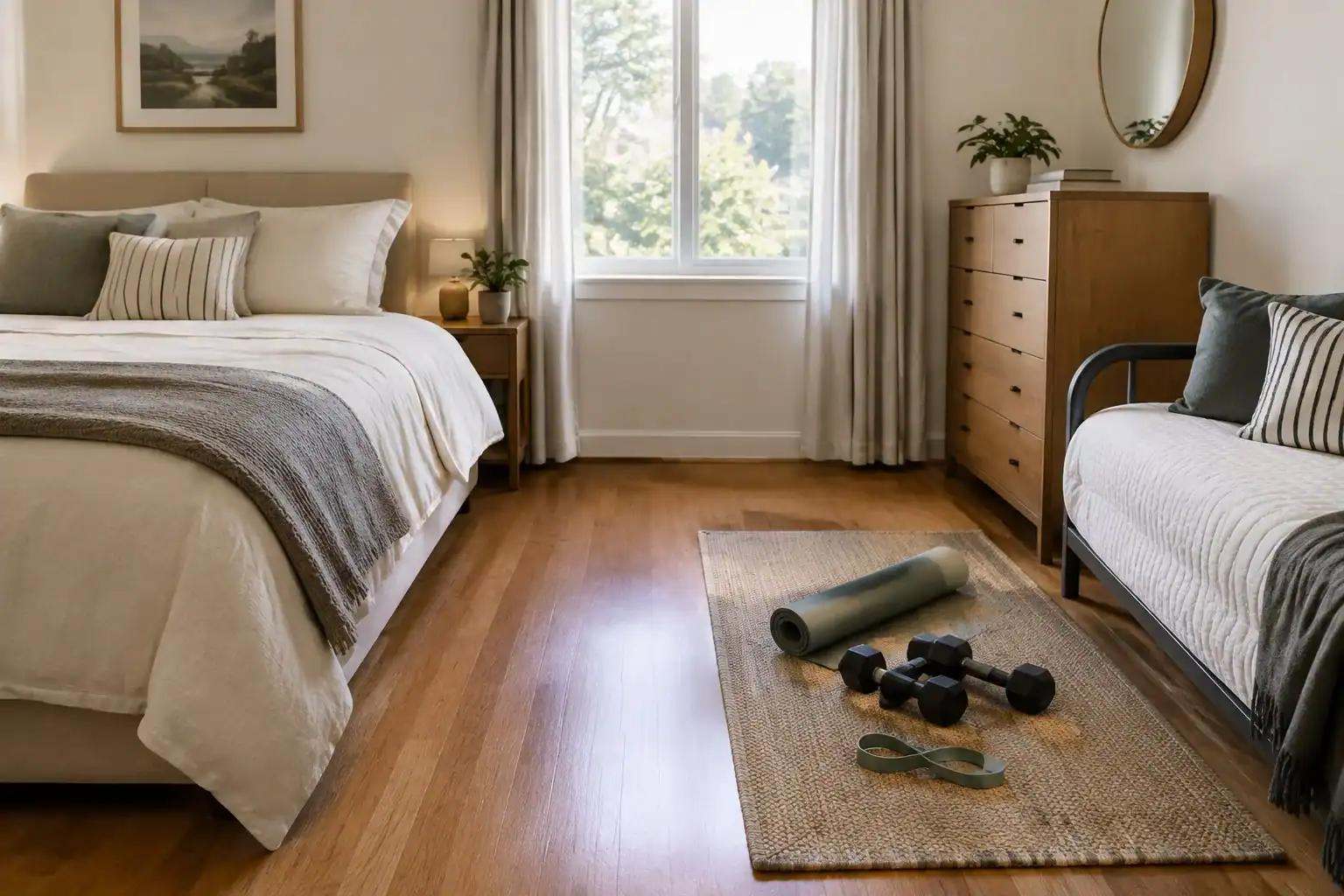
In a shared bedroom, a small rug can visually mark the spot where your rolled mat and equipment live between sessions.
Keep that storage zone on your side of the room, then move loose rugs aside and open the mat on a suitable clear surface when you exercise.
15. Upright Basket for More Than One Mat
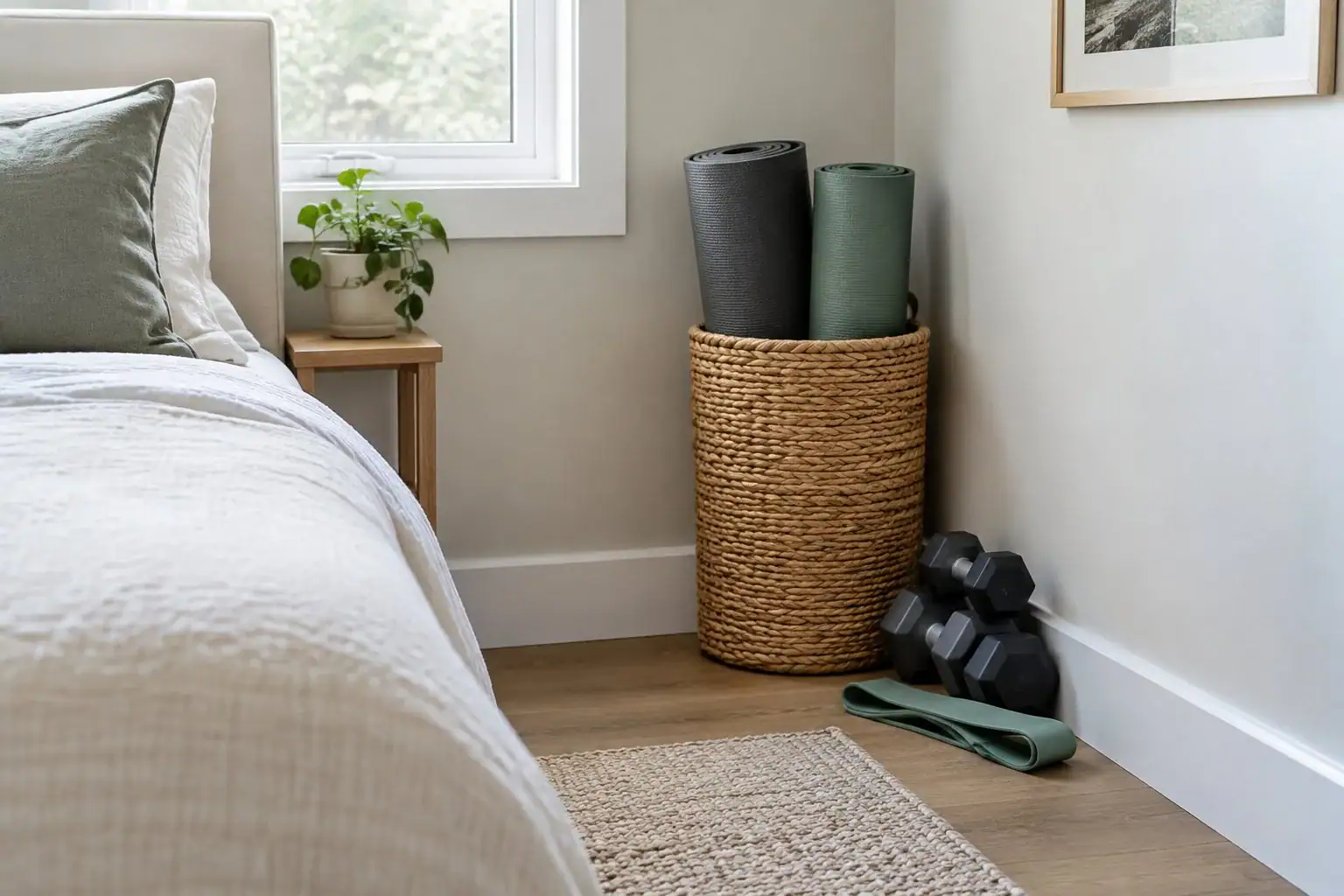
A tall, broad-based basket keeps two rolled mats together when a couple or housemates share the same workout spot.
Check the basket’s inside width against your rolled mats, and use a separate low container for hand weights rather than loading the basket with them.
16. Folding-Mat and Band Storage Wall
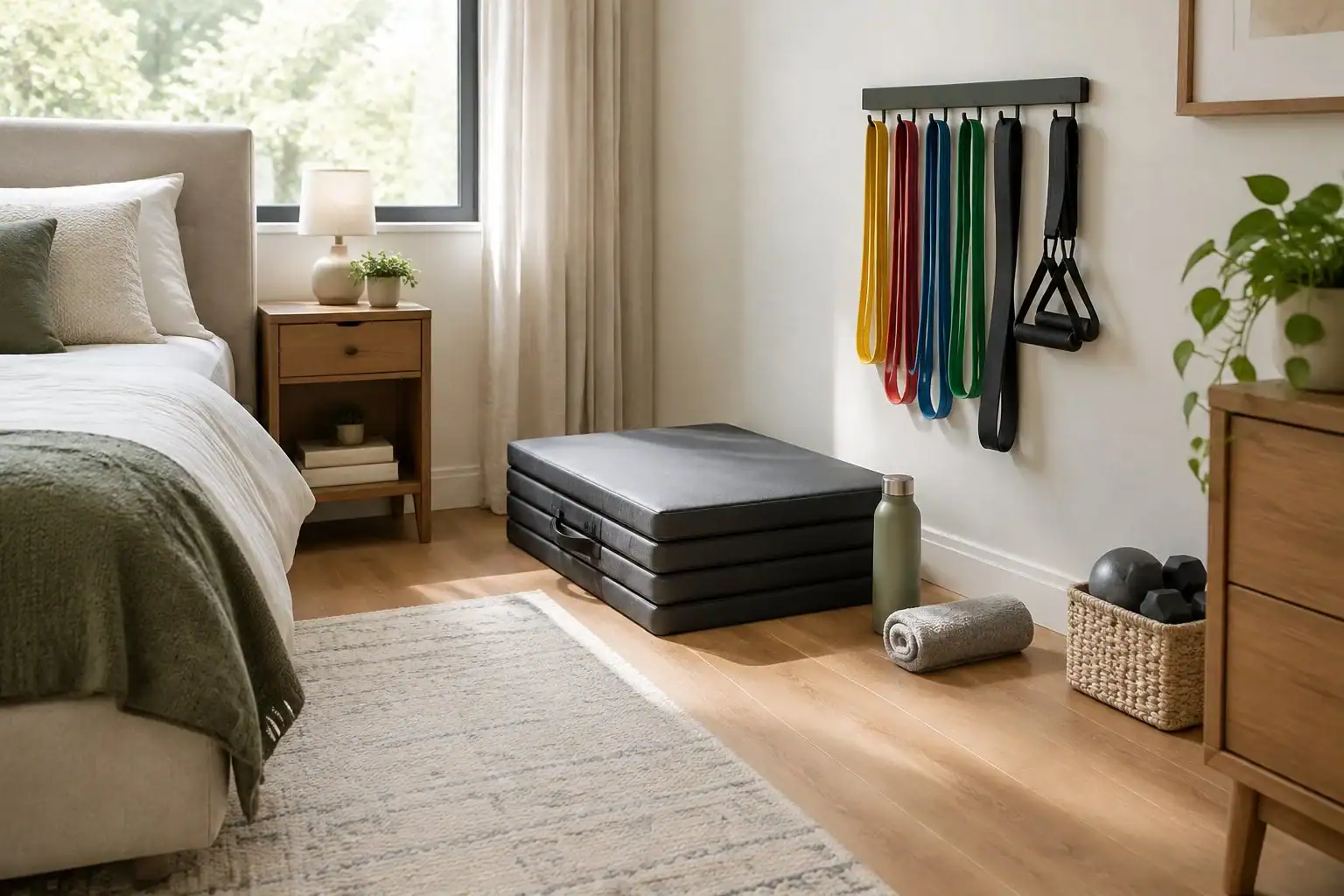
A folded floor mat can sit beneath a small storage rail that keeps bands untangled and easy to choose. Install the rail for its storage load using the maker’s instructions, and remove every band before use: storage hooks are not exercise anchors.
17. Bedroom Nook with a Freestanding Storage Cube
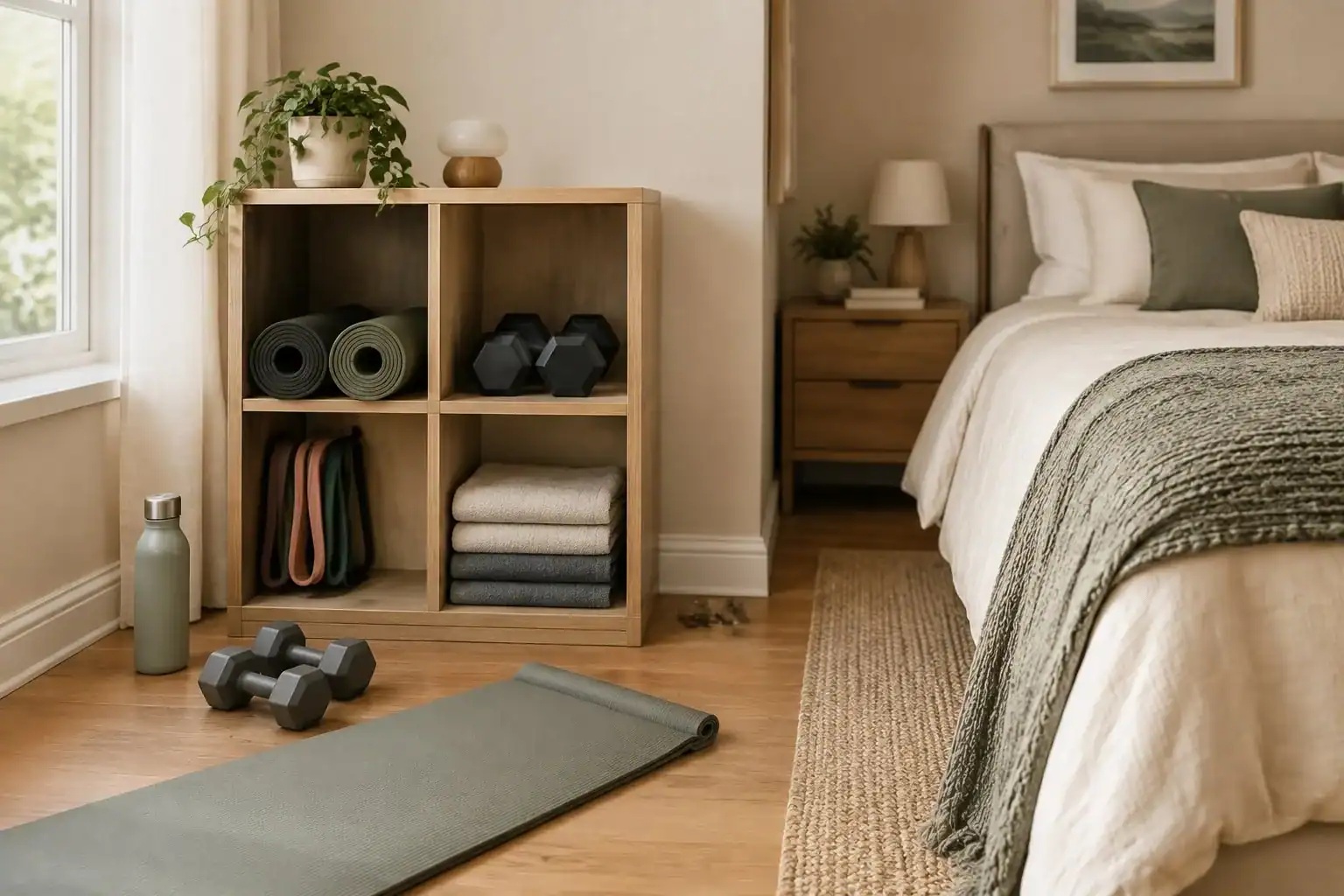
A compact cube unit lets you separate rolled mats, towels, and small accessories into their own compartments.
Follow its anchoring instructions and shelf limits, using a fabric bin for loose pieces and separate purpose-built storage for weights if the unit is not rated for them.
18. Minimal Workout Corner Beside a Nightstand
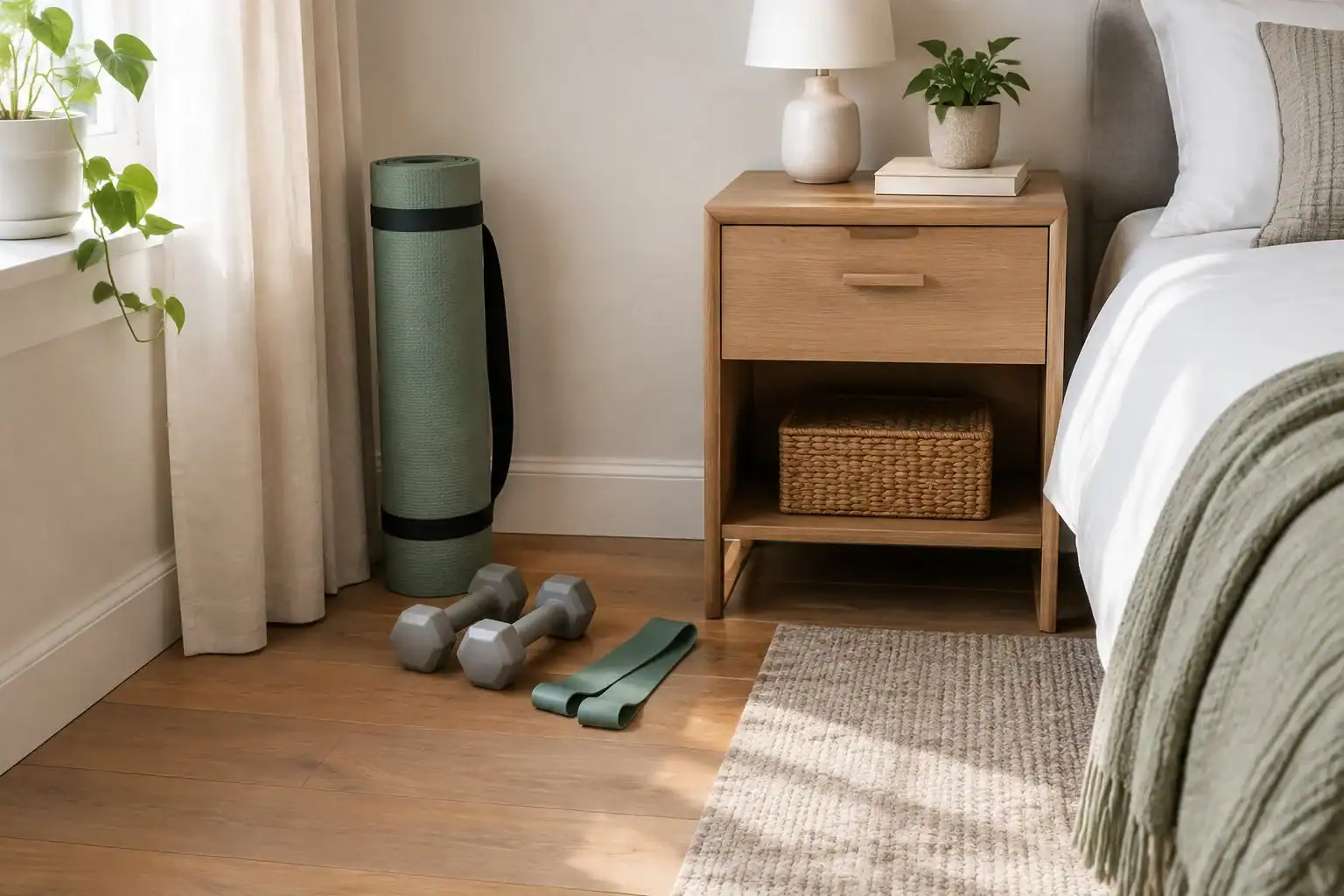
A single nightstand drawer can hold a resistance loop and a small towel when you do not want another storage unit.
Keep your rolled mat beside the furniture and move it to the clear floor for a session, leaving the nightstand top available for everyday bedside essentials.
19. Folding Screen for an Out-of-Sight Gear Corner
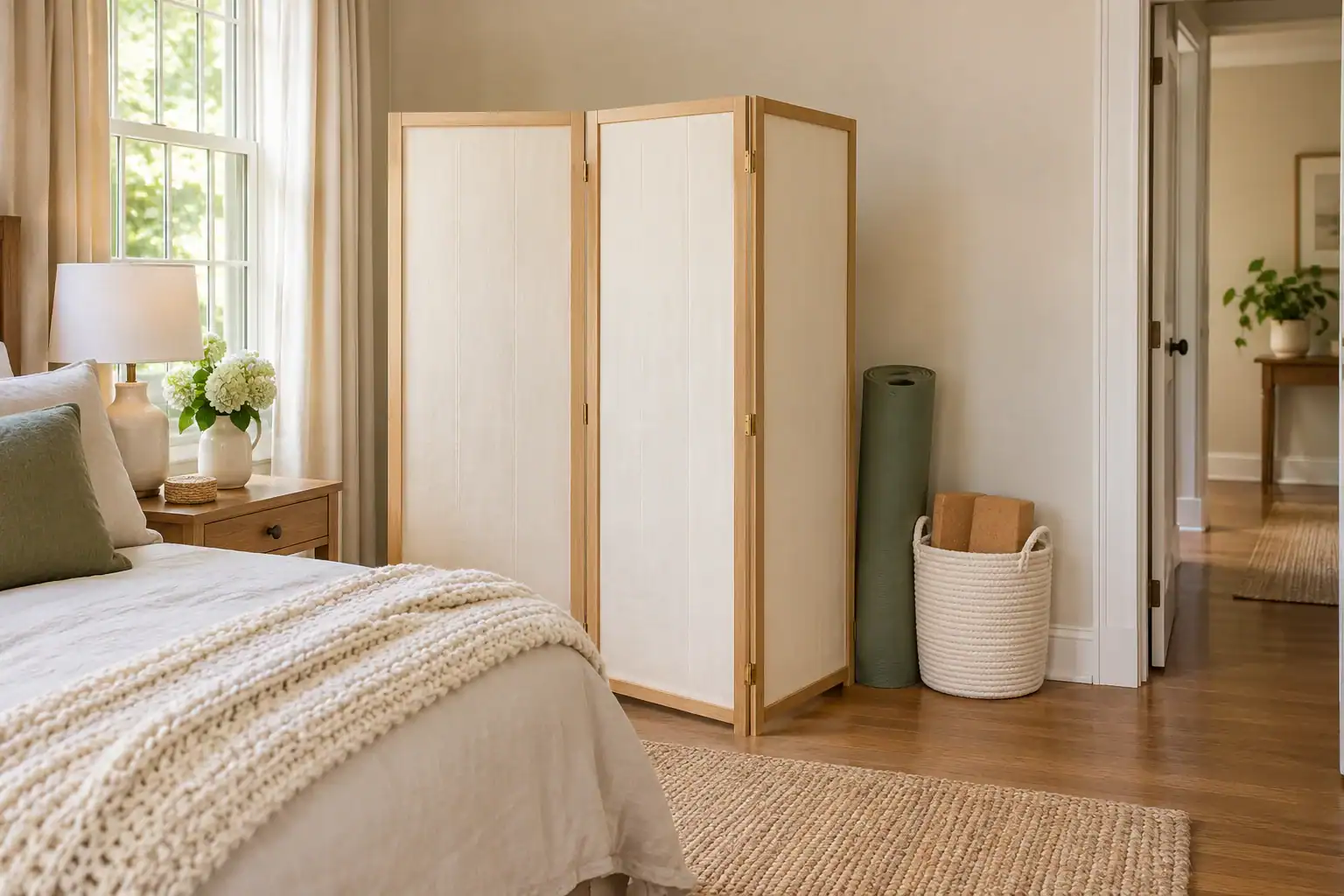
A compact folding screen can hide stored workout gear from the bed when you want the room to feel restful.
Set its panels in the stable configuration specified by its maker, keep the doorway clear, and move the screen aside before spreading out your mat.
20. Multiuse Stretching Spot Near a Reading Chair
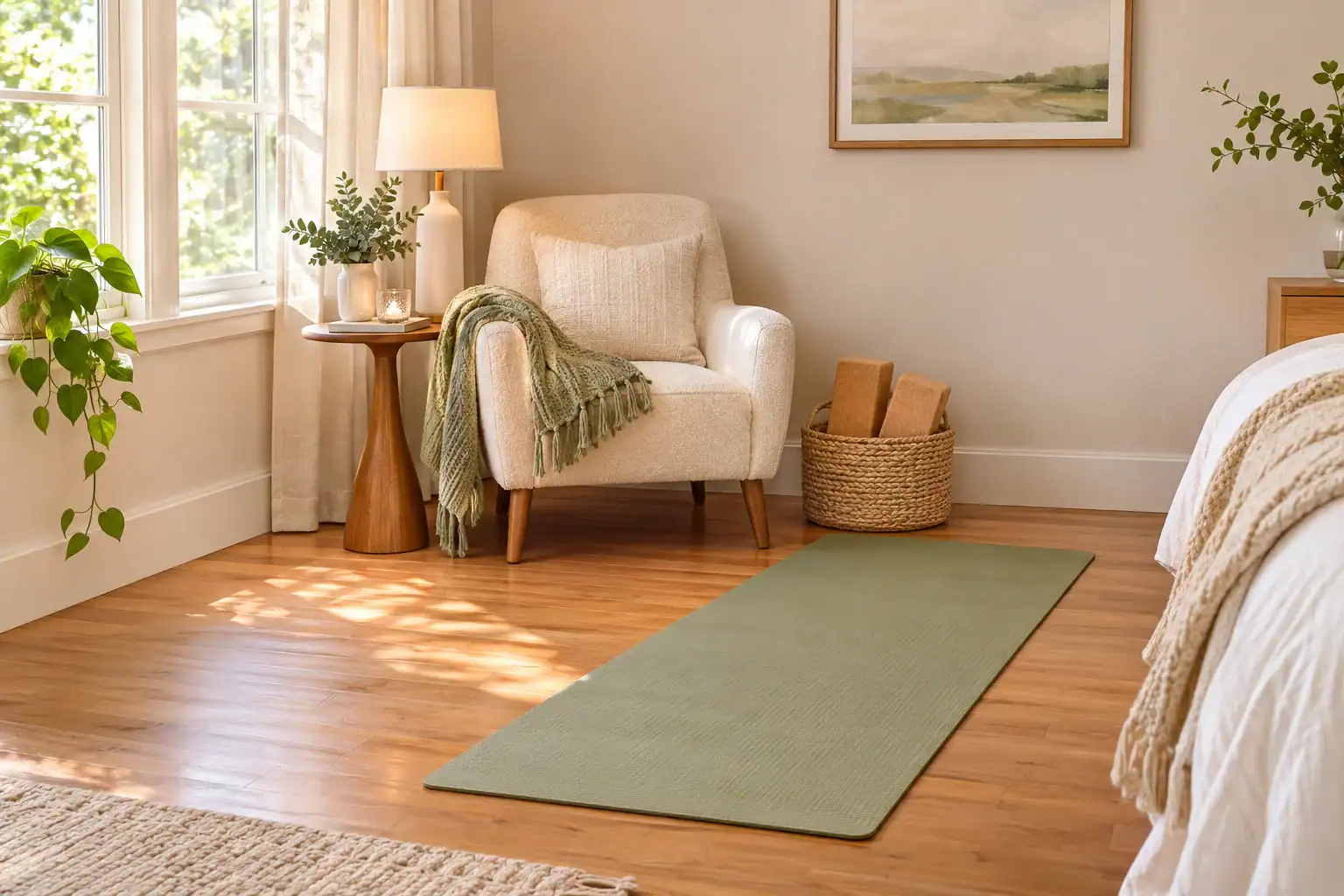
Place your mat near a reading chair to create a corner that shifts between stretching and quiet downtime. Keep a small basket beside the chair for blocks or a strap, and leave both the chair’s approach and your full movement area clear.